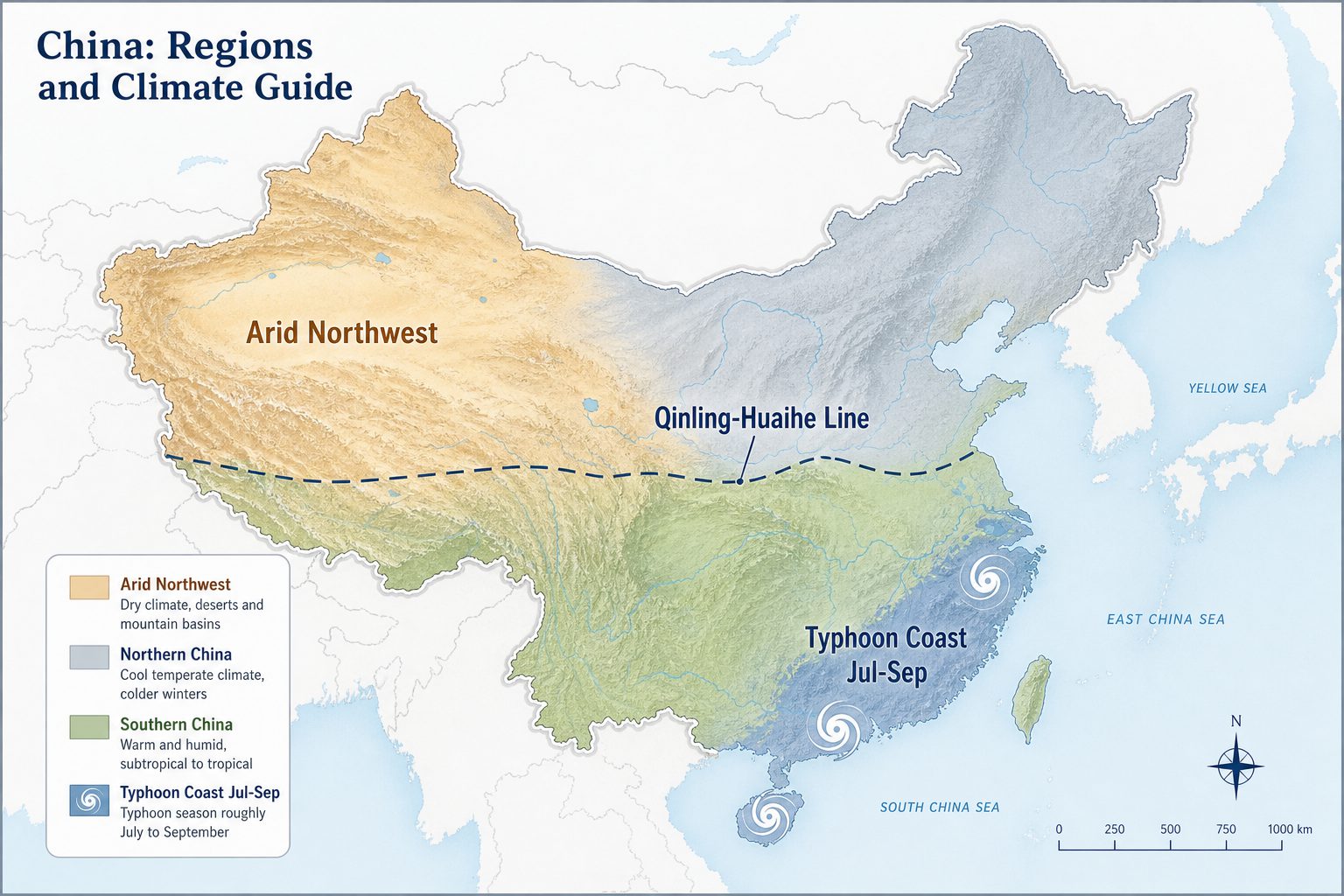
If your mental map of China is one country with one weather system, packing and expectations will fight you from day one. China is closer to a continent: dry cold winters in Beijing, damp indoor chill in Shanghai, desert light on the Silk Road, and summer typhoon watches on the southeast coast. This guide is a short climate and geography primer for Western visitors—so you choose dates, layers, and routes with clearer expectations.
Use it beside our timing guides: Best Time to Visit China 2027: Season by Season Guide and China Weather by Month 2027: Best Months to Visit. East Marvel has planned inbound trips since 1988; tell us your month and cities and we will rebuild pacing within 24 hours.
North vs South: The Qinling–Huaihe Line
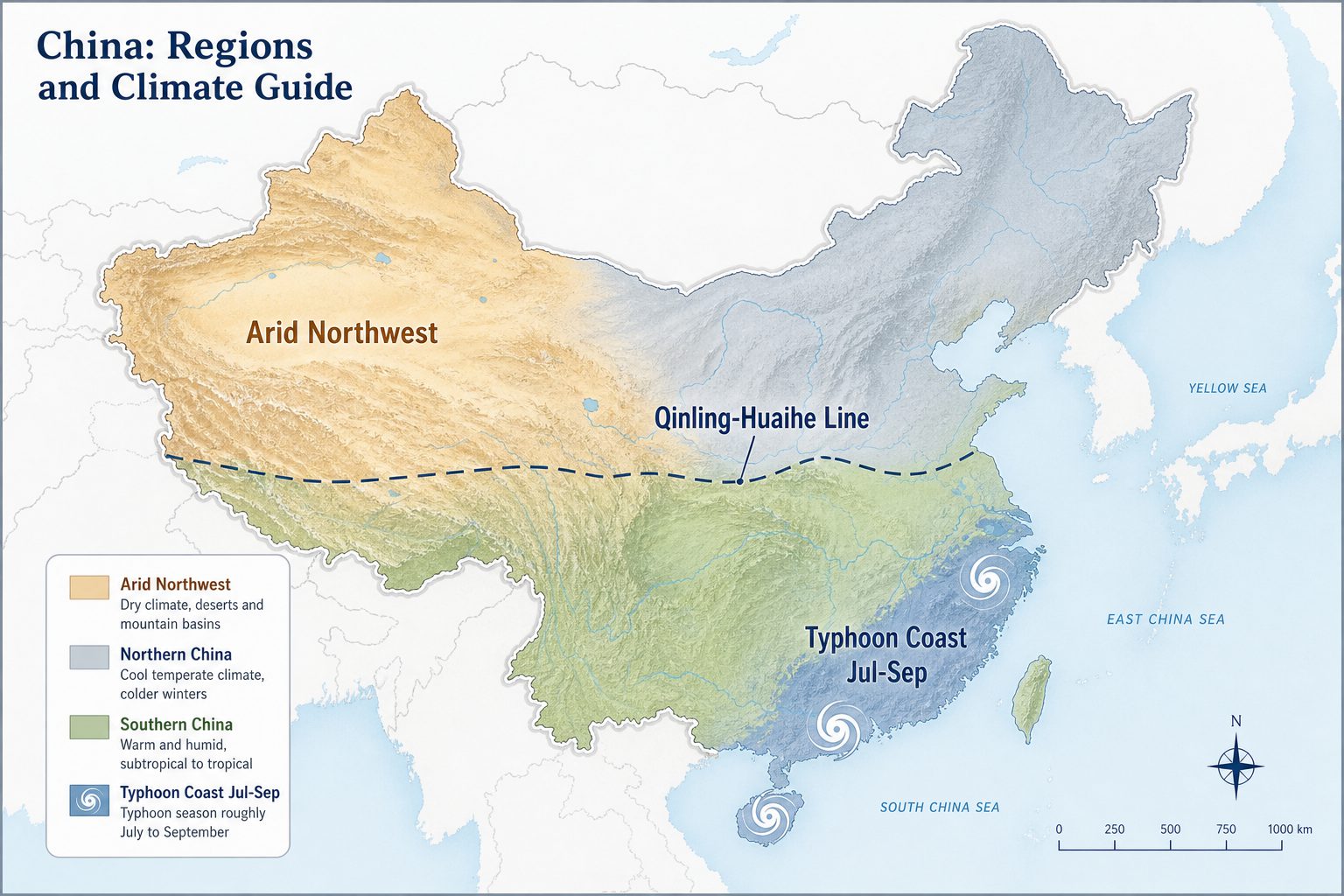
Geographers draw a rough east–west reference across China called the Qinling–Huaihe Line (Qin Mountains in the west, Huai River in the east), near the 33rd parallel. It tracks several real divides at once: around the 0°C January isotherm, wetter subtropical south versus cooler temperate north, and historically rice versus wheat farming belts. For travelers, the practical lesson is simpler: Beijing and Xi'an do not feel like Shanghai or Guilin in winter, even when the thermometer looks similar on paper.
In the 1950s, energy limits shaped a lasting policy choice: state-supported urban central heating systems were prioritized north of this line. North of the line, many apartments and hotels run district heating through winter, so indoor spaces often feel warm even when outdoor air is well below freezing. South of the line—including Shanghai and much of the Yangtze basin—central district heating was not rolled out the same way. Hotels for international guests usually have modern climate control, but older buildings, shops, and some restaurants may feel surprisingly chilly indoors.
That southern winter chill is what many residents call damp cold. Northern cold is often dry: sharp outdoors, then a warm heated lobby. Southern winters sit closer to freezing with higher humidity, so cold seeps into clothing and bones even when the reading is only a few degrees above 0°C. Pack thermal layers and a wind shell for Shanghai–Hangzhou–Suzhou winter city breaks, not only for Beijing. If you want quieter rates and milder outdoor air, winter south loops still work—just manage indoor expectations. Season windows sit in Best Time to Visit China 2027: Season by Season Guide.

East vs West: Humid Coast and Dry Interior
Eastern China, where most first-time itineraries run (Beijing, Shanghai, Hangzhou, the lower Yangtze, Fujian and Guangdong coasts), sits in moist monsoon influence for much of the year. Summers feel sticky; rain can arrive in bands; coastal humidity makes heat harder to shed. That is why June–August classic city days need early starts and midday air-conditioned breaks—the pattern we use on Beijing–Shanghai style tours and Yangtze land–cruise combos. Cruise deck comfort by season is covered in Best Time for a Yangtze River Cruise.
Western and northwestern China—think Gansu corridor towns, Xinjiang basins, and much of the Silk Road arc—run far drier. Days can be bright and large in temperature swing; skin and lips dry out; dust and strong sun matter more than sticky humidity. Summer is often the practical window for long western overland legs, while classic eastern cities are at their hottest. If your trip mixes both, pack for two climates in one suitcase: breathable east-coast summer clothes plus sun protection, a light fleece, and moisturizer for the dry west.
East Marvel’s longer western routes, such as Ancient Silk Road Adventure, are built around that dry-season logic. Classic first-timer packages stay mostly in the humid east; highland summer alternatives like China Tour with Tibet sit outside both sticky lowland heat and coastal typhoon tracks.

Typhoon Season on the Southeast Coast (July–September)
Typhoons (western Pacific tropical cyclones) most often affect China’s southeast and south coasts from about May through November, with the statistical peak in July–September. Provinces and gateways visitors ask about most—Guangdong (Guangzhou, Shenzhen), Fujian (Xiamen and the coast), Hainan (including Sanya), plus Hong Kong and nearby coasts—sit in the higher-exposure belt. Inland classics such as Beijing, Xi'an, Chengdu, and Yunnan highland towns are not typhoon coasts, though heavy rain can still follow a weakened system far inland.
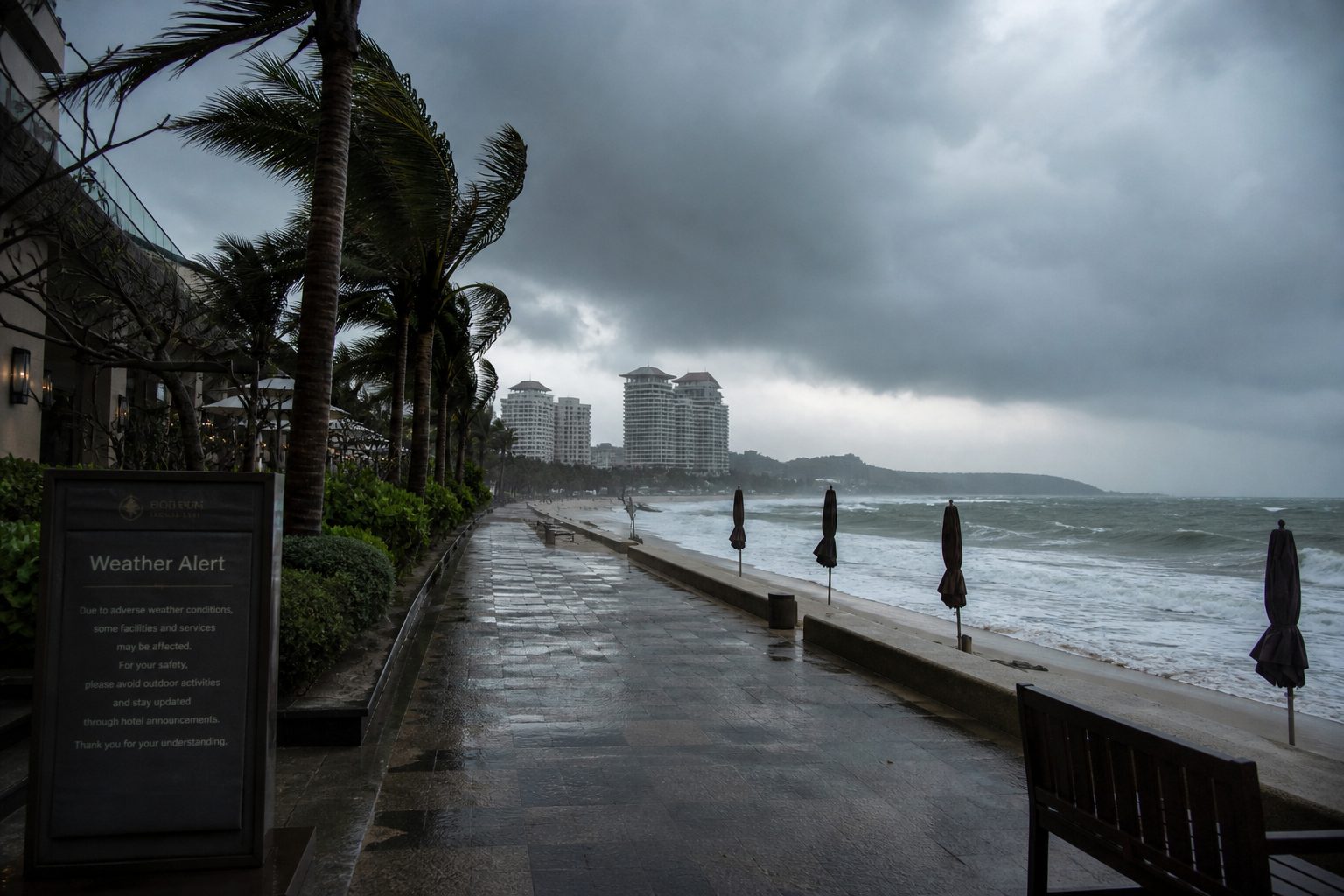
What a storm usually means for a holiday: 24–48 hours of disrupted outdoor plans more often than a ruined two-week trip. Expect possible flight delays, ferry cancellations, temporary park or beach closures, and heavy rain bands. Hotels and cities along this coast handle warnings routinely. Build one flexible buffer day if your summer trip depends on a coastal gateway, and prefer changeable rail or refundable hotel holds when the forecast is active.
If a warning rises while you are on the ground:
1.Follow hotel and local authority instructions; orange and red level alerts generally mean stay indoors.
2.Keep away from waterfront promenades, beaches, and loose outdoor signage.
3.Charge devices, keep water and snacks in the room, and shift to museums, malls, or hotel time.
4.Ask your guide or hotel to rebook coastal transfers early; high-speed rail often recovers faster than flight cascades after the system passes.
Summer school-holiday travelers who want coast time can still go—just keep inland swap options ready (Guilin, Chengdu, Yunnan). Month scoring for heat and holidays sits in China Weather by Month 2027: Best Months to Visit. Hong Kong–linked winter or shoulder loops are a different climate story from peak typhoon weeks.
How to Use This Map When You Book
Translate the geography into three booking checks:
1.Winter north of the heating line: dry outdoor cold, warm hotel lobbies—great coats for Wall days.
2.Winter south of the line: milder outdoor numbers, damp indoor chill—layers that work inside shops and older buildings.
3.July–September on Guangdong, Fujian, or Hainan coasts: accept short weather holds; keep an inland Plan B.
Share your draft month and city list. We will match heating zones, humidity, and typhoon exposure to a private or small-group plan—without assuming China has only one climate.
Related reading
Best Time to Visit China 2027: Season by Season Guide
Best Time for a Yangtze River Cruise.
China Weather by Month 2027: Best Months to Visit
Plan with East Marvel
Share your packing climate worries and coast-versus-inland priorities when you request a custom outline. Ask us to pair heated-north Wall days with damp-south city layers, keep a dry Silk Road or Tibet block for summer humidity, and hold an inland Plan B if Guangdong, Fujian, or Hainan falls in typhoon season.