How Chinese holidays affect visitors
- Spring Festival (Chinese New Year): strongest emotion and strongest transport pressure; some small shops close
- Qingming (Tomb-Sweeping): short public holiday and a spring travel bump
- Labor Day window in early May: popular domestic short-break crowds
- Dragon Boat Festival: short holiday, zongzi, and races in some cities
- Mid-Autumn Festival: mooncakes and a possible long weekend if dates join weekends
- National Day Golden Week around October 1–7: often the hardest week for first-timers at iconic sights
- Traditional-only days: cultural interest; not always a nationwide vacation
1. Major festivals travelers ask about
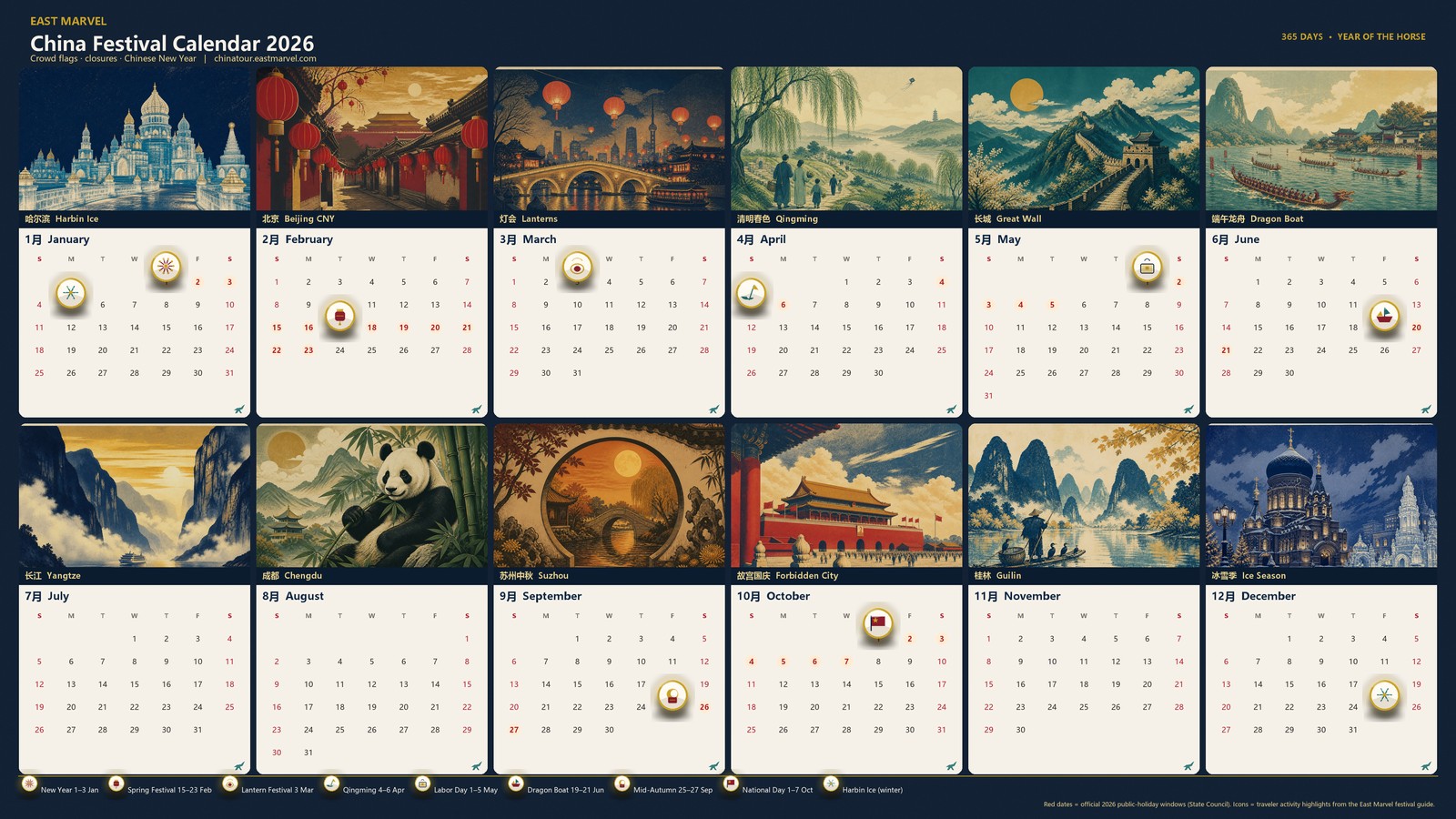
Spring Festival / Chinese New Year brings reunion dinners, red decorations, and temple fairs. Full strategy: Chinese New Year travel guide later in this article. In 2026, the public holiday block ran February 15–23. In 2027, Chinese New Year’s Day falls on February 6.
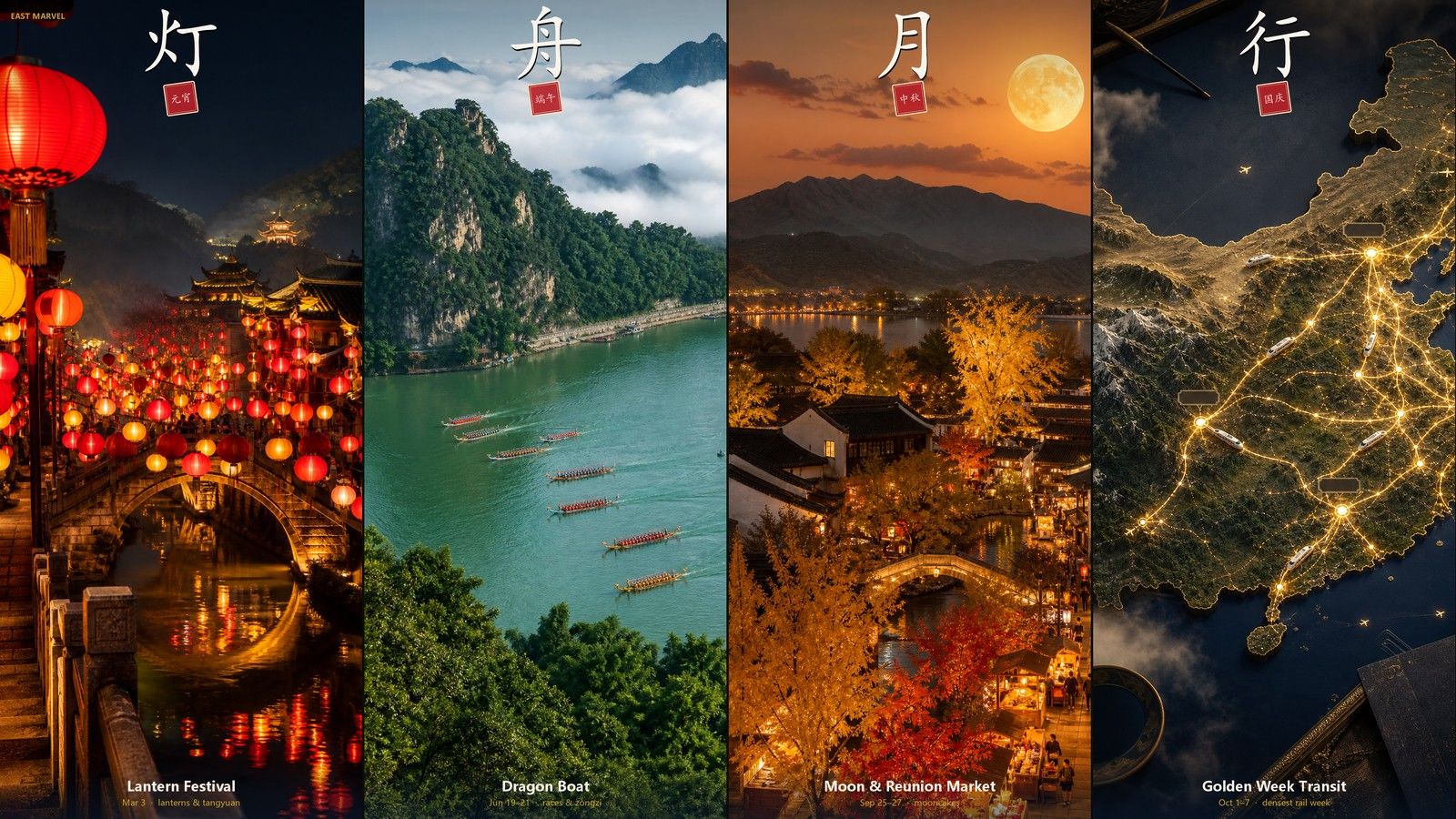
Lantern Festival closes the traditional New Year season with lantern displays and tangyuan.
Qingming pairs tomb-sweeping with spring weather and short-holiday train demand.
Dragon Boat Festival features zongzi and boat races in selected cities.
Mid-Autumn Festival centers on moon viewing and mooncakes, often with strong autumn sightseeing weather nearby.
National Day Golden Week is a national holiday block that packs many attractions. Prefer October 8 onward when you can.
Harbin Ice and Snow Festival is a winter spectacle from late December into early spring season.
Ask East Marvel to fold Dragon Boat races, mooncake tasting, or Harbin ice into the outline if that is the atmosphere you want.
2. 2026 crowd flags at a glance
If your dates are flexible, buffer or re-route around these 2026 blocks also listed in Best Time to Visit China:
- New Year: January 1–3 — mild city pulse
- Spring Festival: February 15–23 — year’s largest travel surge; some shops close
- Qingming: April 4–6 — short domestic surge
- Labor Day: May 1–5 — avoid classic sights if you can
- Dragon Boat: June 19–21 — short pulse
- Mid-Autumn: September 25–27 — short pulse before autumn peak
- National Day Golden Week: October 1–7 — densest sightseeing week; prefer October 8 onward
2027 dates. The festival days for 2027 are: New Year, January 1; Chinese New Year, February 6 (the Spring Festival holiday runs for about a week around it); Qingming, April 5; Labor Day, May 1; Dragon Boat, June 9; Mid-Autumn, September 15; and National Day Golden Week, October 1–7. China’s official 2027 days-off schedule is published by the State Council late in the year before, usually in November. Until then, these are the festival days themselves; expect each break to cover a few days around them.
For month-by-month weather, open China Weather by Month.
3. What stays open and what may close
Usually open: major heritage sites, large museums (confirm Monday closures), international hotels, and many chain restaurants in big cities.
May reduce hours or close: small family restaurants and some neighborhood shops during peak Spring Festival days.
Always verify attraction reservation rules, Monday museum closures, and cruise sailing dates around holidays. Mobile pay still matters on holiday weeks.
4. Festival calendar checklist
- Circle your travel window on this calendar before buying non-refundable flights
- Avoid October 1–7 for a first classic Beijing–Xi'an–Shanghai loop when possible
- If you want Spring Festival atmosphere, book hotels and guides months ahead
- Build buffer time for high-speed rail on holiday eves
- Ask whether a temple fair, mooncake tasting, or ice festival should be an intentional highlight
Chinese New Year travel guide: crowds and closures
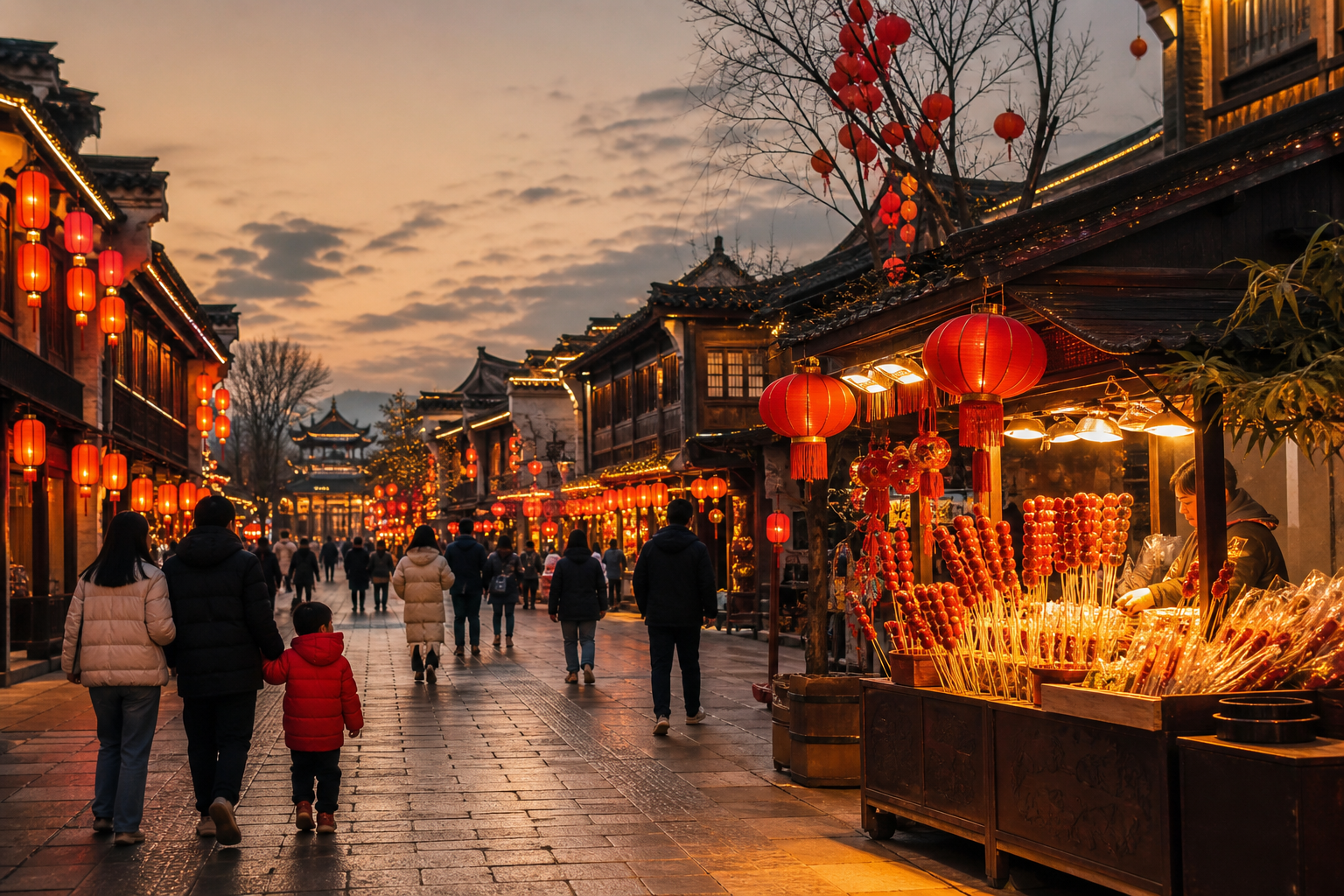
Chinese New Year, also called Spring Festival, is China’s most important holiday and one of the hardest weeks for transport. Travelers search it for red lanterns, temple fairs, and family energy. Trains, flights, and popular attractions can also feel intense.
This section gives a clear go or no-go framework, what may close, where atmosphere is worth it, and how East Marvel redesigns pacing if your dates overlap the holiday.
Also see: Best Time to Visit China and Chinese Culture for Travelers.
Spring Festival snapshot for visitors
- Also called: Lunar New Year, Spring Festival
- Peak domestic travel: holiday eve and first days inside the wider chunyun season
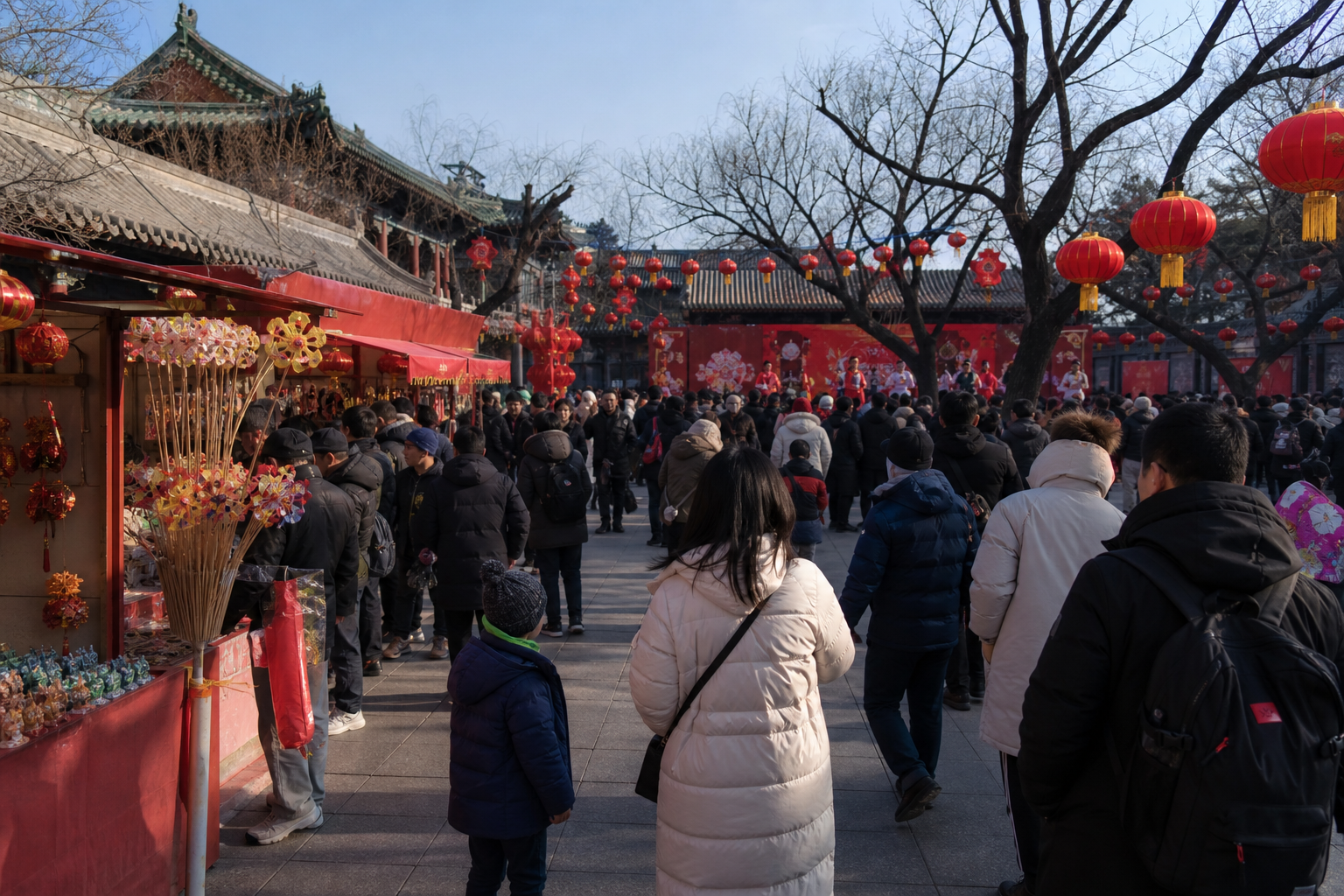
- Atmosphere: strong decorations, fairs, and festive meals
- Closures: some small shops and neighborhood restaurants; major sites usually open
- Prices: hotels and peak trains often higher
- Best for: travelers who want culture over quiet logistics
- Better alternative for many first-timers: arrive a week after peak, or choose shoulder spring
Should you go
Consider going if you want temple fairs, lanterns, festive photography, and guided support so tickets and meals stay organized.
Consider shifting dates if you want easy intercity train seats at short notice, quieter hutongs, shorter attraction queues, and maximum restaurant variety in residential neighborhoods.
East Marvel advice: first-timers who dislike crowds usually prefer April–May or mid-September–October after Golden Week. Festival seekers can still travel at New Year with earlier booking and adjusted expectations.
What to experience
- Temple fairs: folk performances, snack stalls, and crafts; Beijing fairs are popular with visitors
- Reunion flavors: dumplings in the north, fish for abundance, niangao rice cake, and regional sweets
- Red decorations: couplets, lanterns, and paper cuts across cities
- Lantern Festival finale: traditional close of the New Year season with lantern displays
Food context: Chinese Food for First-Timers.
Etiquette notes: wearing something red is associated with luck; ask before close-range photos of people; at temple venues follow Temple Etiquette in China.
What stays open versus what may close at New Year
Usually reliable: international and major hotels, large attractions with confirmed hours, and many chain restaurants and malls in big cities.
More variable: independent neighborhood restaurants especially on days 1–3, small souvenir shops, and some business services.
Your guide’s restaurant list matters more than usual during peak festival days.
Transport, booking, and money
- Book hotels and intercity trains earlier than a normal shoulder-season trip
- Keep your passport ready for rail security and ticket checks
- Carry a little cash backup even though mobile payments dominate
- Build buffer time on holiday eves when stations are busiest
If flights are already fixed inside the holiday window, ask East Marvel whether to keep the dates with adjusted pacing, shift a few days, or lean into festival experiences.
City ideas if you travel at New Year
- Beijing: temple fairs plus winter sightseeing
- Shanghai: strong infrastructure and festive Bund lights
- Xi'an: historic atmosphere; food streets stay lively in tourist cores
- Chengdu: teahouse calm between festive bursts
- Hong Kong: soft landing or exit with holiday lighting when routing allows. Ask us to confirm the entry path for your passport
Match cities to routes such as the 8-Day Classic China Tour or request a custom festive outline.
Chinese New Year checklist
- Confirm the exact lunar dates and public holiday notice for your travel year
- Decide: atmosphere trip versus quiet classics trip
- Book lodging early; avoid same-day attraction improvisation
- Pre-note dietary needs for festive banquets
- Pack layers—north China New Year is cold
- Message East Marvel your passport nationality and entry city for compliant routing
Related reading (this 4-part series)
- China Food, Festivals & Culture hub
- China Festival Calendar & Chinese New Year
- Chinese Culture for Travelers
- Temple Etiquette in China
Plan with East Marvel
Share your preferred month and interests—Great Wall autumn color, Yangtze cruise comfort, winter ice sculptures, or Spring Festival atmosphere—and we will propose dates that protect both weather and logistics.