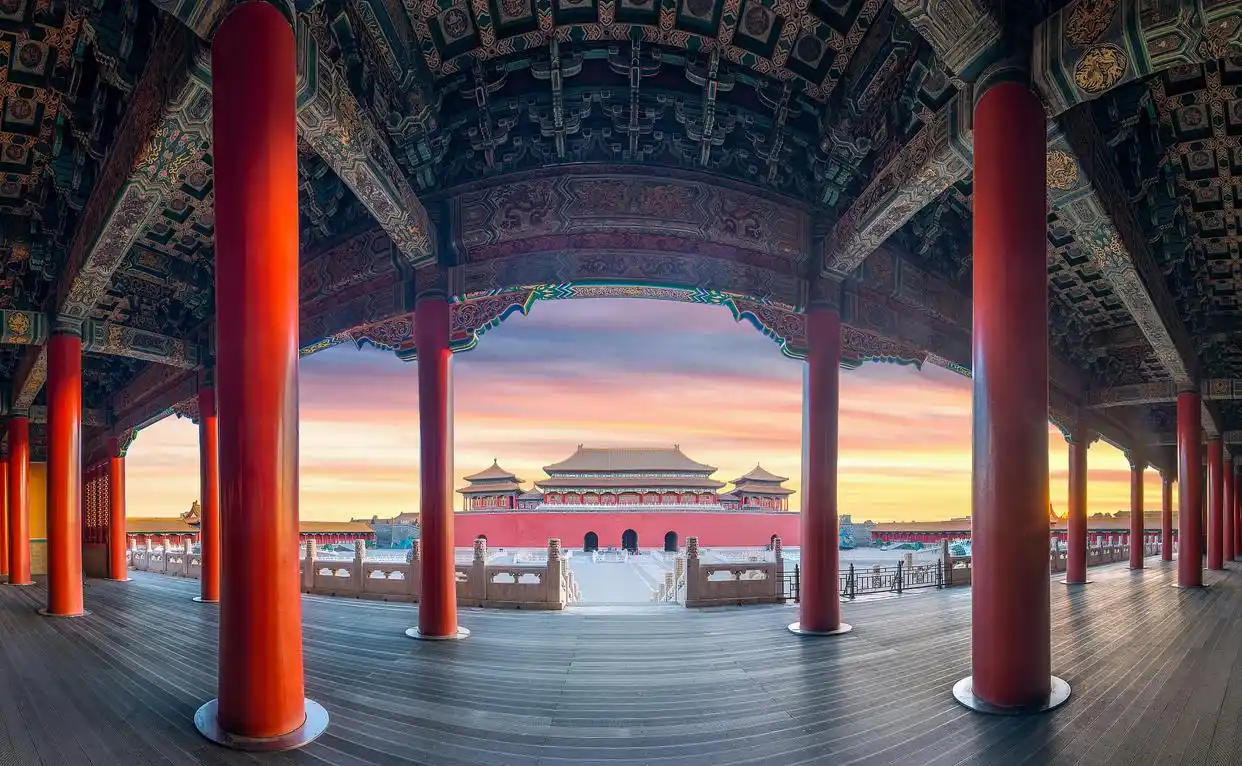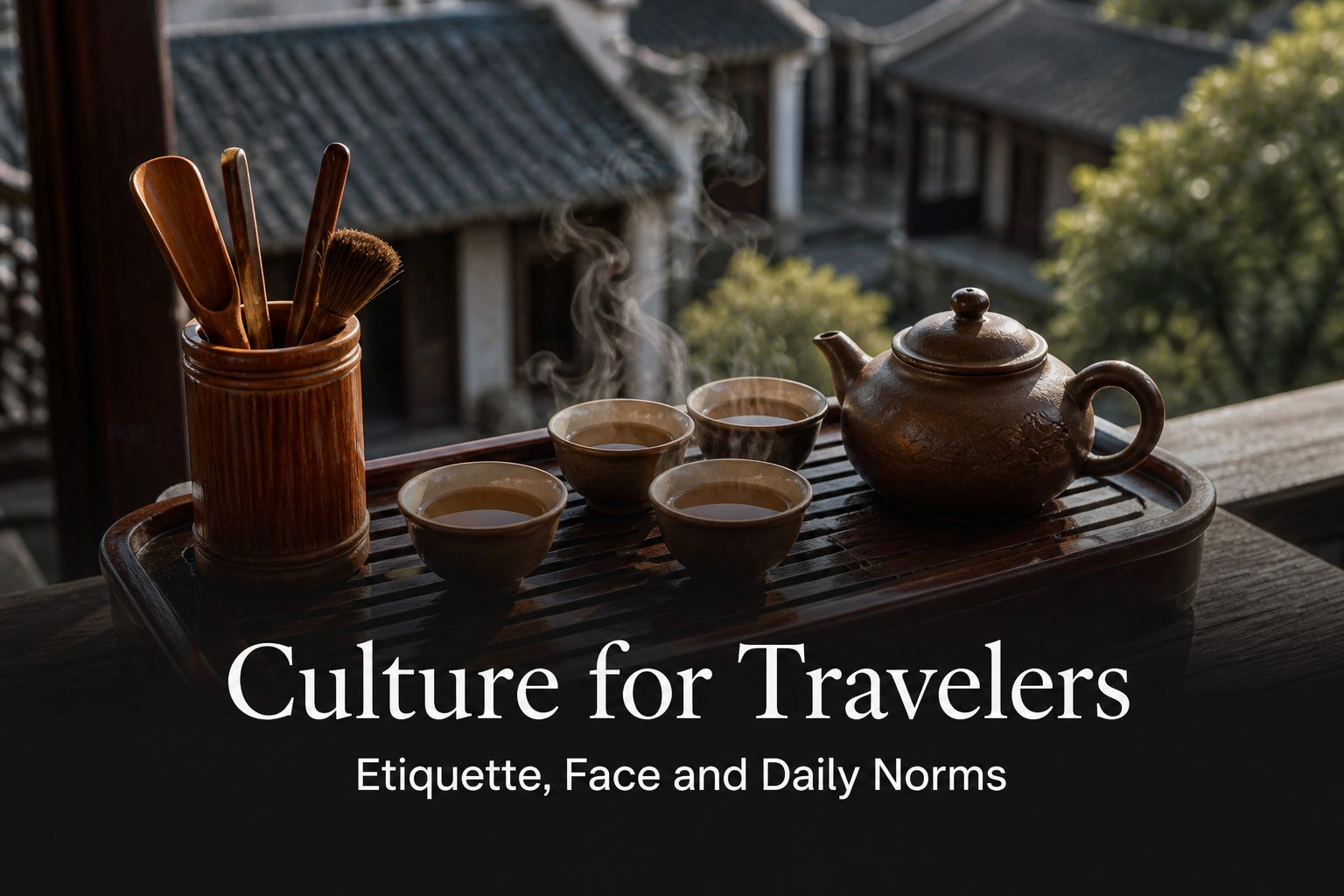
Culture points that matter on day one
- Face: avoid loud public criticism; polite exits work better
- Queues and security: metro and attraction bag scans are normal—patience helps
- Personal space: crowded cities; expect closer proximity than in some Western towns
- Tipping: not expected in restaurants and taxis; ask us about guide and driver norms
- Photography: ask before close portraits; follow temple and museum rules
- Modern and traditional together: QR pay and high-speed rail sit beside historic sites—both are real China
1. Politeness, face, and easy social wins
Face roughly means dignity and social standing. Practical traveler version:
- Soften refusals with a smile and thank you, or say maybe later
- Avoid arguing loudly with staff in public
- Accept that “maybe” can mean “difficult”
- Compliment sincerely when something is well done
Hotel check-in requires passport registration. This is routine, not suspicion. Keep the original with you for trains and lodging.
2. Temples, heritage sites, and respectful visiting
- Cover shoulders and knees when possible
- Speak quietly in active worship halls
- Do not touch statues, offerings, or altar objects
- Follow photo signs—some halls ban photography
- Step around worshippers rather than cutting in front
Full detail: Temple Etiquette in China. Tibet-bound guests should also review highland culture notes with their guide before travel.
3. Dining culture in brief
Meals are social and shared. Learn starter dishes in Chinese Food for First-Timers.
Do not stand chopsticks upright in rice. Try local dishes at your comfort level—mild options exist in almost every region. Spice-heavy stops are covered in the hotpot section of that same food guide.
4. Photography etiquette
- Ask before photographing individuals at close range
- Be extra careful with children and worshippers
- Do not fly drones unless rules clearly allow
- Some museums and palace interiors restrict photos or flash
- Night markets are usually photo-friendly—still mind stall owners’ space
5. Modern China beside traditional China
Many visitors expect only ancient scenery and are surprised by cashless payments, metro security, and high-speed rail punctuality. Others expect only tech and miss tea houses, hutongs, and festival customs.
The richest trips hold both. Practical setup sits in season and transport guides such as Best Time to Visit China. Festival timing is in China Festival Calendar & Chinese New Year.
Want hands-on time such as a cooking class, tea tasting, or hutong walk? Ask when you customize the itinerary. If imperial Beijing, Tibet, the Silk Road, or Yunnan communities are the priority, say so in your trip list.
Practical cultural checklist
- Save hotel names and addresses in English and Chinese screenshots
- Learn a few hellos—and rely on your guide for nuance
- Dress in layers plus one modest outfit for temples
- Install translation with camera text recognition for menus and signs
- Ask East Marvel to add cultural modules such as tea, crafts, or hutong walks when you customize
Route ideas include Ancient Silk Road Adventure and China Tour with Tibet.
Related reading (this 4-part series)
- China Food, Festivals & Culture hub
- Chinese Food for First-Timers
- China Festival Calendar & Chinese New Year
- Temple Etiquette in China
Plan with East Marvel
Share what you want to understand—not only what you want to photograph—and we will fold culture time into a private outline.