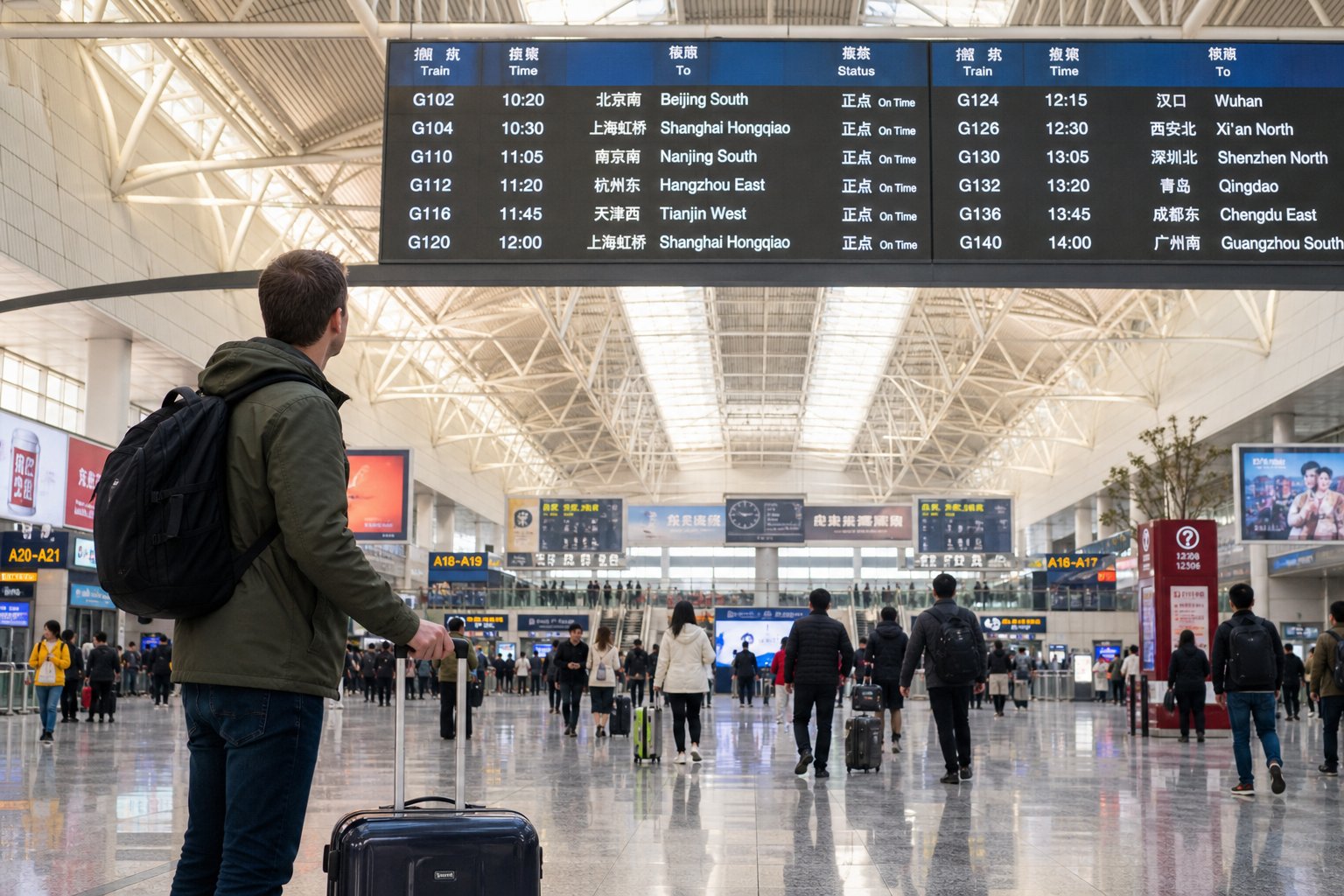
Your Playbook for China by Rail
China's high-speed network makes multi-city trips realistic without living in airports. This guide is the playbook: when rail wins, how to structure days, what happens at the station, and how to handle the messy middle of language, delays, and connections.
Deep dives live in companion pages on purpose:
- Tickets end to end: Everything About China Train Tickets
- Letters, seats, and onboard life: China Train Types, Seats and Services
- Corridors and hubs: China Train Maps
Read this page first if you have not ridden China rail before. Use the other three when you are ready to buy, pick a seat, or draw the route.
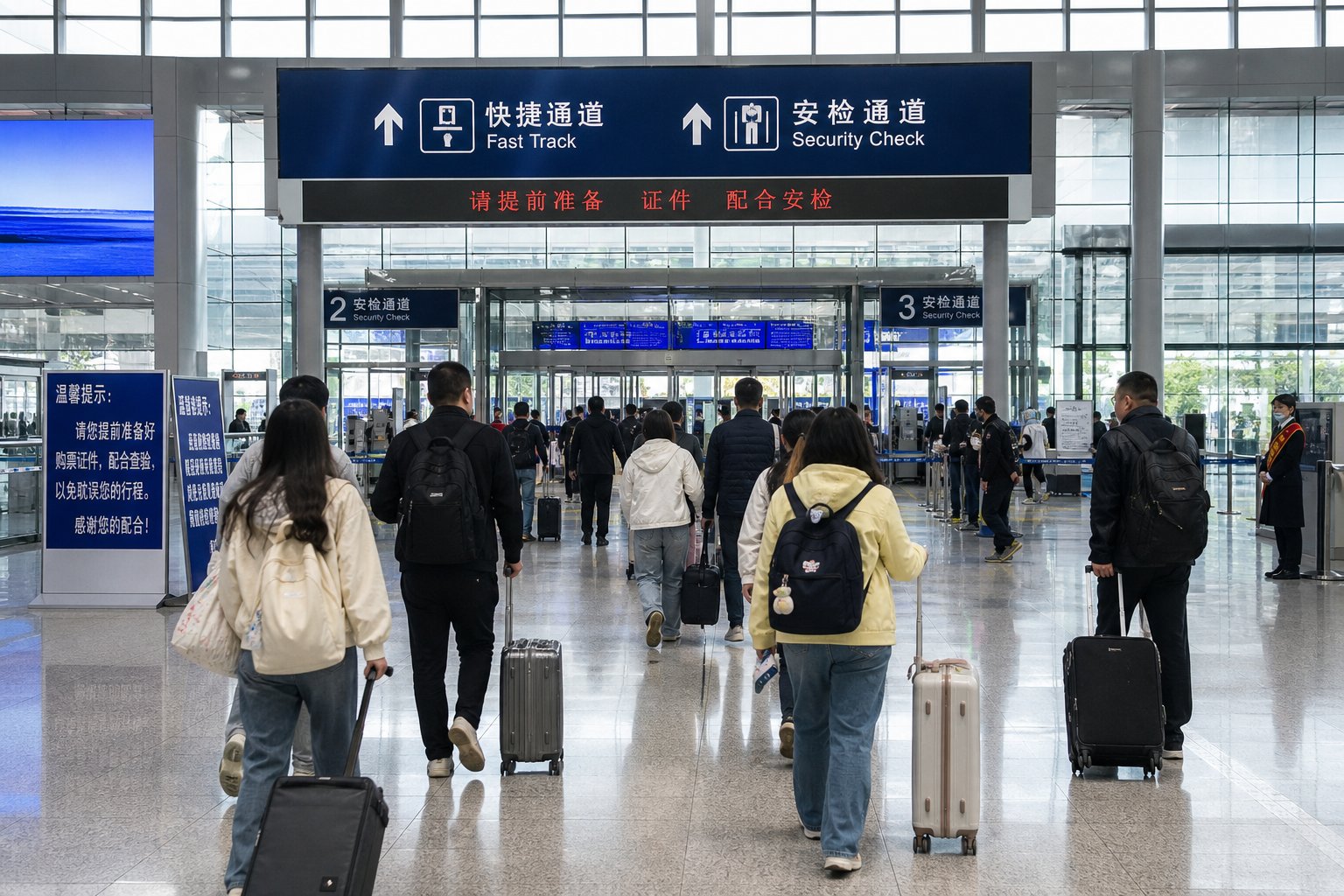
When to Take the Train Instead of Flying
Rail often wins on door-to-door time for roughly 300 to 1,200 km between well-connected cities. Stations sit closer to downtown than most airports, security is lighter than aviation, and trunk lines run at high frequency.
Fly when the map shows a weak or multi-transfer rail path, when overnight sleeper products are sold out and you cannot lose a daylight day, when you carry sports gear or fragile freight that is awkward on EMUs, or when weather risk on a single mountain highway matters less than a long detour by rail.
Many strong itineraries mix both: fly the thin long leg, then rail the dense east-coast or north-south trunks. See When to Fly in China.
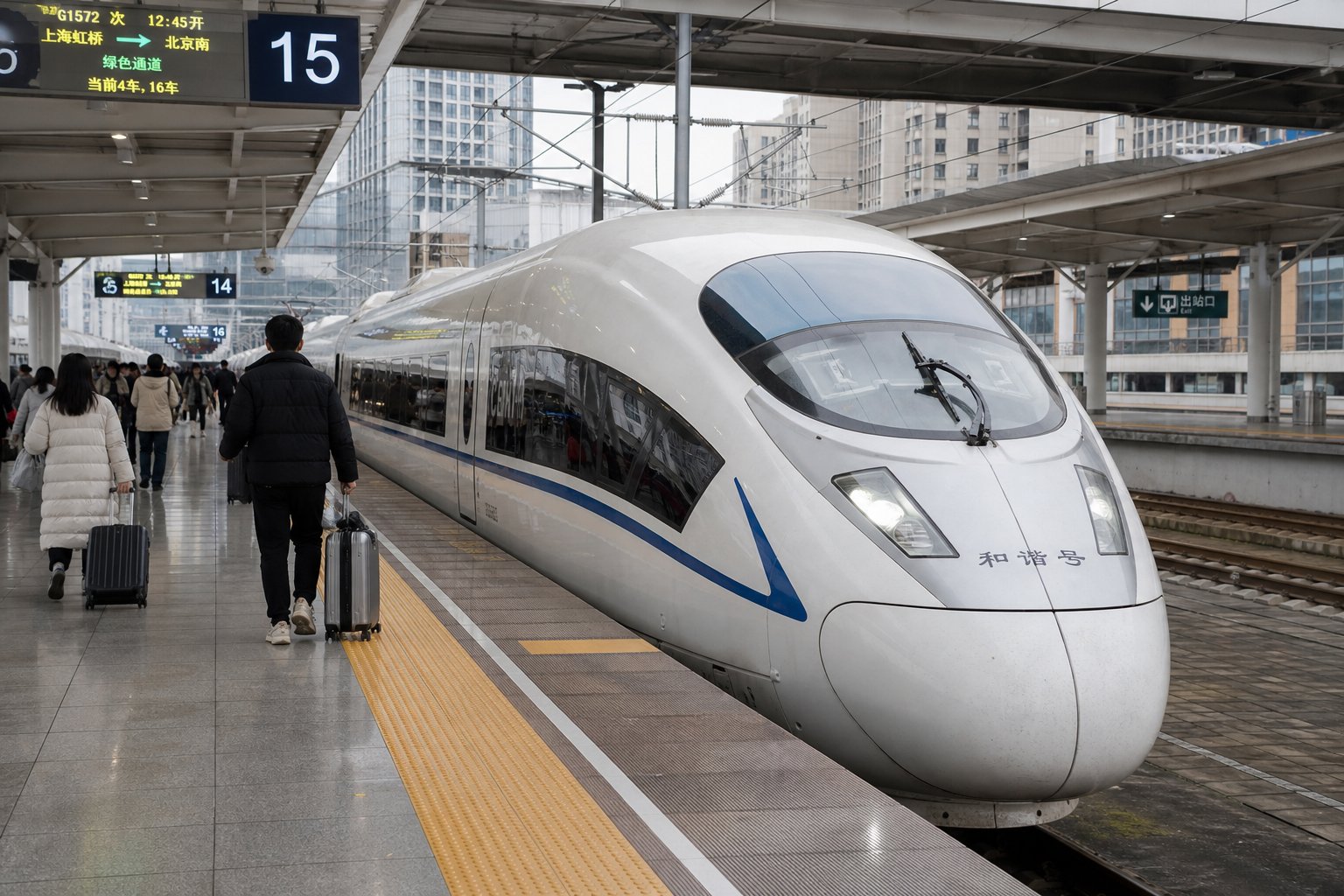
Build the Trip in Four Layers
Work in this order, then lock the scarce holiday leg first. A plain plan that books the hard train early beats a pretty plan that dies on day three.
- Cities and nights: decide where you sleep, not only where you take photos.
- Map legs: solid direct rails versus dashed hub transfers. Sketch them on China Train Maps.
- Train products: letter plus seat or berth. Choose them in China Train Types, Seats and Services.
- Ticket operations: buy order, ID match, and a change or refund plan. Follow Everything About China Train Tickets.
Work backward from the scarcest holiday leg. Spring Festival, National Day, and major school breaks are when popular G trains empty first.
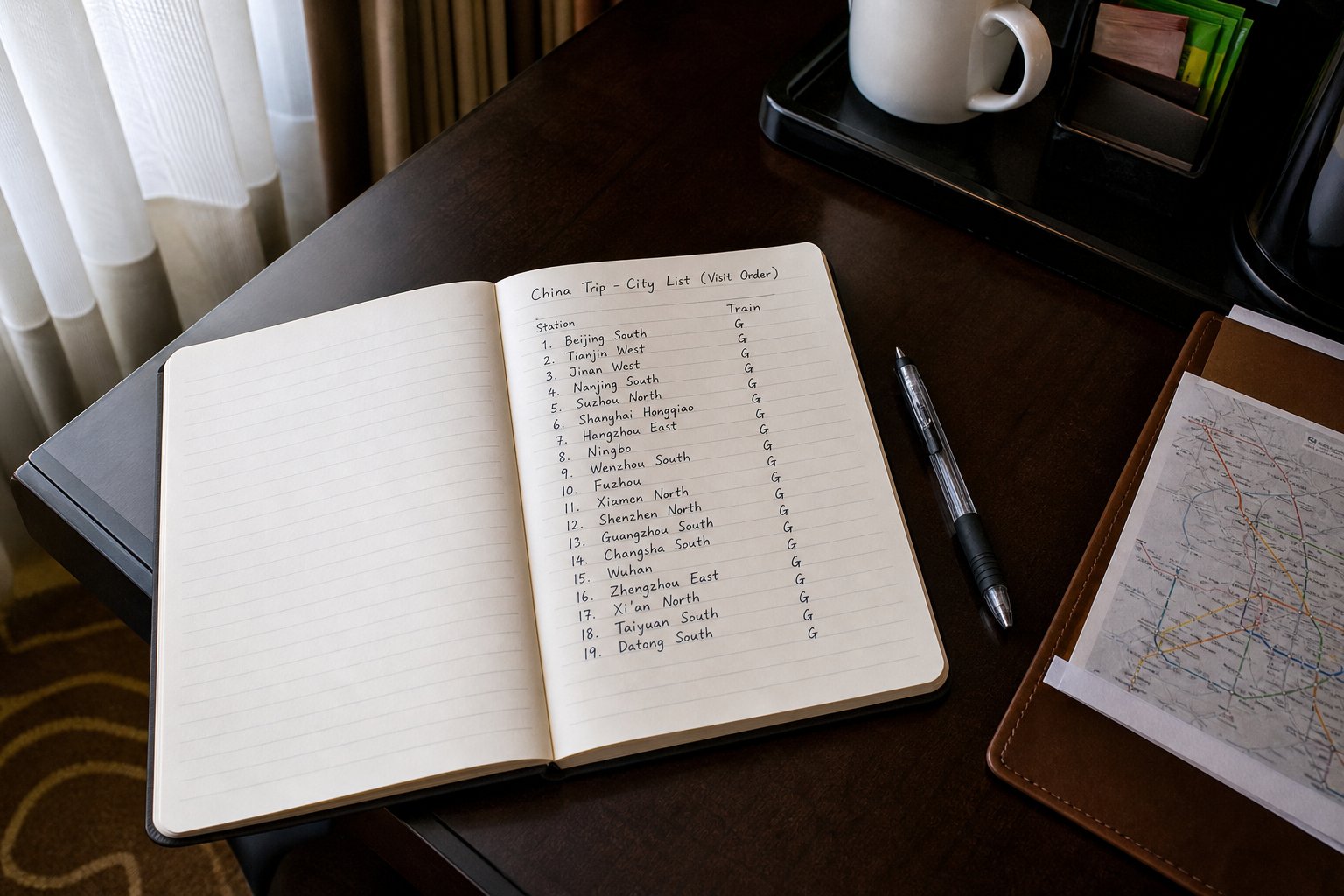
Station Day: From Curb to Seat
Arrive early. Big hubs need 30 to 60 minutes or more. On your first China rail day, add extra time.
Flow at the station:
- Enter the correct building. South versus West matters.
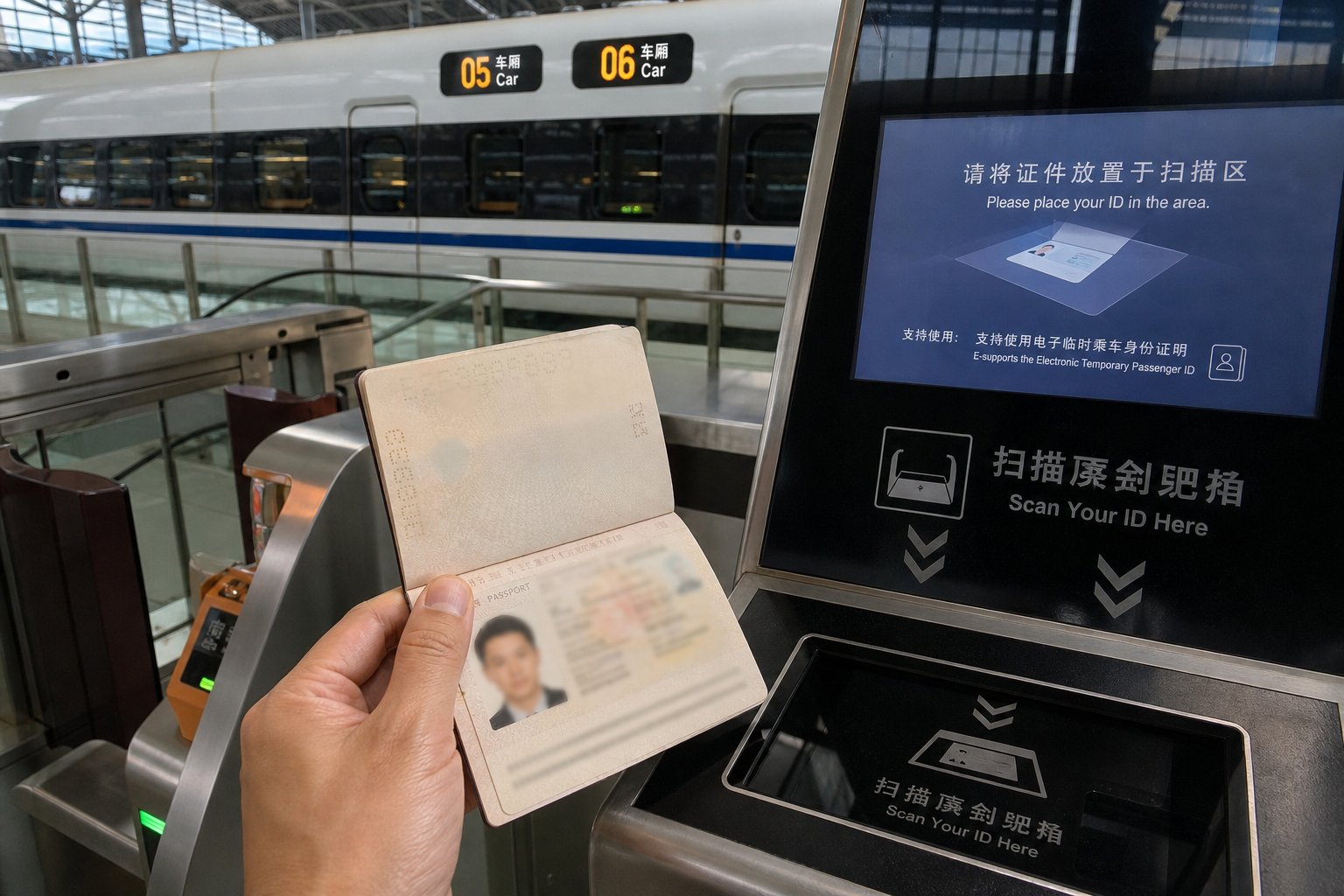
- Pass security with passport and bags on the belt.
- Read the departure board: train number, then gate. Gates can change. Trust the live board over an old screenshot.
- Wait near the gate. Boarding often opens about 15 to 20 minutes before departure, though this varies by station.
- Present the passport at the gate, then follow car-number signs on the platform to your seat.
- Store luggage, silence phone announcements if needed, and watch the LED for your stop.
Start packing a stop early when you alight. Large stations may have long walks to metro or taxi. Follow exit numbers for your onward ride.
If you miss the train, do not sprint onto the wrong one. Go to the ticket window or app and use the change or refund rules in Everything About China Train Tickets.
Connections, Delays, and Buffer Math
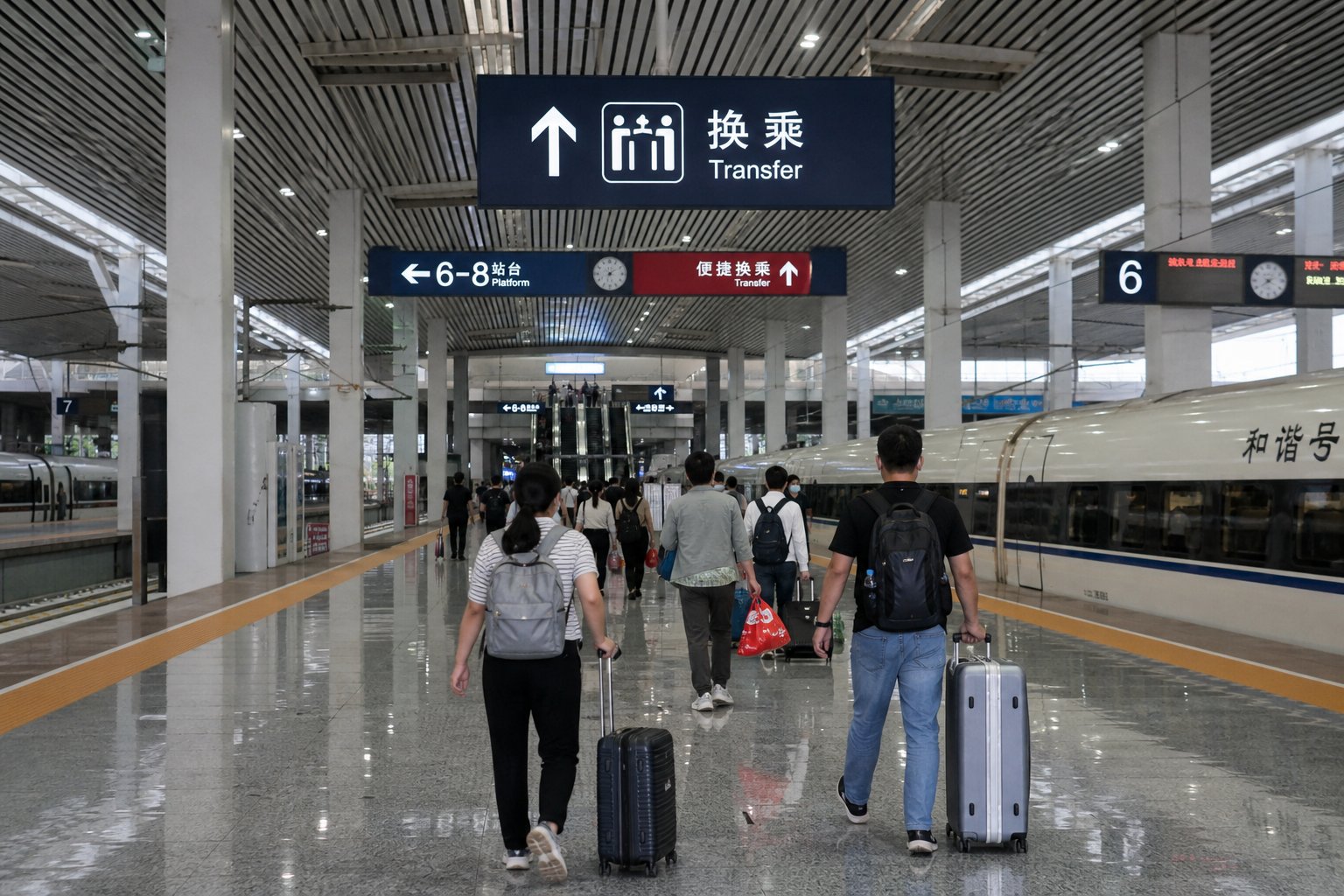
Same-station high-speed connections can work with 60 to 90 minutes when both trains sit on the same HSR campus. Cross-city station changes often need 2 to 3 hours once you add security, metro, and walking.
Delays happen less dramatically than air on many trunks, but they still happen. Never book a same-evening international flight against a single tight rail arrival without a backup night in between.
If a connection breaks, prioritize getting to the hub city safely, then rebuy or change. Arguing on the platform wastes the window that still has seats.
Phrases and Micro-Skills That Remove Friction
Show these on your phone if you need help:
- 我要去检票口…… — I need gate…
- 这是我的护照。 — Here is my passport.
- 请帮我改签 / 退票。 — Please help me change / refund.
- 请问地铁怎么走? — How do I get to the metro?
Micro-skills that save time:
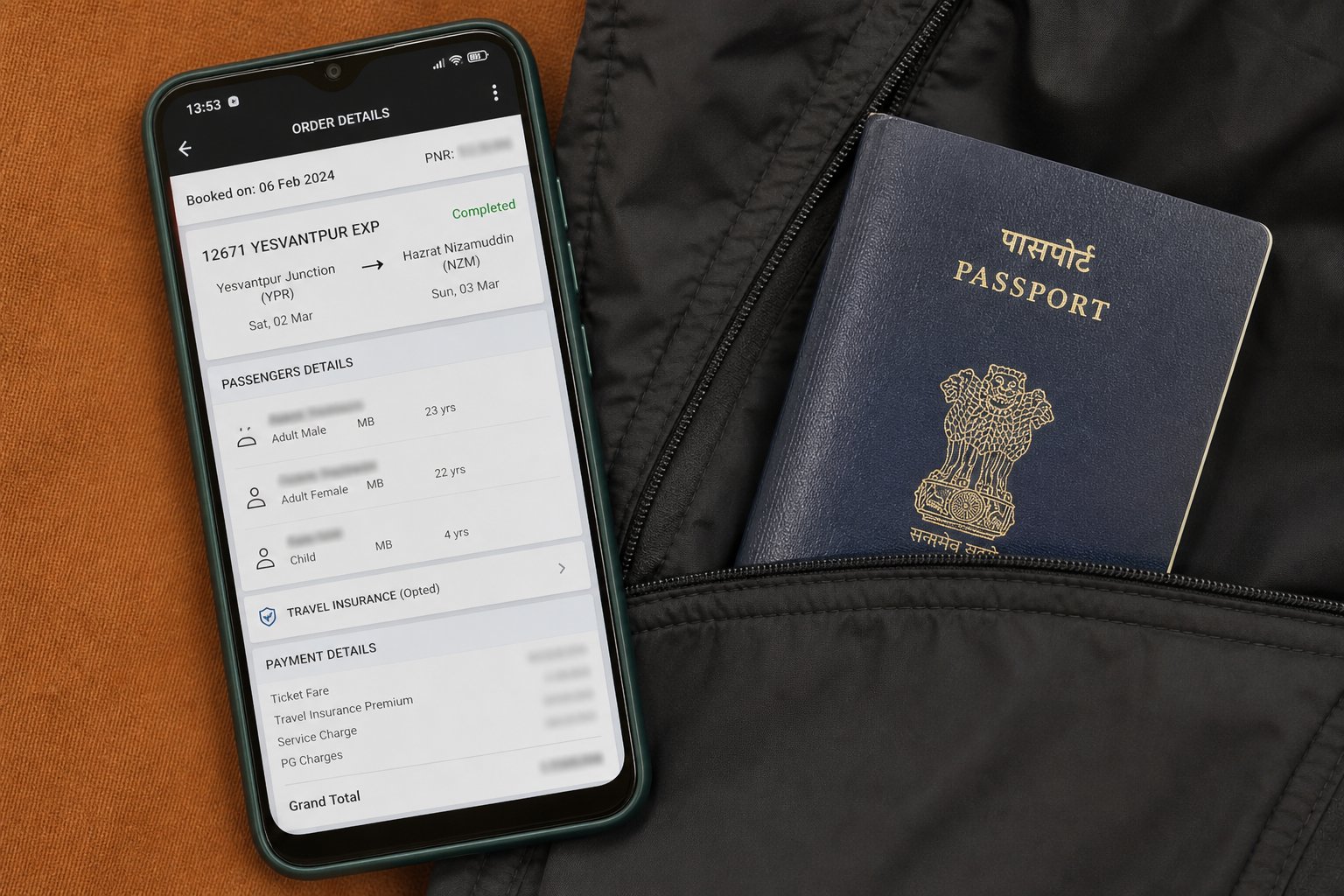
- Screenshot orders offline. Station Wi-Fi is inconsistent.
- Carry a short power cable and a light layer.
- Keep the passport in the same pocket every time you approach a gate.
- On second class, board early if you have a large suitcase. Rack space vanishes.
- Download an offline map pin for the station taxi stand or metro entrance.
12306 and Stations: What Matters in Practice
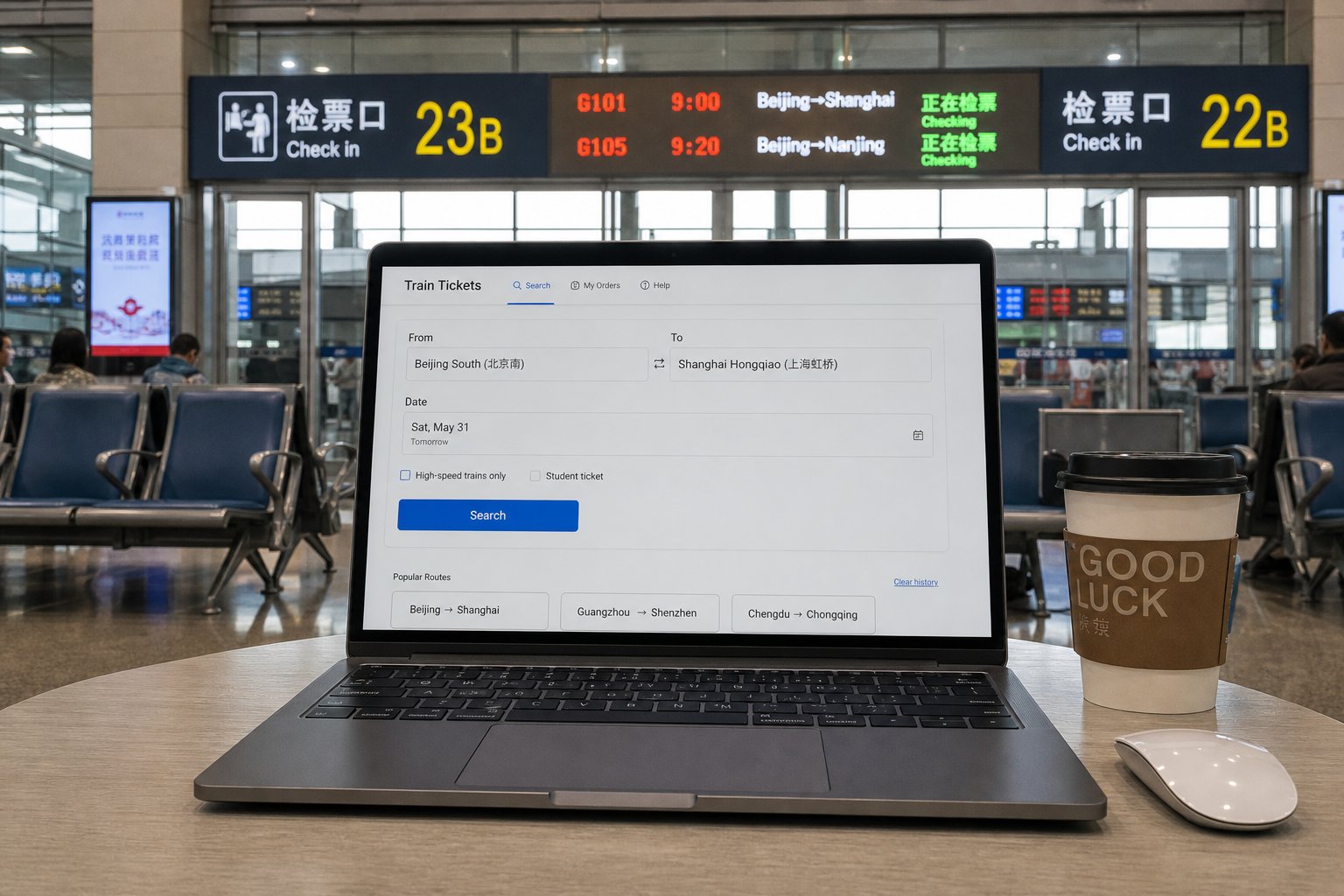
12306 is the source of truth for inventory, price, and official change or refund prompts. English pages help foreign-passport signup. Some edge cases still push you to a window. Finish identity checks before peak sale mornings.
Stations feel like mini airports: food courts, left luggage at some hubs, and business lounges tied to certain seats. Signage is bilingual in top-tier cities and patchier elsewhere. Follow train numbers and gate letters more than English place poetry.
Timetable revisions happen. If your itinerary sits near a known major change window, reopen 12306 the week before you travel and confirm each leg still exists at that hour.
Closing Checklist
Run this list once, then stop tinkering:
- Rail versus flight decided per leg
- Map legs drawn with real station names
- Train letter and seat chosen on purpose
- Tickets paid, names matched, screenshots saved
- Buffers for hubs and any flight on the same day
- Phrases and offline pins ready
You are set to travel China by train as a system, not as a stack of disconnected tips.