Seven arches
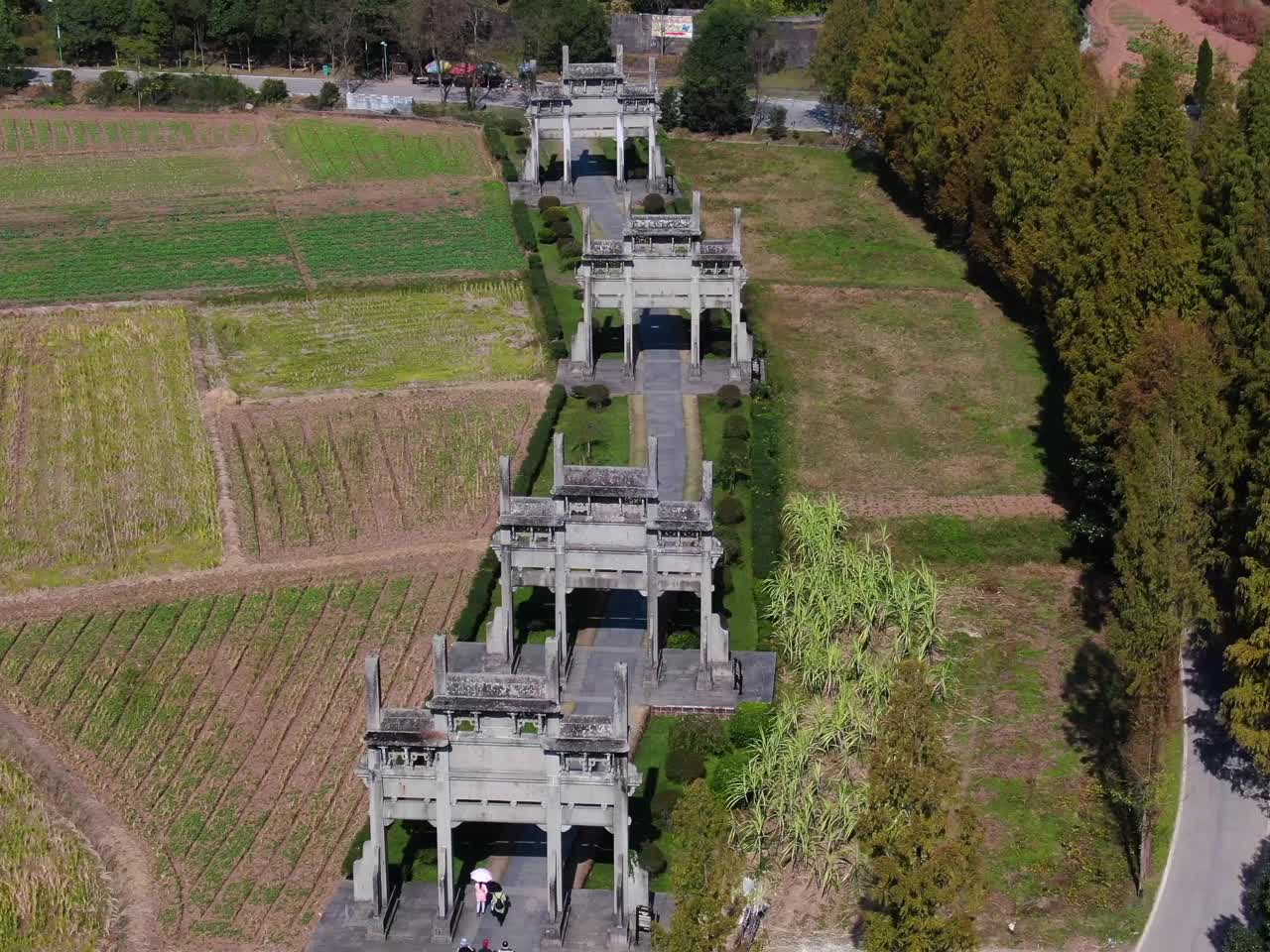
Your high-speed rail ticket says Huangshan North Station. The station is not at Tunxi Old Street. Leave the station toward She County. By car it is about half an hour. The tourist bus takes about an hour. The rice fields end, and a row of stone stands in the middle of the road. You do not see one archway. You see seven. This is Tangyue, and the arches belong to the Bao family.
In Huizhou, an archway is the sentence a family was allowed to say in public. For a long time that sentence could only be loyalty, duty to parents, a widow who did not remarry, or the rank an official had reached. Salt merchants and tea merchants later learned to say it too. The sentence stayed the same. The people who paid for it changed.
Old Huizhou was one prefecture and six counties: She County, Xiuning, Qimen, Yi County, Jixi, and Wuyuan. Wuyuan later passed to Jiangxi. The land is mostly mountain, with little farmland. The philosopher Zhu Xi traced his family to this region. Genealogies, ancestral halls, and the exams for official posts mattered here. A son was expected to sit the exams. Most families could not eat on an exam result. The clan sent its men out to trade and kept the graves, the halls, and the women in the village. Honor was still counted by official rules. The money that fed the family was merchant money.
In the Ming and Qing these men dealt in salt, tea, timber, pawnbroking, paper, and ink. Their trade ran along the Yangtze to Yangzhou, Hankou, and the towns downstream. People said, “No town without a Huizhou man.” In a market town you could usually find a shop kept by someone from these counties. Many of Yangzhou’s garden owners came from the same six counties. A man might be away for ten years. The money still had to come home.
It did not come home as a showy street. The lanes stayed white-walled and black-tiled. Display was kept to two places: the woodcarving inside the house, and the archway at the village gate. An archway needed the emperor’s permission. A merchant could not grant that permission. He paid for dikes and grain, sent his sons to the exams, and paid to have widows and filial sons honored by the court. The old honors were not removed. Salt and tea paid to keep them standing.
Tangyue: one row, one family
The row in front of you is that history. All seven arches belong to the Bao family. Three are Ming. Four are Qing. Loyalty, duty to parents, widowhood, and righteousness stand in a line, as if the clan had stored its honors in stone. Two arches were raised for women who never remarried. That was the moral code of the time. The stone has outlasted the people. You do not have to take it as a lesson for now.
The arch the Bao family actually bought with salt is the one from 1820, inscribed 乐善好施, “pleasure in doing good.” Bao Shufang worked in the Lianghuai salt administration, the salt trade of the lower Yangtze. The court did not give a merchant an archway for selling salt. It agreed when he spent the salt profit on dikes, grain, and what the court called righteousness. Beside the row is the men’s ancestral hall, Dunben Hall, and the women’s hall, Qingyi Hall. A hall of their own for women is rare in Huizhou. You do not need the story of every arch. It is enough to see them fill the road. The sentences are still official. The three Ming arches came before the salt fortune. Salt paid for the arch from 1820. She County once had many more archways. Most are gone. The ones left will still stop your car.
The arches stand on the road. You can look from where you stand. A garden beside them, if you want to go in, is a separate ticket.
In town: one archway, one official
Farther on, in the seat of She County, is the Xu Guo Archway. Xu Guo was from She County. In the Wanli reign of the Ming he entered the Grand Secretariat, the top of the civil service. The emperor allowed him an archway. One man’s office. One piece of stone. This is an official at the top. The Tangyue row is what came later. See the row first, then this single arch. A merchant clan lined its honors up. A high official needed only one.
Xidi: the title at the gate, the houses behind
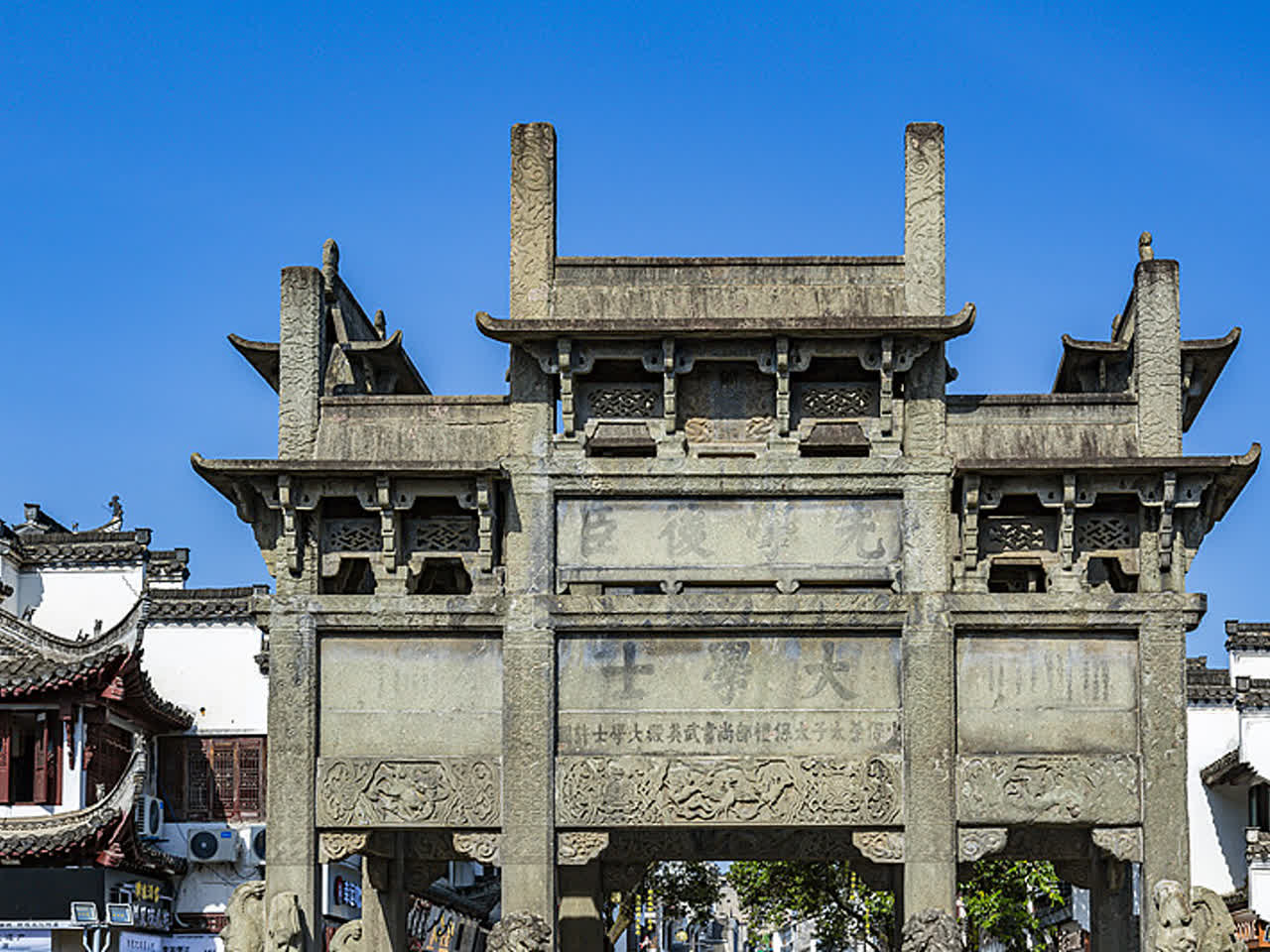
Xidi is in Yi County, about twenty to thirty minutes by car from Hongcun. It is not on the same day’s road as She County. The village dates from the Northern Song. The people who live here are the Hu clan. The archway at the entrance is Hu Wenguang’s, from the Ming. He held office away from home. He did not keep a shop in the village. The village put his title at the gate. The houses stand behind it. You see the official first. Then you see the home.
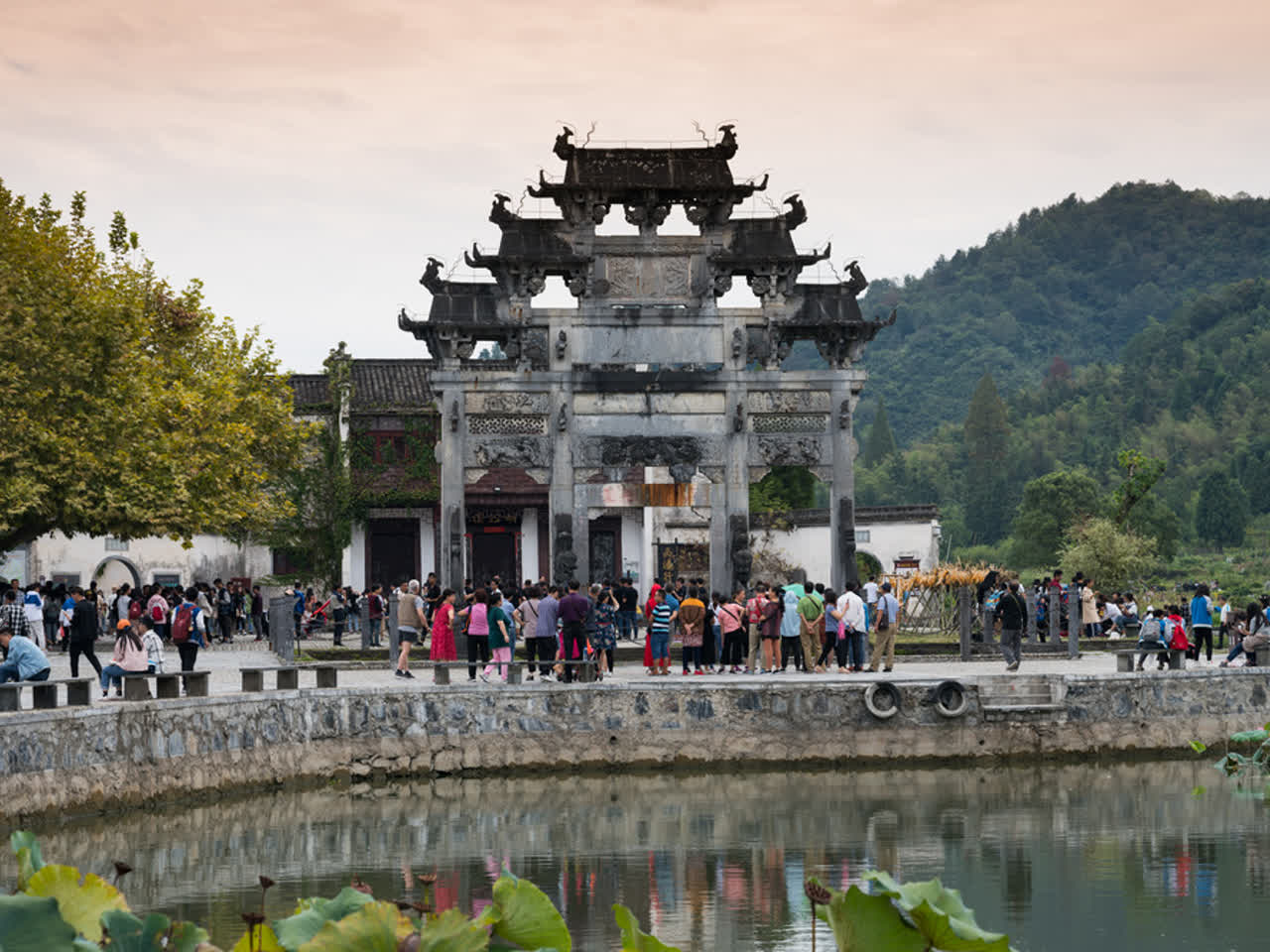
Two streams run through the village. The lanes follow them in bluestone. The plan is said to resemble a boat. The ancestral halls took more work than the houses. Jing’ai Hall is where the clan met, mourned, and married. Its roof frame is higher than an ordinary family’s hall. Hongcun is the water. Xidi is the lanes. Walk Xidi in the afternoon, when the light comes down into the alleys. It is quieter than Hongcun.
Hongcun: water at the door, trade on the door
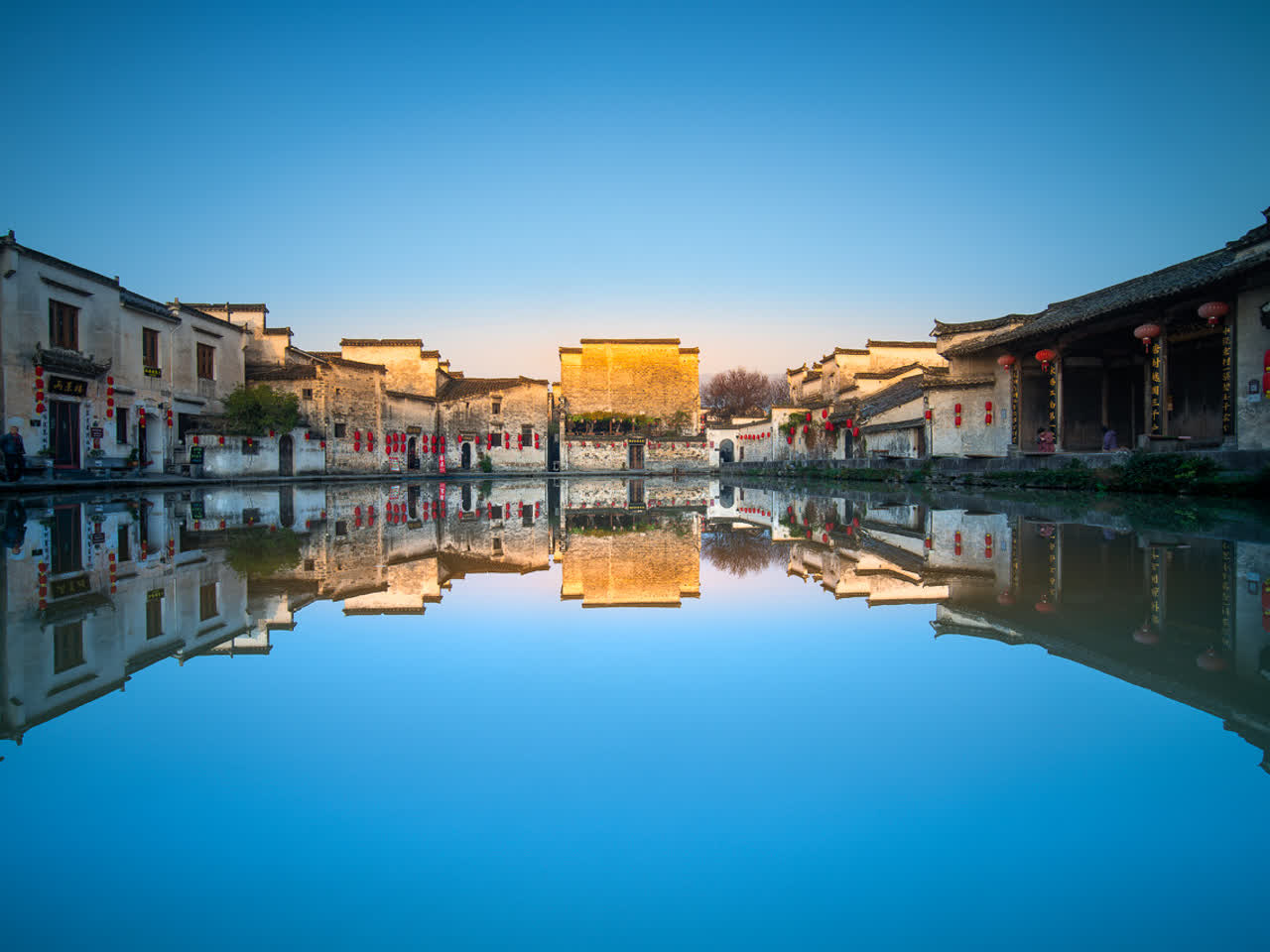
Hongcun is a Wang-clan village, settled in the Southern Song. The water you walk beside was added over later generations. A canal runs past the front doors, gathers in the crescent pool at the center, and flows on to South Lake. Locals describe the village as an ox: hills for the head, old trees for the horns, the canal for the intestines, the crescent pool for the stomach, South Lake for the belly. Follow the water. The stone steps are slippery, and the water is moving. Tour groups arrive after 10:00. For the pool alone, be there before 8:00.
The house to enter is Chengzhi Hall, on the upper canal, built in 1855 for the salt merchant Wang Dinggui. Locals call it a folk Forbidden City. The building is plainer to describe than the nickname: a timber house, nine skywells, about sixty rooms, 136 wooden columns, and brick, stone, and wood carvings across the beams and the door hoods. Above the central door is the carving of a hundred boys at the Lantern Festival. The central door copies an official residence. It opens for celebrations and for important guests. Everyone else uses the side doors. Above the side door is the character 商, trade. You enter his house under that word. The guides will point to it. Wang Dinggui made his money and bought an official title. The title matters less than the character. The central door still borrows the look of office. The word over the side door is the merchant’s.
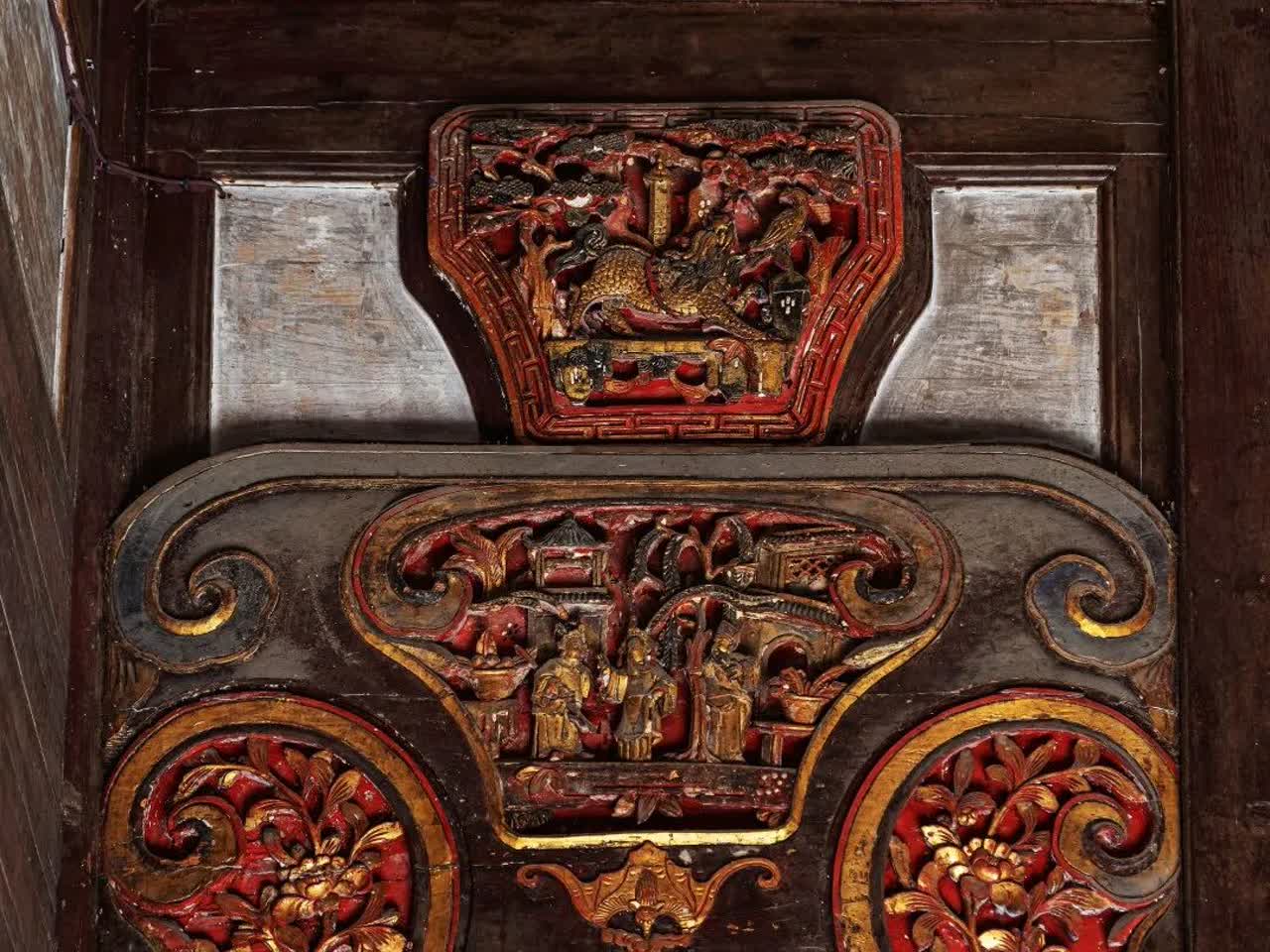
Inside are the account room, the room for the sedan chair, and the small rooms where he played cards and smoked. The salt fortune was not put in a separate hall. It was built into the family house. Chengzhi Hall is included in the village ticket. Someone at the gate may offer to take you in without paying. Do not go with them. The village checks tickets.
Inside the white walls
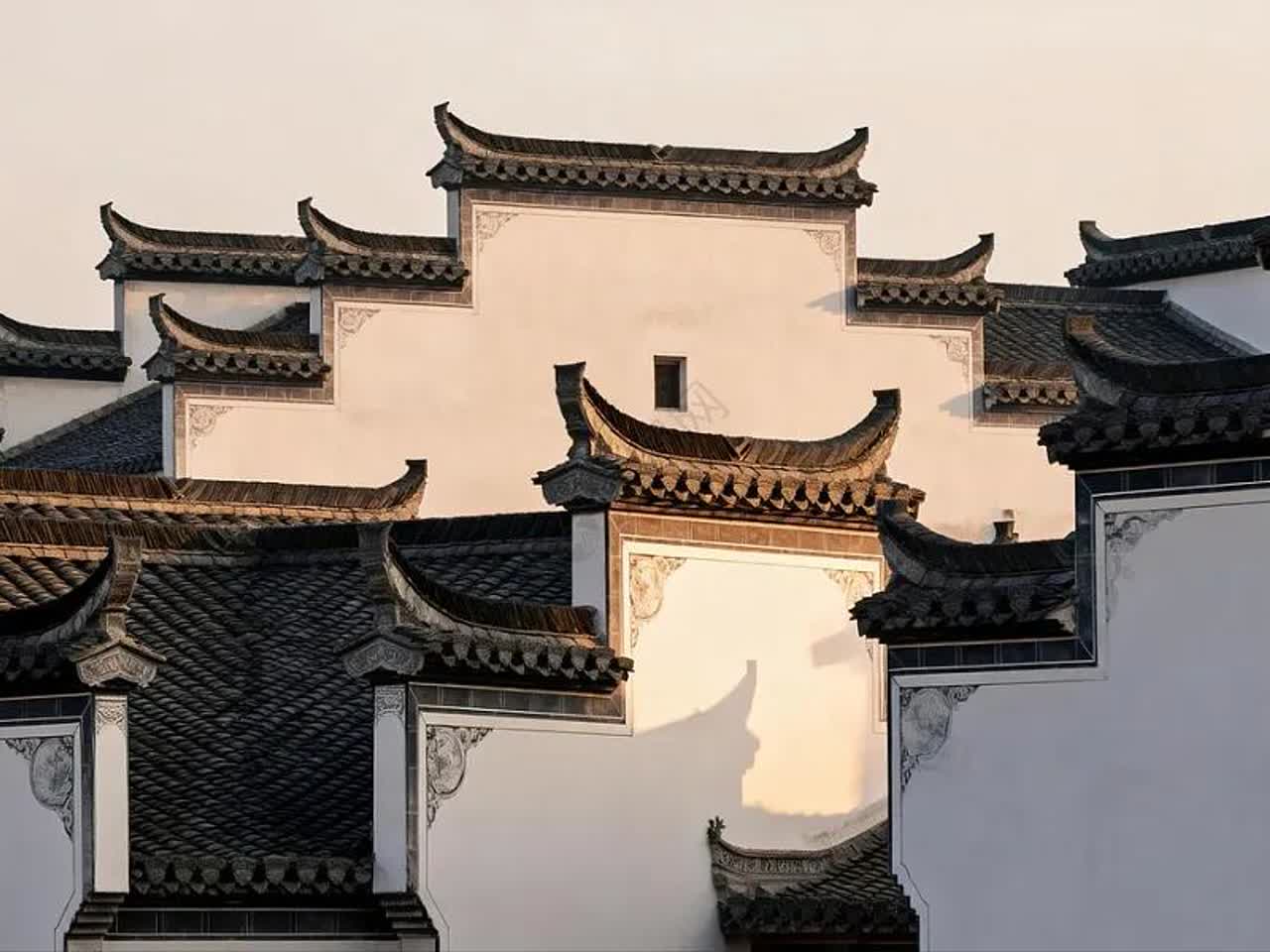
Ordinary houses do the same thing more quietly. The stepped gables, called horse-head walls, were built to stop fire from spreading. They rise like ranks, each step higher than the last. The skywell brings rain into the family’s own court. The phrase is “four waters return to the hall”: water stays in, and so does wealth. The street sees a white wall. Inside, the beams are crowded with fishermen, woodcutters, farmers, and scholars. A merchant was not supposed to shine in the lane. He kept the shine in the wood.
On the long table in the hall you usually find three things: a vase to the east, a mirror to the west, and a clock in the middle. In Mandarin, vase, ping, sounds like peace; mirror, jing, sounds like quiet; clock, zhong, sounds like “to the end.” Together they say what the family wanted: peace and quiet, all the way through. The man might be in a shop in Yangzhou or Hankou. The three objects faced the gate at home. The shop was not in the village. The village was the shop’s face.
Hongcun and Xidi are 104 yuan each at the gate. Online prices are sometimes a little lower. Buy the two tickets separately. The name on the ticket must match the passport. The Hongcun ticket is good for three days and covers the main houses.
Tunxi Old Street: where the white walls open
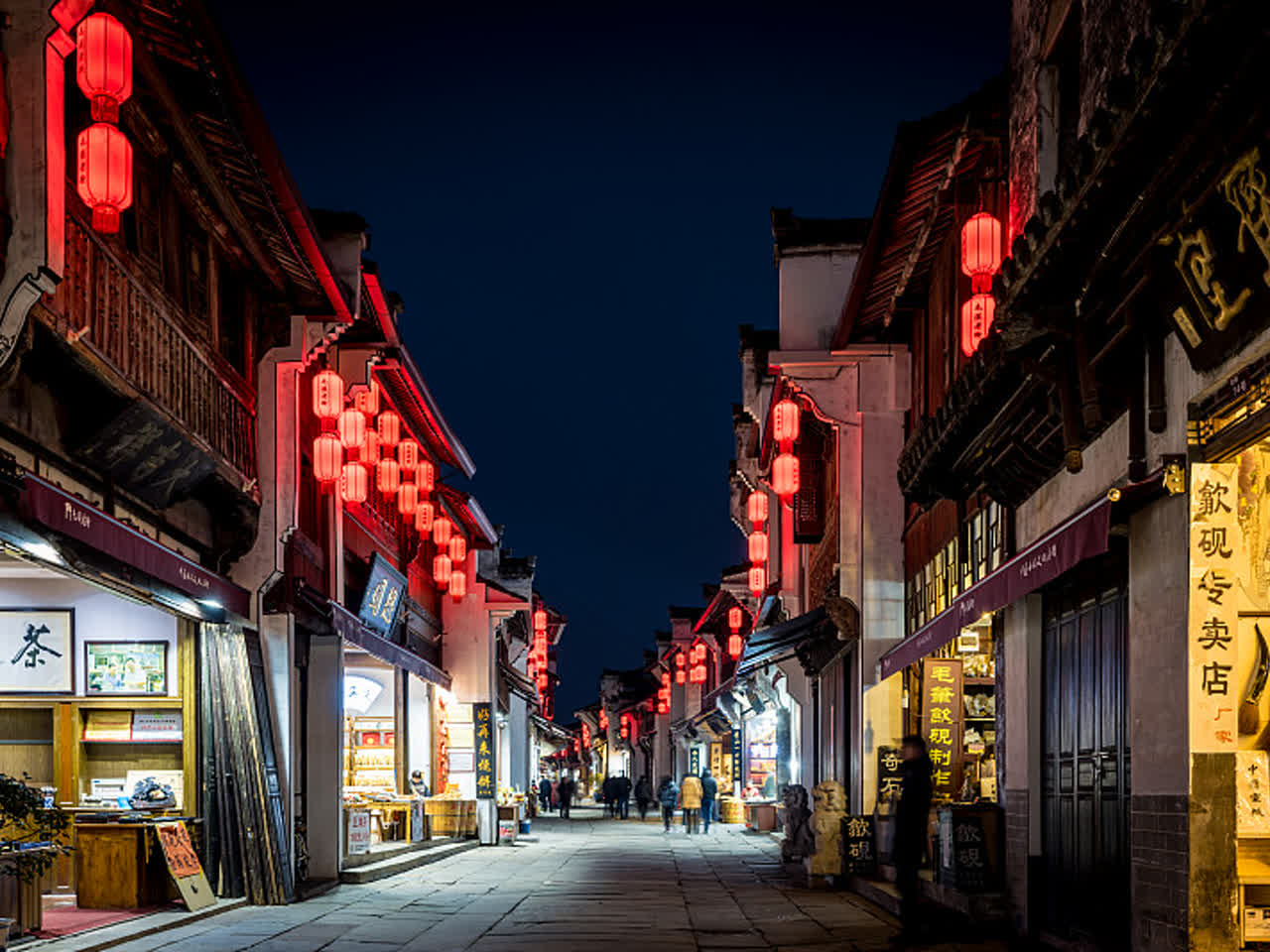
Tunxi Old Street is the hand. The village was the face. From Huangshan North Station, Tunxi is about twenty-five minutes, on a different road from Tangyue. The Heng River, the Shuai River, and the Xin’an River meet here. The street runs about 1.3 kilometers. The busiest stretch is a little over 800 meters, with more than 300 Huizhou buildings. One straight street splits into cross streets and narrow lanes. Locals call the plan a fish bone. Tea, ink, inkstones, and timber changed hands here. Shop in front, workshop or storeroom behind, rooms upstairs. Horse-head walls, small gray tiles, white walls, and eaves that stick out far enough to walk under in the rain. It was a market in the Song dynasty, and a major tea market by the mid-1500s.
Locals call it a living Qingming scroll. Look instead at whether tea, ink, and inkstones still share the street. Huizhou ink and She inkstones were the merchants’ writing tools, and their evidence that they counted as scholars. Buy an inkstone you can wet, so you can see the grain. Or buy a stick of ink marked with a year and a workshop. A sealed gift box at the first door is not that. Walk on. The street is free and open day and night. After dark the white walls show more clearly, and the shops are busier.
The mountain to the north
Huangshan stands north of these villages. It has been a UNESCO World Heritage site, cultural and natural, since 1990. Of the three main peaks, Lotus Peak is 1,864.8 meters, Bright Summit is 1,840.4 meters, and Tiandu Peak is 1,810 meters. This mountain is what left so little farmland. Pines come out of cracks in the rock. The paths are narrow, and you walk slowly. The mountain is why they had to leave. It is also what they later paid to keep: pine, stone, and cloud, first on the ridge, later in a painting inside the house. The archways were for the court. The landscape was for themselves.
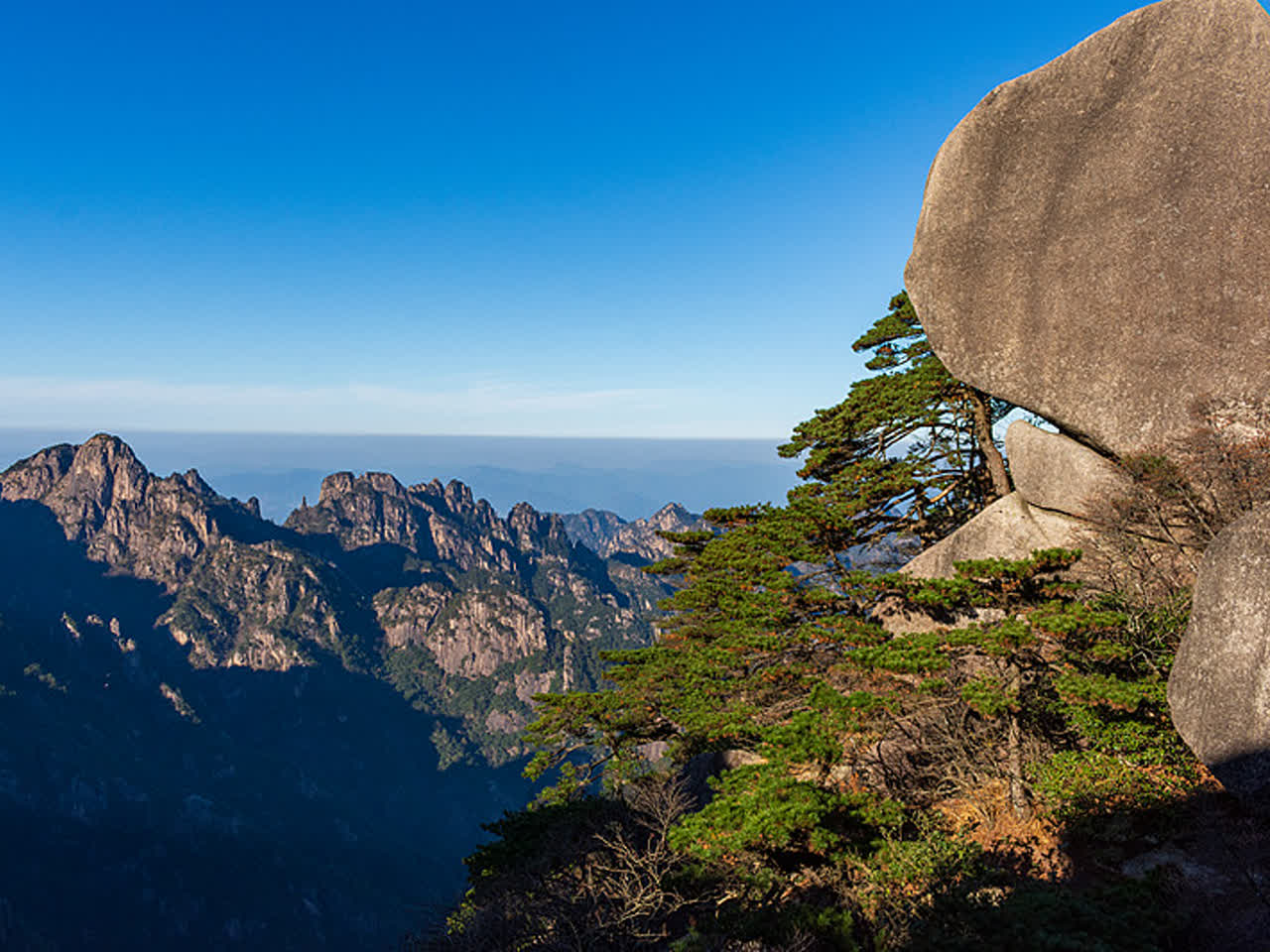
Lotus Peak and Tiandu Peak close in turns for restoration, about five years at a time. As of October 2026, Tiandu is open and Lotus is closed. Check the official notice again before you go. Tiandu needs a separate booking on top of the entrance ticket. The path is steep. If your knees are bad, or you have a heart condition, or you dislike heights, do not go up.
A cable car only skips part of the climb. There are four ways in: Yungu, Yuping, Taiping, and the East Gate, open since 11 June 2026. The East Gate has no footpath. The Donghai cable car is the only way in and out there. Enter by the gate you booked. For sunrise, sleep on the mountain. Do not try to go up and down in one day. The sea of clouds needs moisture. The usual chance is a still morning after rain. If you do not see it, the mountain is still why they left. Do not drop the villages to chase cloud.
The Greeting Pine is at Yuping, and the line there is long. For a quieter walk, take the West Sea Grand Canyon when it is open. The path goes down to the valley floor and back up. In early October 2026 it was closed. Check the notice before you count on it. Save some strength for the climb back.
Entry is by real name, by time, and by gate. Book on the WeChat mini program 黄山旅游官方平台, Huangshan Tourism Official Platform. A foreign passport is accepted. The name must match the passport. From 21 January through 19 December 2026 the ticket is 190 yuan, valid for three days from the first entry. Cable cars are separate: Yungu and Taiping 80 yuan one way, Yuping 90 yuan. The West Sea Grand Canyon cable car is 100 yuan one way. The Donghai cable car has its own fare on the official platform. Buy the ticket before you go. The gate is not the place to sort this out. On public holidays, book at least three days ahead. On ordinary days, at least one day. Book a hotel on the mountain only after the ticket is confirmed. Prices after December 2026 follow the park’s next notice.
Three days
Give the mountain one day. If you want Tiandu Peak or the sunrise, do not add the villages.
Give the archways one day. If you still have daylight when you arrive, go from Huangshan North Station to Tangyue, then into She County for the Xu Guo Archway. An archway is for standing and looking. It does not belong between two rushed stops. Tunxi Old Street is the other way. Save it for the evening.
Give the two villages one day. Start with whichever you reach first in the morning. In Hongcun, follow the water to Chengzhi Hall. In Xidi, follow the lanes to the official’s archway. Do not split the two villages across two days.
Pay with WeChat Pay or Alipay. Link a foreign card before you fly. Carry a little cash for the stalls. Over the 1–5 May holiday and the 1–7 October holiday, mountain bookings and village lanes fill up. Travel outside those weeks if you can.
See the official’s name first. Then walk into the house a merchant built. That order is Huizhou.