
Entry Regulations for Tourists
You cleared visa planning at home. China entry regulations begin the moment your aircraft door opens. For most leisure travelers the process is orderly—but officers expect your documents, story, and declared purpose to match. This guide walks through immigration, the digital Arrival Card, accommodation registration, frontier health quarantine, and the decision-path reminder so you do not mix visa-free, transit, and L-visa rules at the counter.
1. Two checkpoints: immigration then customs
After you deplane, you pass National Immigration Administration (NIA) border inspection first, then General Administration of Customs (GACC) for baggage.
- Immigration verifies identity, entry permission (visa, visa-free eligibility, or transit), and purpose of stay.
- Customs supervises goods, cash, restricted items, and health-quarantine concerns (GACC passenger guide).
Do not confuse them. A valid visa stamp does not excuse undeclared cash or prohibited goods at Customs—and a clean Customs channel does not fix the wrong entry policy claimed at immigration.
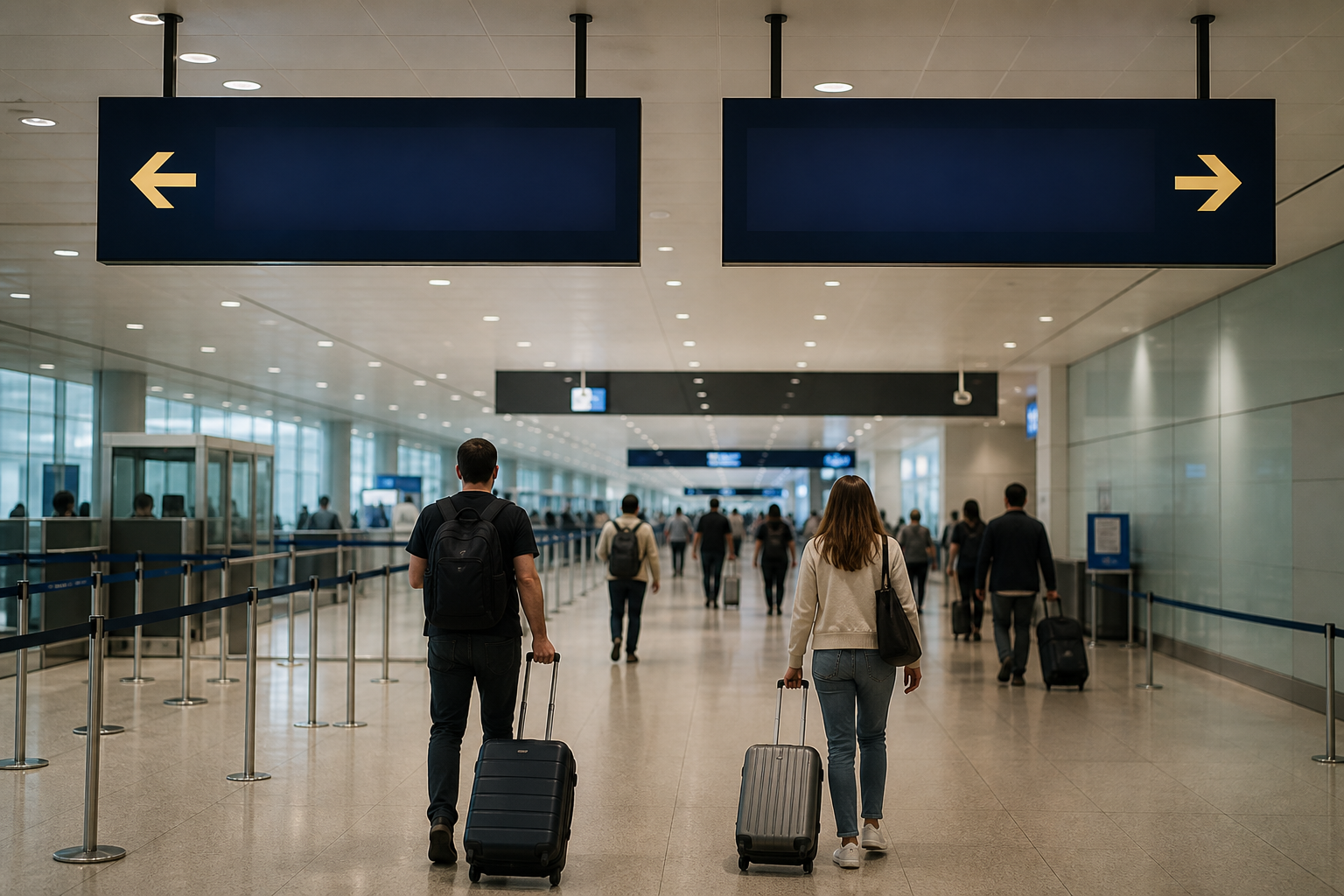
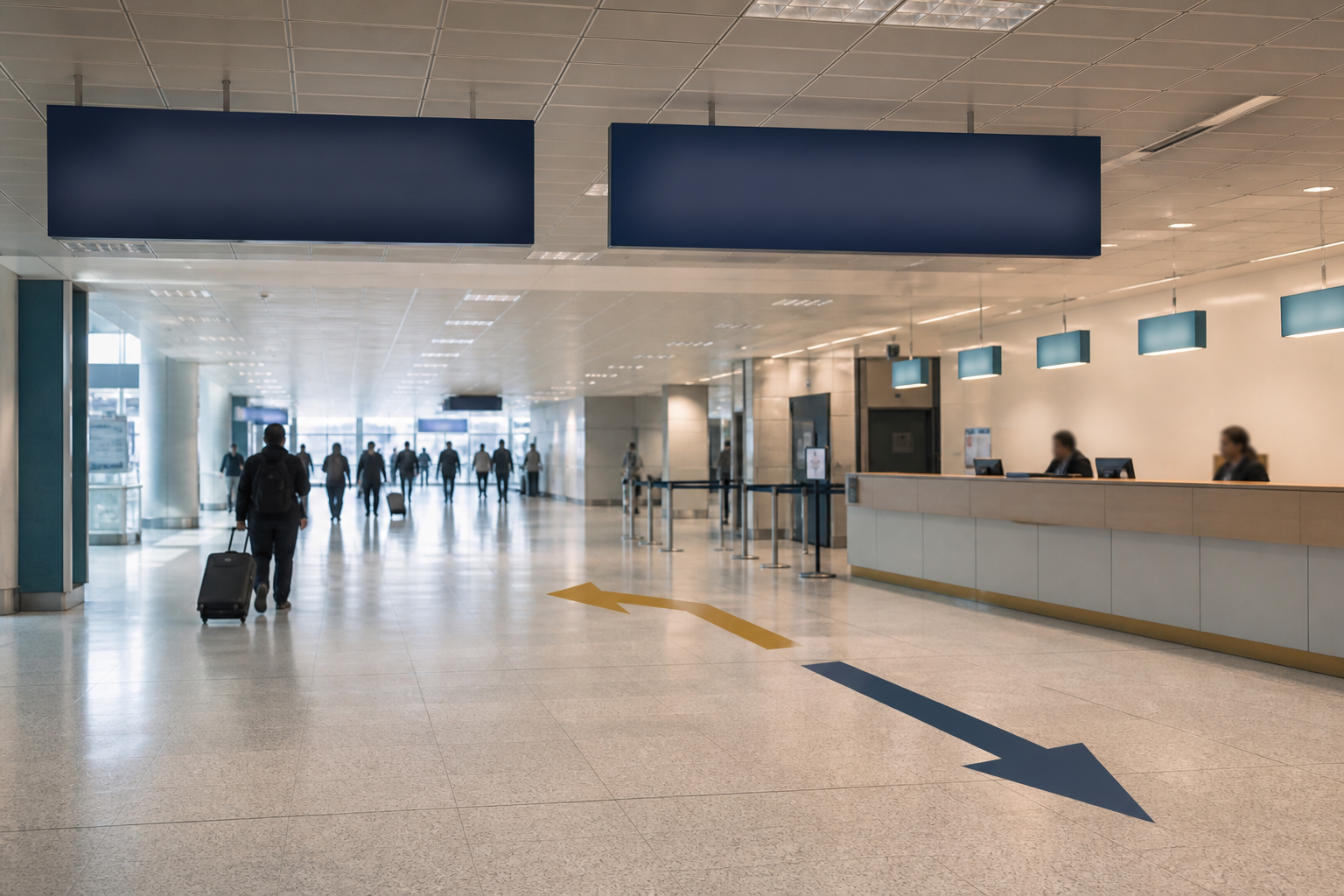
[Photo] Airport signage showing Immigration and Customs arrows — follow signs in order; phones may have weak signal until you clear Wi-Fi zones.
2. What immigration officers check
At the primary inspection desk, have these ready:
- Valid passport (ordinary passport for most visa-free routes)
- Entry permission evidence: visa vignette, or eligibility under 30-day unilateral visa-free / 240-hour transit / other published scheme
- Arrival Card QR code (digital) or paper form
- Onward or return ticket when using transit or when officers ask for proof of exit
- Hotel address in Chinese (and English) for the first night
- Invitation or tour confirmation if visiting friends, business contacts, or a booked operator
Officers may ask short questions: purpose of visit, length of stay, cities you will visit, who pays for the trip. Answers should match your Arrival Card, visa category, and actual bookings.
Purpose must match permission:
- Tourism and short family visits fit visa-free and L visas.
- Work, long-term study, and news reporting require the correct visa in advance—not a tourist waiver.
Tip: If you hold a 240-hour transit waiver, your onward ticket must show a third country/region—not a simple return home. SeeChina Visa-Free Entry Guide
3. China Arrival Card — mandatory for most travelers
Since 20 November 2025, NIA offers free online filing for foreign arrivals (official PC portal). Most inbound travelers—including 30-day visa-free and 240-hour transit visitors—should complete it.
How to file:
- Open only Arrival Card channels: PC portal, NIA 12367 app, or official WeChat/Alipay mini-programs.
- File within about 72 hours of arrival (follow the live portal window).
- Enter passport data, transport number, first address in China, contact phone, email, and purpose.
- Submit and screenshot the QR code for offline display at immigration.
Warnings:
- Third-party “Arrival Card” sites charge fees and may steal data (NIA fraud alert).
- Filing is free. Paper cards and airport kiosks remain if you cannot file online.
Phone screen showing Arrival Card QR code next to passport — screenshot before you board; airport Wi-Fi may be slow at peak hours.
4. Accommodation registration within 24 hours
Chinese law requires foreign visitors to register their accommodation with public security within 24 hours of arrival (NIA guidance).
If you stay at a hotel:
- Licensed hotels register you at check-in using your passport. Confirm the front desk completes the registration—you usually do not need a separate police visit.
- Keep your registration slip or hotel confirmation showing your legal stay address.
If you stay with friends or in a rental:
- The host or landlord must register you at the local Exit-Entry Administration or designated police station within 24 hours.
- Bring passport, host ID, lease or property proof, and your Arrival Card details.
Failure to register can complicate extensions, re-entry, or fines. East Marvel guests on packaged tours typically stay at registered hotels where this is handled automatically—tell us if you add private homestay nights.
5. Health quarantine at the frontier
General tourism no longer requires COVID-era health declaration forms or routine PCR tests for entry. Frontier health quarantine still applies when you show signs of illness.
- Fever, cough, rash, or other infectious symptoms: declare honestly; officers may refer you for screening.
- Carry medicines in original packaging with prescription labels or doctor notes when possible—especially controlled or injectable drugs.
- Do not carry prohibited items: narcotics, biological samples without permits, certain fresh produce (see Customs articles).
If you feel unwell on the flight, notify cabin crew before landing so health staff can assist smoothly.
6. Entry decision path reminder — do not mix policies
Do not mix 30-day visa-free, 240-hour transit, Hainan regional, and L visa rules at the counter. Full decision tree: China Visa-Free Entry Guide.
7. Documents to carry on arrival day
In your carry-on (not checked luggage):
- Passport + visa page if any
- Arrival Card QR screenshot
- First-night hotel confirmation (Chinese address highlighted)
- Return/onward flight itinerary
- Travel insurance certificate
- Invitation letter or East Marvel tour voucher if applicable
- Credit cards / proof of funds if asked
- Emergency contact numbers (including insurer 24h line)
Photograph every stamp and registration receipt into your offline phone folder.
8. First-timer landing timeline (air arrival)
Typical sequence at a major hub like PEK, PVG, or CAN:
| Time | Step |
|---|---|
| T+0 min | Deplane → follow Arrivals signs |
| T+10–25 min | Queue for immigration; scan Arrival Card QR; passport check |
| T+25–40 min | Customs — choose Green (nothing to declare) or Red; baggage scan |
| T+40–70 min | Collect checked bags; optional currency exchange / SIM |
| T+70–90 min | Meet guide or transfer; ride to hotel |
| Check-in | Hotel passport scan → accommodation registration completed |
Build 60–90 minutes after scheduled arrival before assuming you can make a tight same-day train. Peak waves and extra questioning add time.
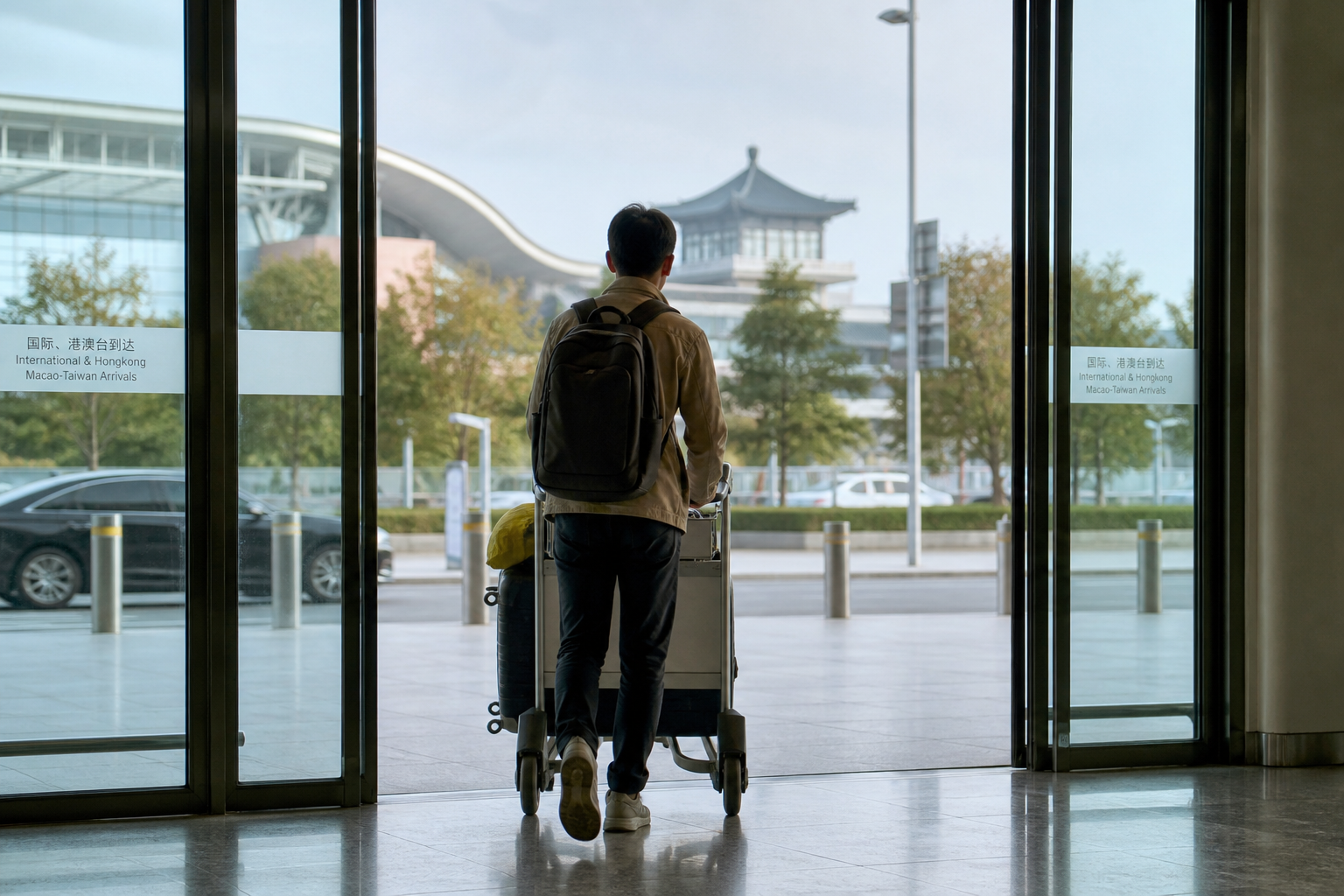
[Photo] Traveler exiting international arrivals hall with luggage cart — buffer time beats a missed train connection on day one.
9. Special cases: Tibet, cruise, and land borders
Tibet: A mainland visa or visa-free entry does not replace the Tibet Travel Permit. Foreigners cannot travel Tibet independently. Arrange permits through licensed operators before tickets—seeChina Visa-Free Entry Guide
Cruise passengers: Verify whether your port of call supports the transit or visa policy you plan to use; shore excursions may still require immigration clearance matching your permission.
Land borders (Hong Kong/Shenzhen, Macau/Zhuhai): You undergo separate immigration on each side. Carry the same mainland entry proof you would at an airport.
10. Common mistakes and how to avoid them
- Wrong entry policy for routing — e.g., claiming transit without a third-country ticket. Fix before check-in abroad.
- Fake Arrival Card website — use only NIA official links.
- No hotel address ready — immigration may delay you while you search email.
- Purpose mismatch — business meetings on a pure transit waiver without checking allowed activities.
- Skipping registration at unlicensed rentals.
- Packing entry documents in checked bags — keep them on your person.
Departure Tax Refund Guide
Shopping in Shanghai or Beijing can come with a departure tax refund—a partial return of VAT on eligible goods when you leave mainland China through a participating port. This is not duty-free airport shopping and not an automatic rebate on WeChat street purchases. This guide covers who qualifies, in-store steps, classic airport refund, refund-upon-purchase, Tax Refund 2.0, and FAQs including Hong Kong exits.
Tip: Store lists and desk hours change by city. Use STA and Customs pages as source of truth. East Marvel can suggest hotel-area malls—we do not process refunds. Plan shopping time in your itinerary.
1. Customs clearance ≠ tax refund
Two separate systems confuse first-time shoppers:
| System | What it is |
|---|---|
| Customs baggage clearance | Red/Green channels for declaring dutiable, restricted, or excess items on entry and exit |
| Departure tax refund | VAT rebate on qualifying purchases from designated tax-refund stores, verified at exit |
You can clear Customs honestly and still miss a refund if you shop at the wrong store or skip verification before your flight. You can also complete a refund and still owe duties on other undeclared goods.
GACC — Red/Green channels
GACC — international passenger guide
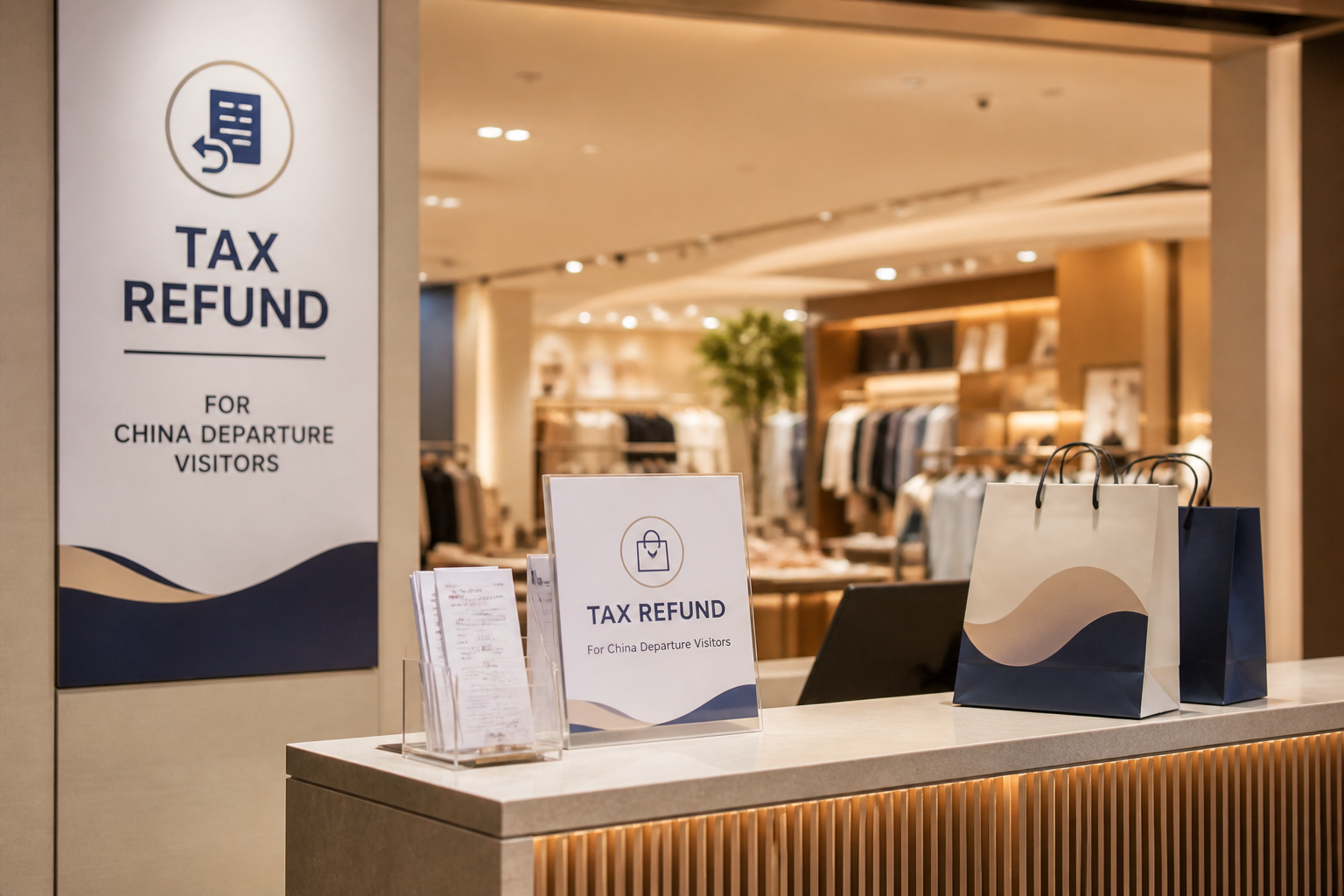
Tax-refund logo at a department-store counter — ordinary receipts alone are not enough; look for official signage.
2. Who qualifies — eligibility checklist
You may claim departure tax refund if you meet all of these (STA policy):
- You are an overseas visitor: foreign passport holder, or Hong Kong / Macao / Taiwan resident, continuously staying in mainland China ≤183 days before departure
- You buy tax-refundable goods at a designated tax-refund store (official logo / “Tax Refund” counter)
- Same visitor, same store, same calendar day: eligible purchases usually total ≥ RMB 200 (threshold lowered in 2025 upgrades—confirm at counter)
- Goods leave China with you, generally unused / unconsumed
- You depart via a participating port where a tax-refund agency operates (major air, sea, and some land ports in policy regions)
- Classic exit refund: purchase-to-departure commonly within 90 days (follow your form and local STA rules)
Residents staying over 183 consecutive days generally do not qualify as overseas visitors under this scheme. Short visa-free or L-visa tourists usually do.
3. At the store — before, during, and after payment
3.1 Before you pay
- Ask: “Is this a tax-refund store? Are these items eligible?”
- Prefer goods you can carry out (hand luggage or checked bags you can open for inspection)
- Consumables opened in China (snacks, cosmetics used here) usually cannot be refunded
- Keep passport ready—staff need it for invoices and refund records
3.2 When you pay
- Accumulate ≥ RMB 200 of eligible items at that store on that day (splitting tiny purchases across days/stores may miss the threshold)
- Request the Refund Application Form for Overseas Visitors (or digital equivalent / national tax-refund service code under paperless flows)
- Receive official sales invoice(s) with your name and passport number
- Check amounts, item list, and store seal / system confirmation before leaving the counter
3.3 Right after shopping
- Photograph invoices + form / QR / service code into a backup folder
- Pack refund goods where you can present them quickly if Customs selects you for inspection
- Do not gift, resell, or heavily use items before exit
Shanghai Tax English PDF — procedures & thresholds
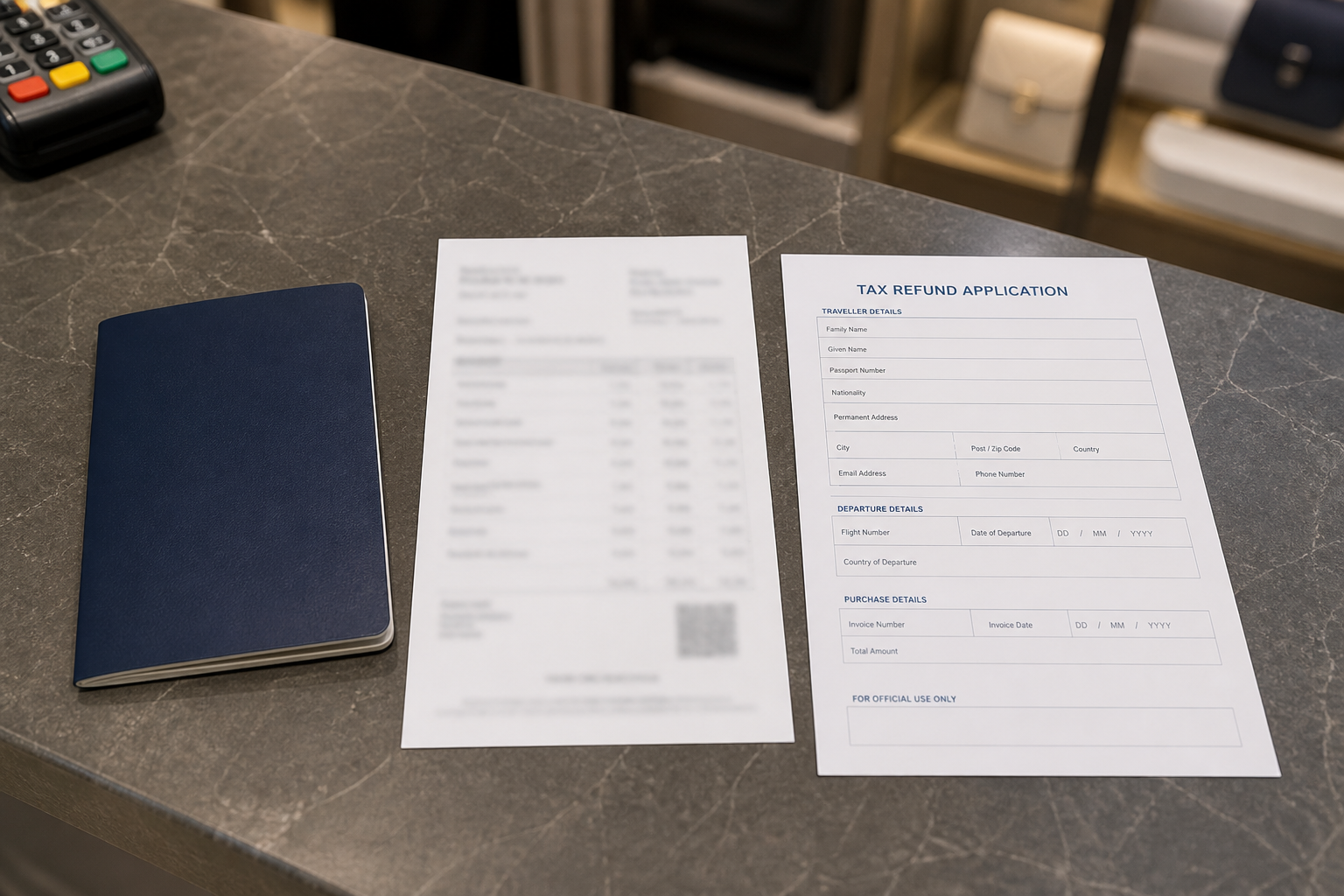
Passport, invoice, and tax-refund application form on a shop counter — three pieces that must match.
4. Classic departure refund — airport step-by-step
Use this path when you did not take prepaid refund in the shop, or the store only supports classic exit refund.
On departure day:
- Arrive early at the international terminal—refund desks sit before or near the restricted area; queues grow at peak waves (3 hours before flight is prudent at PEK/PVG in summer).
- Gather passport, boarding pass, refund application / digital record, invoices, and unused goods.
- Follow “Tax Refund” signs to Customs verification. Officers may check documents and, when required, physical goods.
- After Customs endorsement or online confirmation, go to the tax refund agency desk in the allowed zone.
- Submit passport + Customs-confirmed documents + invoices. Choose payout: RMB cash or card/bank transfer per local rules.
- Cash cap (STA materials): refunds up to about RMB 20,000 may allow cash or transfer; above that, transfer is typically required—confirm at the desk.
- Keep the agency receipt until you are through security.
Tip: If checked bags contain refund goods, ask staff about order—some ports require Customs check before bag drop. Wrong sequence is a top reason people miss refunds.
Airport “Tax Refund” counter before security — Customs first, then agency; follow local arrows.
5. Refund-upon-purchase
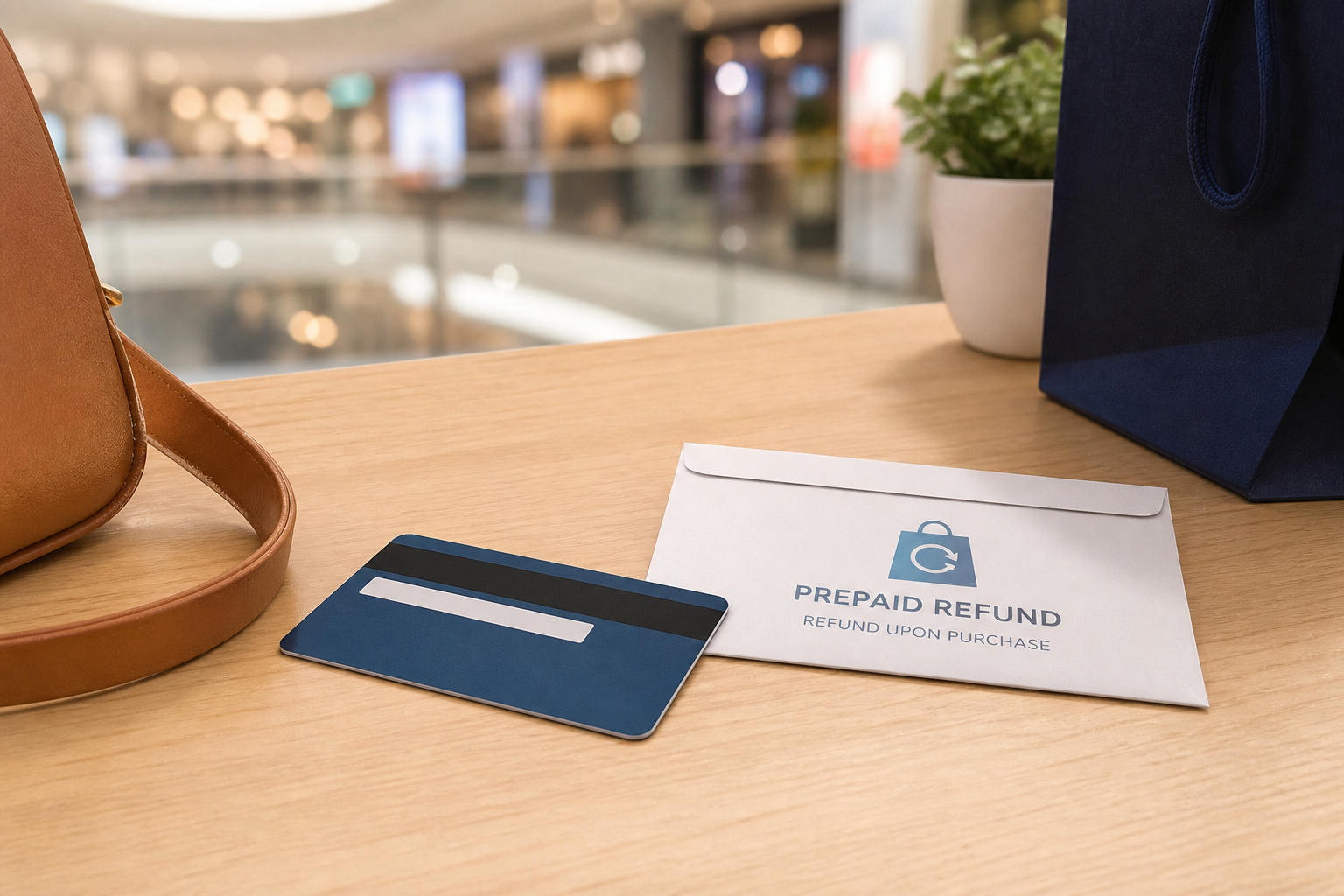
At participating stores, you may receive an on-the-spot prepaid refund (RMB equivalent of the VAT refund) after signing an agreement and completing a credit-card pre-authorization. You still must complete Customs / agency formalities when leaving China.
Extra conditions:
- Your own credit card that accepts a working pre-authorization
- You promise to leave within the agreed time via eligible ports
- Under Tax Refund 2.0 (from 1 July 2026), the promised departure window is unified to 28 days nationwide, with cross-region recognition expanding so you may finish exit formalities at more ports than the purchase city alone
At the store:
- Buy eligible goods at a refund-upon-purchase store
- Sign the service agreement in person
- Card pre-authorization → store/agency pays prepaid refund in RMB
- Receive application form / digital record + invoices
If you break the promise (miss deadline, wrong port, fail Customs): the agency may charge the pre-authorization to recover the prepaid amount—often within a few working days after the deadline.
STA — refund-upon-purchase conditions
Shanghai Gov — Refund-upon-purchase guide
Credit card and prepaid refund envelope at a mall desk — instant cash still needs a clean exit verification later.
6. Tax Refund 2.0 — from 1 July 2026
Commerce, Finance, STA, Customs, and other departments upgraded the scheme. Practical traveler takeaways (STA 2.0 briefing):
- Small-sum sampling: for refund sales under about RMB 10,000, Customs may use random physical checks instead of inspecting every bag; claims ≥ RMB 10,000 still face item-by-item verification more often
- More paperless: Customs and agencies confirm application forms and invoices online—bring digital codes/QR and keep backups
- Refund-upon-purchase: push for cross-region recognition + unified 28-day exit window
- More stores and expo service zones in major consumption cities
Tip: Even with sampling, keep goods accessible. If selected, you must open bags quickly or risk missing the flight.
7. How much you get back
- Refund is based on VAT embedded in the invoice, minus any handling fee charged by the refund agency
- Local STA materials commonly describe refund rates tied to VAT brackets—for example about 11% / 8% of invoice value for different VAT rates, minus ~2% agency fee (figures vary—use the amount on your form / screen)
- Payout currency is RMB (cash or transfer)
Shanghai Tax English PDF — rates and caps
8. Departure day timeline
- 3 hours before international flight (busy hubs): arrive at terminal
- Tax refund / Customs verification with goods + documents
- Refund agency payout or pre-authorization release confirmation
- Airline check-in / bag drop as instructed for refund goods
- Security → boarding
Multi-city trips: shop closer to your final mainland departure city when possible, or use refund-upon-purchase only if you understand the 28-day / port rules.
Traveler with shopping bags at airport check-in hall — build extra time on the last mainland day.

9. FAQ
Can I refund Taobao / street-market WeChat payments?
Only purchases at designated tax-refund stores with proper invoices/forms qualify.
Can I use the goods in China then refund?
Generally no—items should leave unused/unconsumed.
Do visa-free travelers qualify?
Yes, if you meet overseas-visitor and 183-day rules.
Hong Kong departure after mainland shopping?
You normally complete mainland departure tax refund when leaving the mainland via a participating mainland port—not automatically at HKG. Plan your mainland exit port carefully (e.g., PVG/PEK/CAN, not West Kowloon unless rules explicitly cover your case).
Who helps if the counter rejects my form?
Return to the store if still in the city; at the airport, ask the refund agency supervisor. East Marvel guides can help interpret signs and timing—not override Customs.
Baggage Allowance & Personal Limits
Your airline emailed a 23 kg checked-bag limit. Customs posted a sign about cash declaration. Are they the same rule? No. Airline baggage allowance is a contract with your carrier. China Customs personal limits govern what you may bring for personal use without duty or special declaration. Exceed either layer and you face different consequences—overweight fees vs fines or seizure. This guide separates the two, then walks through cash, alcohol/tobacco, medicines, high-value gear, and packing tips.
Tip: When unsure at Customs, choose the Red (declaration) channel and ask. See China Entry & Exit Rules
1. Two layers: airline vs Customs
| Layer | Who sets it | What happens if exceeded |
|---|---|---|
| Airline | Carrier + ticket class | Excess baggage fees; size/weight refusal at check-in |
| Customs (GACC) | Chinese law | Declaration, duty, quarantine hold, fine, or seizure |
You can be within airline weight and still owe Customs duty. You can pass Customs and still pay the airline for a second bag.
Always check:
- Your ticket’s checked and carry-on allowance (pieces, kg, cm)
- Customs personal allowance for items you carry (GACC passenger guide)
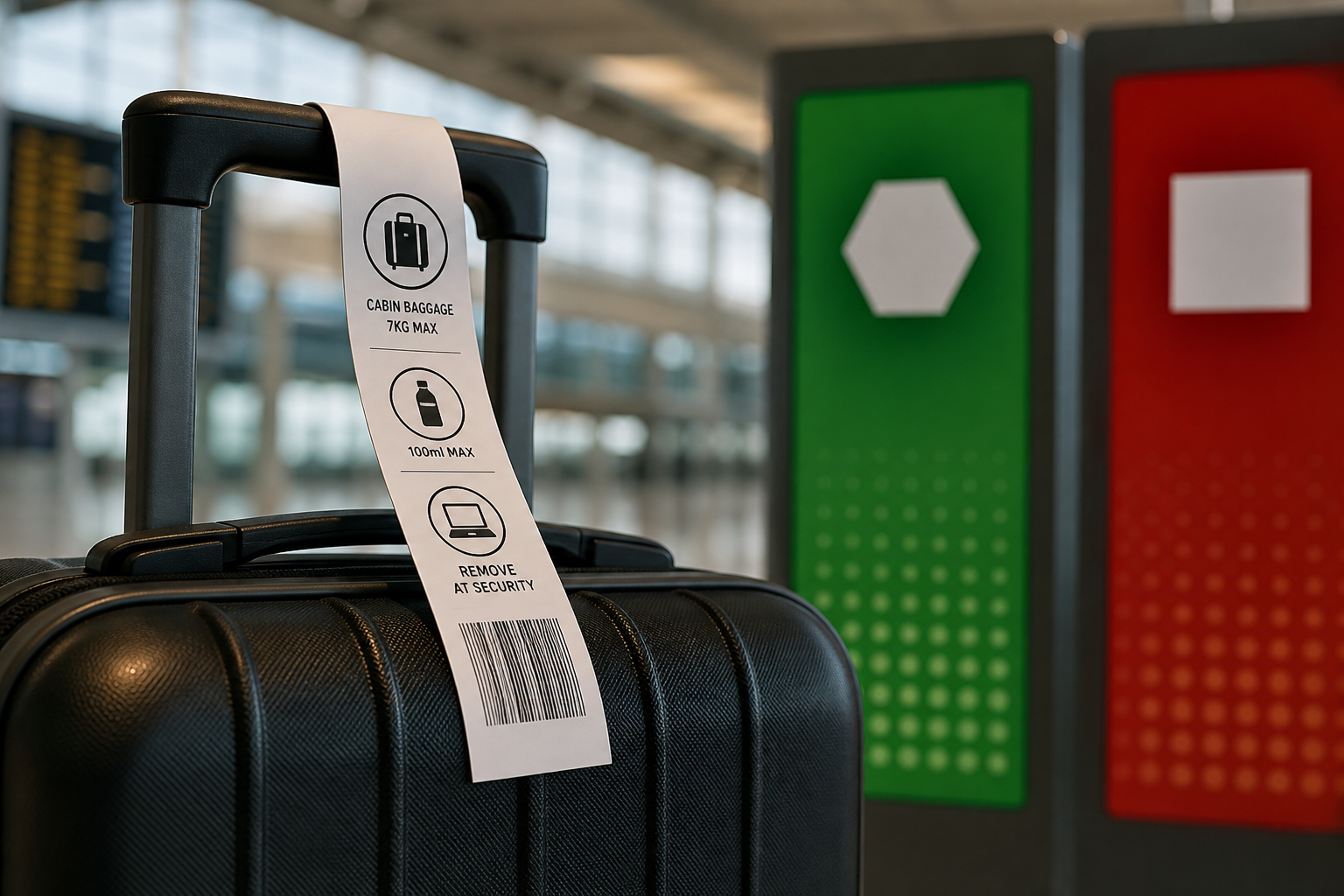
Airline baggage tag next to Customs Red/Green sign — two different rulebooks on one trip.
2. Personal allowance — what “reasonable for personal use” means
Customs evaluates whether goods are for personal use vs commercial import/export. Indicators of commercial quantity include:
- Many identical items (dozens of same SKU)
- Bulk packaging without retail labels
- Samples, price lists, or marketing materials
- Quantities far beyond one traveler’s reasonable consumption
Tourist tip: Gifts for many relatives add up fast—spread purchases across trips or declare when over duty-free limits.
Personal allowance figures below are typical reference points from Customs practice and Announcement 43 (2025)—always confirm at the port for your exact items.
3. Cash — declaration thresholds
You must declare currency when carrying amounts above published limits (Customs Announcement 43):
- RMB 20,000 or more in cash, or
- Foreign currency cash equivalent to USD 5,000 or more
Declaration does not automatically mean confiscation—it starts the lawful registration process. Failure to declare when required can lead to penalties.
Practical tips:
- Splitting cash across family members to evade limits is not a safe workaround if the total still exceeds rules
- Cards and mobile pay are primary in cities; carry modest RMB cash for taxis and small vendors
- On exit, declare large cash you legally carry out
4. Alcohol and tobacco
Typical declaration triggers for inbound personal use (reference levels—confirm locally):
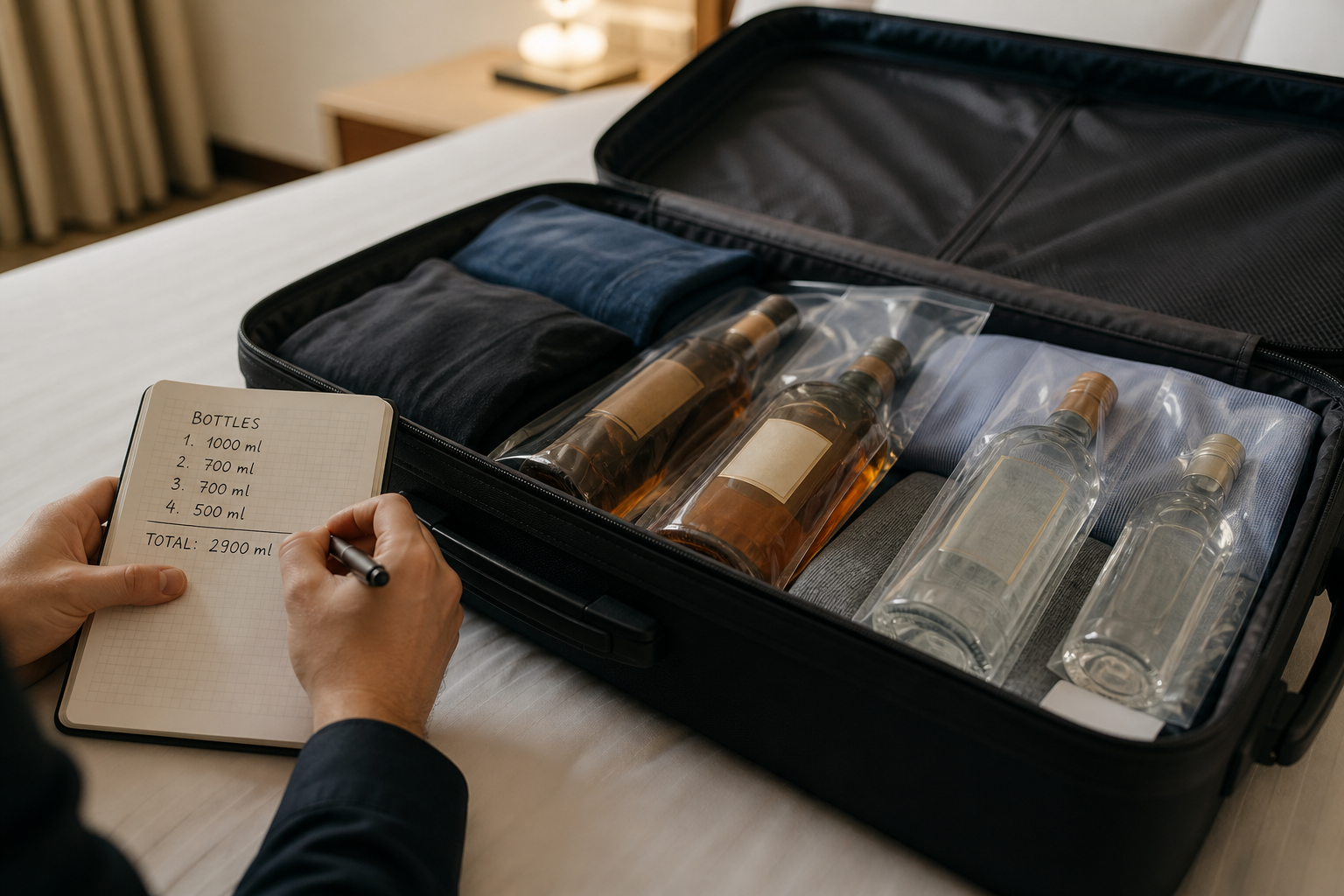
- Alcohol: spirits often around 1,500 ml total beyond duty-free personal allowance triggers attention; wine/beer have separate category rules
- Tobacco: often around 400 cigarettes (or equivalent tobacco weight) as a common reference ceiling for personal import without declaration
Above these, use the Red channel and complete declaration forms. Duty and tax may apply.
Duty-free alcohol bottles in luggage — count milliliters before you pack; one extra bottle can change your channel choice.
5. Medicines for personal use
Rules balance personal medical need against controlled-substance and quarantine risk.
Best practice:
- Keep medicines in original packaging with prescription labels or a doctor’s note in English (generic and brand names, dosage)
- Carry reasonable quantities for trip length—not pharmacy-level stock
- Controlled substances, psychotropic drugs, and certain injections may need prior approval or be prohibited—check before packing narcotic painkillers or ADHD medications
- Traditional Chinese medicine powders and animal-derived ingredients can trigger quarantine review
Declare at Red channel if you carry unusual quantities or injectable kits.
6. High-value cameras, laptops, and re-export
Professional photographers and filmmakers often carry expensive bodies, lenses, and drones.
On entry:
- Personal-use equipment you will take back out may be registered to simplify exit—especially if Customs might confuse it with undeclared commercial imports
- If unsure, declare at Red channel on arrival and keep registration documents
On exit:
- Match what you brought in vs what you bought in China
- Commercial samples, bulk electronics, or undeclared high-value purchases can be challenged—see China Entry & Exit Rules
7. Other common carry items
| Item | Tourist note |
|---|---|
| Food / fresh produce | Many fresh fruits, meats, and dairy are restricted for quarantine—avoid gifting undeclared soil-rooted plants |
| Drones | Registration and flight-zone rules apply inside China—not just Customs |
| Books / printed media | Large quantities of identical titles may look commercial |
| Pets | Quarantine certificates required—plan months ahead |
| E-cigarettes / vape liquid | Subject to tobacco/safety rules; check airline and Customs |
8. Packing tips for smoother clearance
- Liquids in carry-on follow airline 100 ml rules; declare bulk alcohol in checked bags honestly
- Keep declaration triggers in hand luggage if you must show them at Red channel before bag drop
- Label chargers and adapters—mixed cables slow inspection
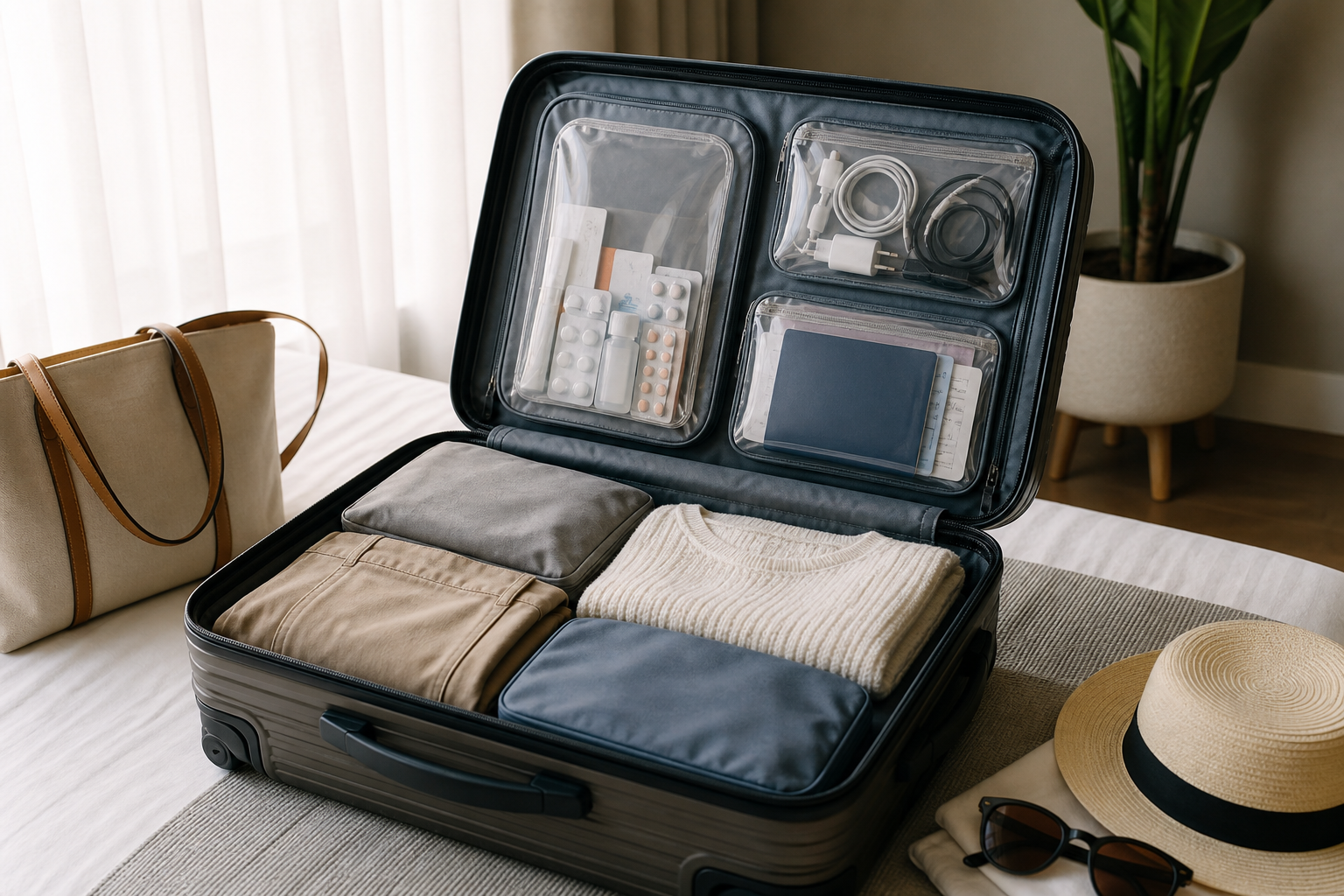
- One clear pouch for prescriptions + medicine
- Photograph serial numbers of cameras/laptops before travel
- Do not pack cash in checked bags—keep declared amounts with you
- Tax-refund purchases stay accessible for Customs sampling China Entry & Exit Rules
- Gift lists on paper help explain quantities to officers
Open suitcase with organized pouches for meds, electronics, and documents — five minutes of sorting saves thirty at Customs.
9. Entry vs exit — same limits, different risk
Entry: tourists often exceed alcohol/gifts from duty-free shops—know inbound personal allowance.
Exit: focus shifts to export control (antiques, cultural relics, cash, commercial goods disguised as luggage). Read 18 — Export Control before souvenir shopping sprees.
Customs Declaration Form Guide
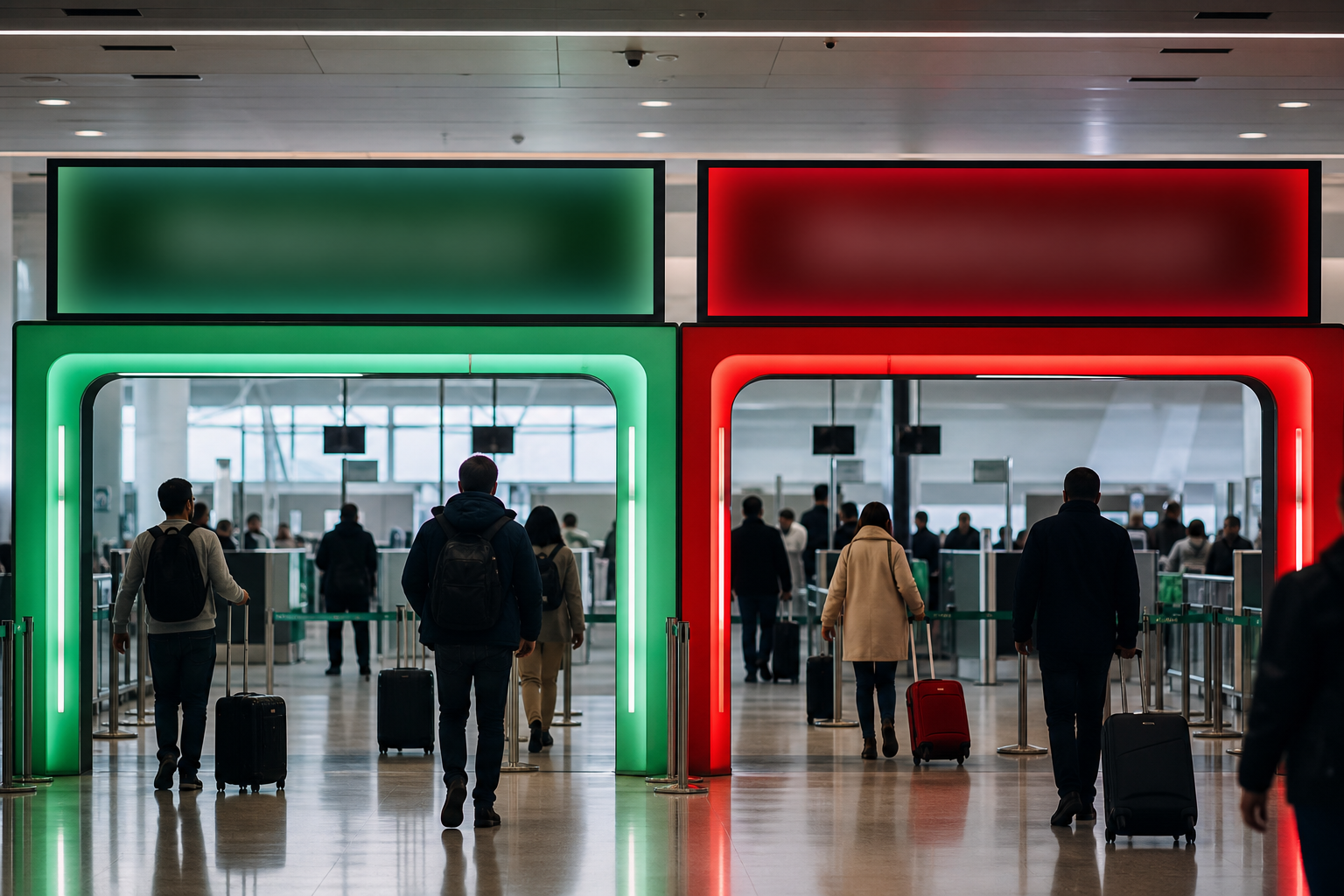
After immigration, you enter Customs supervision. Overhead signs show Green Channel (nothing to declare) and Red Channel (declaration required). Choosing wrong is not a harmless shortcut—undeclared dutiable or restricted goods can lead to fines or seizure. Since Customs Announcement 43 (2025), rules are clearer—and electronic pre-declaration via the official Customs Entry/Exit Traveler Fingertip Service on WeChat/Alipay can speed honest travelers. This guide explains when declaration is required, how channels work, how to fill forms, and practical tips.
Tip: When unsure, choose Red and ask an officer. Bags may be inspected on either channel. Travel support.
1. Red channel vs Green channel
| Channel | Use when |
|---|---|
| Green | You carry nothing that must be declared under current rules |
| Red | You have dutiable, restricted, controlled, or quarantined items, large cash, commercial quantities, or high-value goods requiring registration |
Key points:
- Green means “nothing to declare,” not “nothing to inspect.” Officers may still select you for screening on either channel.
- Honest declaration is almost always better than hoping you will not be searched.
- The same logic applies on departure—especially for tax refund goods, cash, and export-controlled souvenirs.
GACC — Red/Green channels (English)
Airport signs for Red Channel / Green Channel — Red = declare; Green = nothing to declare. When unsure, take Red.
2. Customs Announcement 43 (2025) — what changed
Customs Announcement 43 (2025) consolidates guidance on declaration obligations for inbound and outbound passengers. Traveler-facing takeaways:
- Clearer lists of situations requiring declaration
- Emphasis on cash declaration thresholds: RMB ≥20,000 or foreign cash > USD 5,000 equivalent
- Integration with digital declaration channels
- Stronger alignment between personal use vs commercial goods
Always read the official text before travel—implementation details appear at ports via notices and officer training.
3. When declaration is required — checklist
Use Red channel or electronic pre-declaration if any of the following apply (non-exhaustive—see Announcement 43 and GACC guide):
Cash & valuables
- RMB cash ≥ RMB 20,000
- Foreign currency cash > USD 5,000 equivalent
- Gold, jewels, or other high-value items beyond personal exemption when required
Alcohol & tobacco (typical triggers)
- Spirits beyond personal duty-free allowance—often scrutiny above about 1,500 ml combined reference level
- Cigarettes beyond about 400 sticks reference personal import level
Restricted & controlled goods
- Weapons, ammunition, replicas treated as weapons
- Drugs (narcotics), unauthorized pharmaceuticals
- Endangered species products (ivory, certain traditional medicines, protected plants)
- Counterfeit currency or counterfeit brand goods in commercial quantity
- Cultural relics and antiques without export/import permits
- State secrets or prohibited printed/audio-visual materials
- Commercial samples or goods for resale—not personal luggage
Quarantine items
- Fresh fruits, meats, dairy, seeds, soil-linked plants without inspection certificates
- Biological samples, certain pets without quarantine approval
Equipment
- Professional gear imported for use in China that you must re-export—declare on entry to simplify exit
- Drones, radio equipment where registration/import rules apply
Other
- Items exceeding personal reasonable quantity for one traveler
- Goods you already know are dutiable under Customs tariff
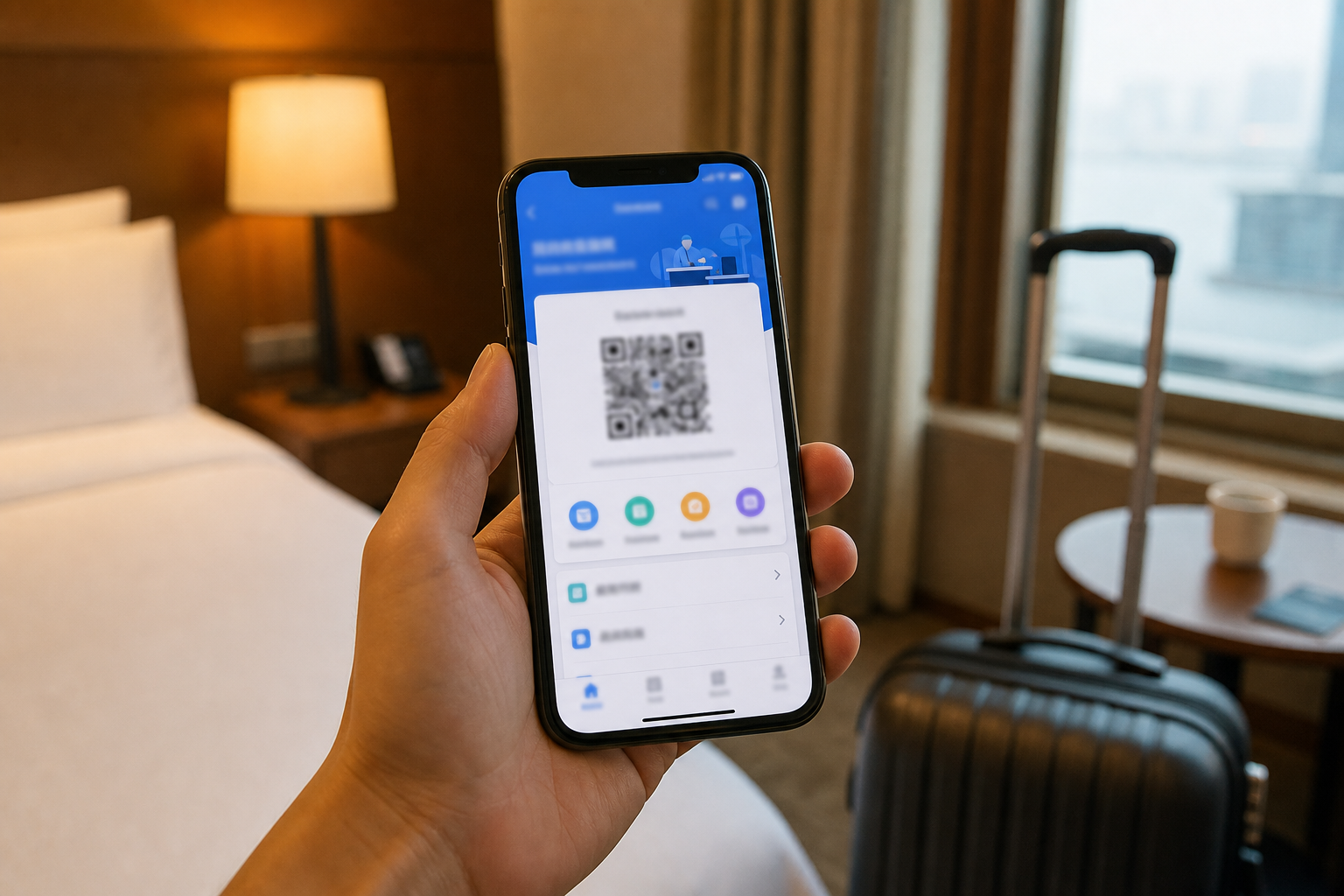
4. Electronic pre-declaration — fingertip service
China Customs offers the Entry/Exit Traveler Fingertip Service through official WeChat and Alipay mini-programs. Benefits for prepared travelers:
- Pre-declare before reaching the counter when you know you must declare
- Reduce handwriting errors on paper forms
- Generate QR records officers can scan
How to use (typical flow):
- Open WeChat or Alipay and search for the official Customs Entry/Exit Traveler Fingertip Service mini-program
- Select entry or exit declaration
- Choose item categories (cash, alcohol, tobacco, etc.)
- Enter amounts and descriptions truthfully
- Submit and save the QR / confirmation screenshot
- At the port, show the electronic record at Red channel and follow officer directions
Note: Electronic filing supplements officer review—it does not replace physical inspection when required.
Phone showing Customs fingertip mini-program QR — file on hotel Wi-Fi before departure day rush.
5. Paper declaration form — how to fill
If the port directs you to a paper Customs declaration form (baggage item declaration for entry/exit passengers):
Section-by-section tips:
- Personal details — Name exactly as passport; nationality; passport number; flight/train number; date
- Address/contact — First hotel or reachable phone; useful if officers need follow-up
- Item description — Be specific: “750 ml cognac × 2 bottles” not “alcohol”
- Quantity & value — Honest counts and purchase prices in RMB or original currency as requested
- Currency declaration — Separate line for RMB and each foreign currency with amounts
- Signature & date — Unsigned forms are incomplete
Keep a photo of the stamped form after officer review.
6. Step-by-step at the airport
Inbound (arrival):
- Collect bags → follow Customs signs
- Decide Green vs Red (when unsure → Red)
- If Red: queue → present passport + declaration (paper or electronic)
- Officer review → possible bag scan or manual inspection
- Pay duty if assessed → exit to arrivals hall
Outbound (departure):
- Tax refund travelers: Customs verification often before check-in—see China Entry & Exit Rules
- Declare export-controlled or high-value items at Red if required
- Proceed to airline check-in after Customs clearance
7. Penalties for non-declaration
Consequences depend on item type, amount, and intent—but can include:
- Confiscation of goods
- Fines multiples of duty owed
- Delays missing flights or trains
- Legal cases for narcotics, weapons, or smuggling-scale quantities
Accidental oversight: Cooperate immediately if officers find undeclared items— honesty affects handling, though penalties may still apply.
8. Tourist scenarios — quick answers
| Scenario | Channel |
|---|---|
| Normal clothes + laptop + phone for trip | Usually Green if no other triggers |
| USD 8,000 cash in bag | Red + declare |
| 600 cigarettes as gifts | Red |
| 3 bottles spirits from duty-free | Likely Red or declare—check volumes |
| Prescription meds for 2-week trip in original bottles | Often Green if reasonable; declare unusual quantities |
| Antique scroll bought at market | Red + permit check—see export guide |
| Commercial product samples for client meetings | Red—not personal luggage |
9. Tips for smooth declaration
- Pre-count alcohol milliliters and cigarette sticks before packing
- Use fingertip service the night before if you already know you must declare
- Keep purchase receipts for duty calculation
- Separate declared items in an easy-to-open pouch or suitcase layer
- Do not joke about banned items—humor does not translate well under X-ray
- Same rules for group tours—each traveler declares their own cash
- East Marvel guides can point to Red/Green signs but cannot sign forms for you
Export Control for Travelers
Souvenir shopping is a highlight—tea, silk, ceramics, calligraphy. But China export control treats some categories as national heritage, security, or quarantine priorities. Leaving with the wrong item can mean confiscation, fines, or criminal liability at departure Customs. This guide explains what cannot leave, antiques and “old-looking” goods, food in quantity, commercial samples, cash, how to declare, and shopping tips before your last mainland day.
Tip: Declare at Red channel when unsure—see China Entry & Exit Rules. East Marvel guides remind you about declaration timing; we cannot certify antiques. Plan your departure day.
1. Why export rules differ from import rules
Inbound, Customs focuses on protecting public health, tax revenue, and security from foreign goods entering China.
Outbound, Customs additionally protects:
- Cultural heritage (antiques, relics, valuable artworks)
- Endangered species (CITES-related products)
- Strategic or controlled technology
- State secrets and prohibited publications
- Capital flight via undeclared cash
A souvenir legal to buy in a market may still be illegal to export without certification—or entirely banned.
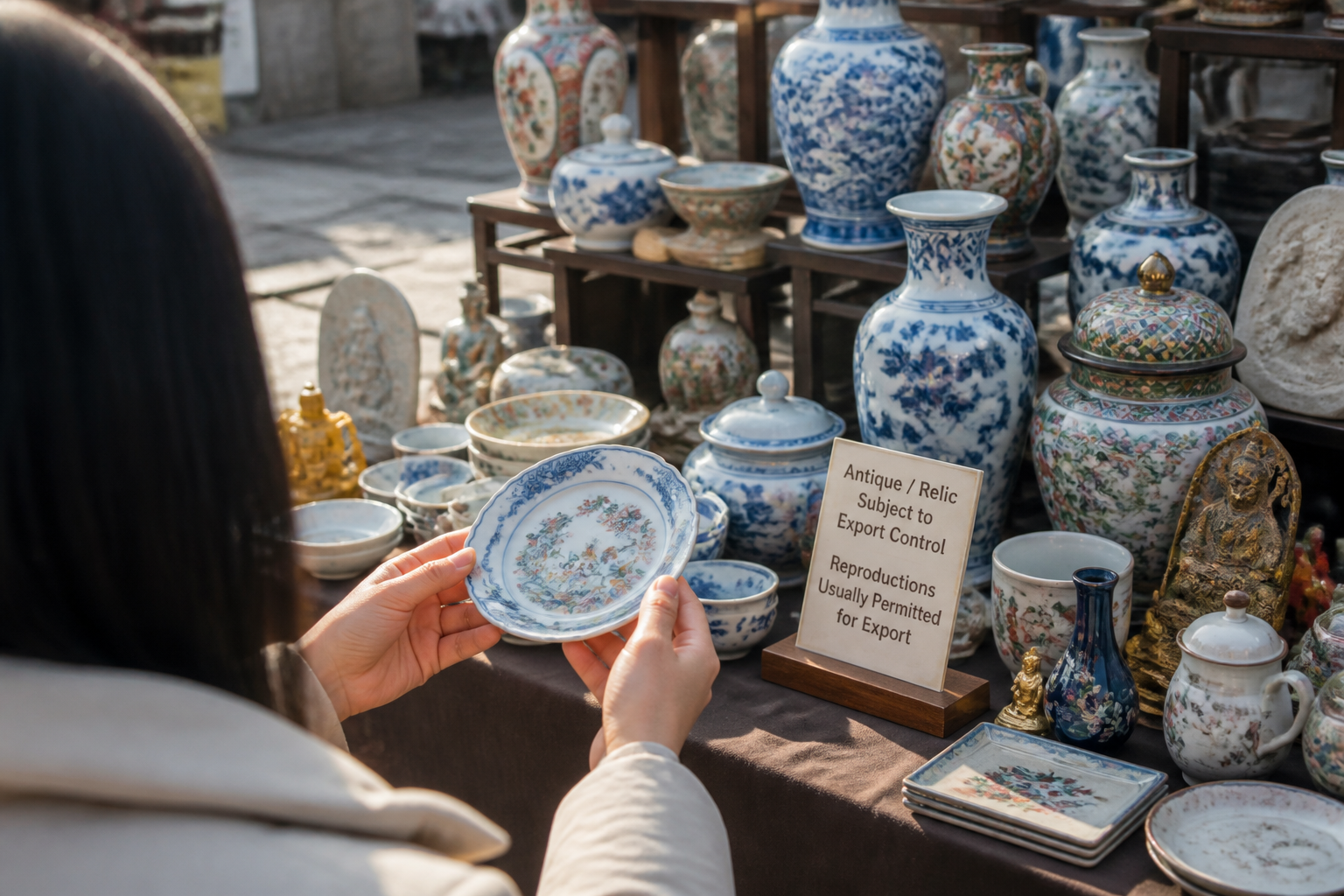
Tourist browsing antique-style ceramics at a market — “reproduction” vs “relic” is decided by Customs experts, not stall labels.
2. Categories that cannot leave (or need permits)
2.1 Cultural relics and antiques
- Items classified as cultural relics under Chinese law—including many objects above certain ages or of historical value—cannot be exported without official appraisal and export permits from cultural authorities
- Ivory and other endangered wildlife products are banned under domestic law and CITES
- Ancient coins, bronzes, tomb-style pieces, and old manuscripts trigger expert review even if the seller calls them replicas
Tourist rule: If you are not a professional collector with permits, avoid buying “old” items intended for export. Reproductions from licensed shops with clear modern manufacture labels are safer—but keep receipts.
2.2 Endangered species and related products
- Ivory, rhino horn, certain traditional medicines containing protected species, turtle products, and protected plant derivatives
- Penalties are severe—do not accept “small souvenir” explanations from vendors
2.3 State secrets and prohibited materials
- Unauthorized classified documents, restricted maps, or sensitive data storage devices
- Printed, audio-visual, or digital media prohibited for export (large quantities of identical political or restricted titles)
2.4 Weapons and controlled equipment
- Firearms, ammunition, explosives, realistic replicas treated as weapons
- Some knives beyond tourist utility sizes
- Drones, radio transmitters, encryption devices may need registration—match what you imported
2.5 Cash over limits
Cash declaration thresholds match the entry rules under Baggage Allowance above. Exceeding limits without declaration risks seizure and fines on exit as well.
2.6 Commercial goods disguised as personal luggage
- Samples, bulk inventory, or goods for resale are not personal baggage
- Multiple identical cartons, price lists, or wholesale packaging signal commercial export requiring formal customs procedures
3. Foods, tea, and liquids in quantity
Small sealed gifts for personal use often pass as personal baggage. Commercial quantities do not:
- Dozens of identical tea bricks or baijiu bottles for resale
- Fresh produce, meat, dairy—many categories fail destination country import rules too
- Unlabeled bulk food without ingredient and origin labels
Check both China export and your home country import (US FDA, EU customs, Australia biosecurity). China clearing exit does not guarantee home-country entry.
4. High-value new purchases — receipts and tax refund
Keep invoices for high-value goods. Store and airport VAT-refund steps are in Departure Tax Refund Guide above—export control and tax refund are separate checks.
5. How to declare on departure
Use the Red channel (or fingertip e-declaration) for controlled items, excess cash, or commercial quantities. Form mechanics: Customs Declaration Form Guide above.
6. Shopping tips before you leave
Do:
- Buy new reproductions from reputable stores with formal invoices
- Keep one souvenir per person logic for gifts—not wholesale counts
- Photograph serial numbers of electronics bought in China
- Complete tax refund paperwork at purchase if eligible
- Ask East Marvel guides about airport time for Customs + refund desks
Avoid:
- “Antique” street deals that sound too cheap for real age
- Ivory, coral, or unidentified “medicinal” animal parts
- Bulk tea/wine unless you understand commercial export rules
- Packing commercial samples in personal suitcases for client visits
- Carrying undeclared cash to “avoid bank fees”
7. Destination country rules — second checkpoint
Your home or next country applies its own import limits:
- Alcohol/tobacco duty-free allowances
- Food and plant products often banned (US, Australia, NZ especially strict)
- Cultural goods may need separate declarations
Pack so you can remove items before the final flight if needed—do not bury declarable goods under layers officers cannot inspect quickly.
8. Real scenarios
| Item | Risk | Advice |
|---|---|---|
| Qing-style vase from flea market | High | Skip unless cultural authority certifies export |
| Jingdezhen factory porcelain with receipt | Low | Keep invoice showing modern manufacture |
| 10 boxes same tea for office gifts | Medium | Redeclare; may be treated commercial |
| Laptop bought at Apple Store CN | Low | Invoice + personal use; consider tax refund path |
| USD 10,000 cash undeclared | High | Declare or reduce amount; penalties possible |
| Company product samples × 50 | High | Formal export clearance—not tourist luggage |
9. If officers retain an item
- Stay calm; ask for written documentation of the hold or seizure
- Request English explanation where available
- Contact your embassy/consulate for guidance—not intervention in lawful enforcement
- For tax-refund goods, missing verification voids refund—another reason to arrive early
Related reading (this 4-part series)
- China Visa-Free Entry Guide
- China Visa Types & Requirements
- China Visa Application Guide
- China Entry & Exit Rules
Official sources hub
- National Immigration Administration (NIA): https://www.nia.gov.cn/
- Arrival Card (free): https://s.nia.gov.cn/ArrivalCardFillingPC/
- General Administration of Customs (GACC) English: http://english.customs.gov.cn/
- State Taxation Administration (STA) tax refund: https://www.chinatax.gov.cn/eng/c101276/c102444/c5240901/content.html
- Customs Announcement 43 (2025): https://www.gov.cn/zhengce/zhengceku/202504/content_7017195.htm
- MFA visa-free FAQ: https://www.mfa.gov.cn/wjbzwfwpt/kzx/tzgg/202511/t20251110_11749824.html
- Visa Application Service Center (COVA): https://www.visaforchina.cn/
Plan with East Marvel
Practical tips—not legal advice. For itinerary review and tax-refund-friendly routing: