What a Useful Train Map Answers
A China train map is useful only if it answers: can I go A to B without flying, and where do I change if I cannot go direct? You do not need every spur line. You need trunks, tourist city hops, and the hub cities that glue them together.
Treat the map as a planning tool, not as wallpaper. First decide whether a direct G, D, or C exists. If it does not, name the hub where you will change, and decide whether that change is same-station or cross-city. Only then open a booking screen.
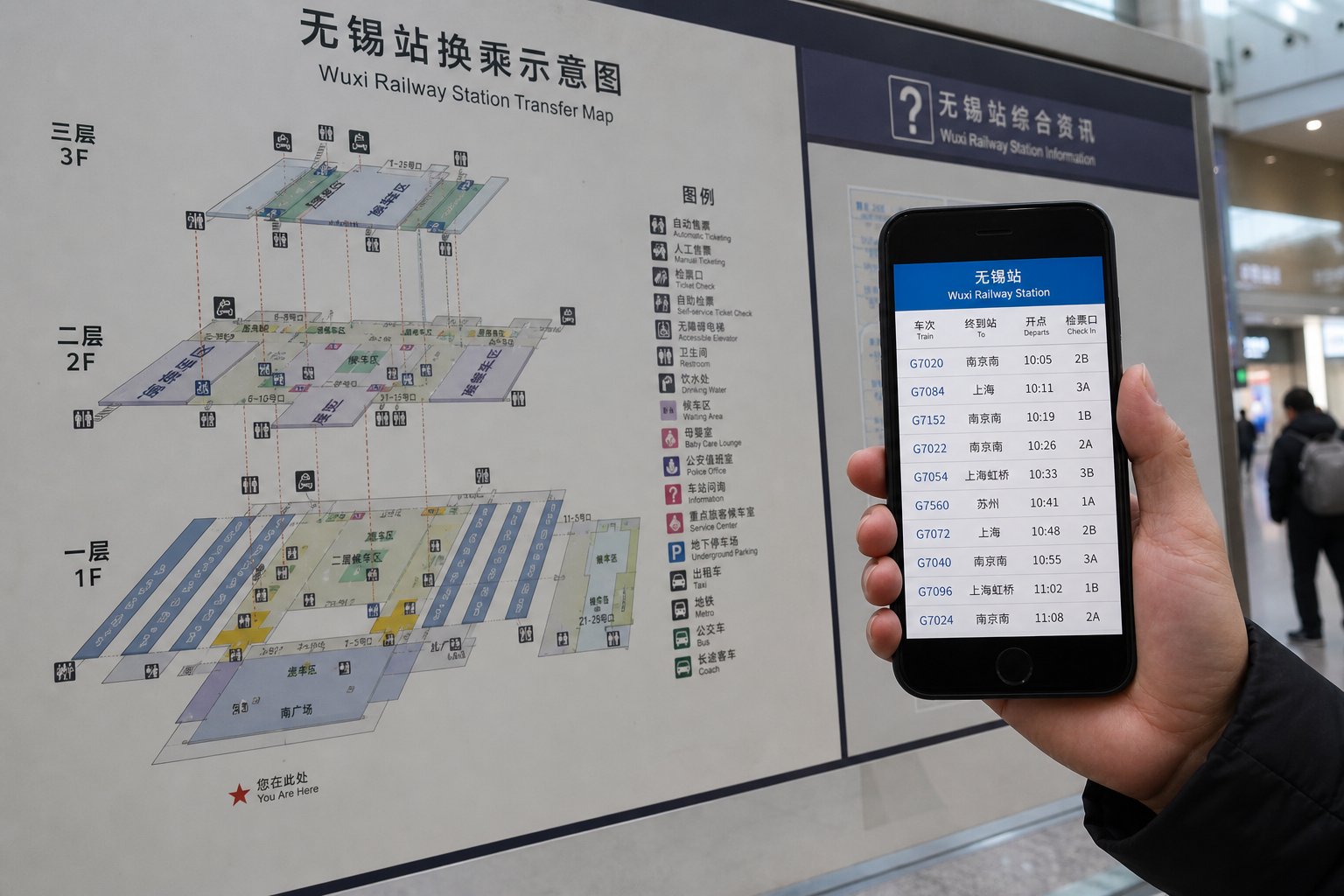
Use wall diagrams in stations for orientation, then confirm live paths and times on 12306. Booking mechanics sit in Everything About China Train Tickets. Letters and seats sit in China Train Types, Seats and Services. The whole-trip playbook sits in the China Train Travel Guide.
Trunk Corridors That Shape Most Itineraries
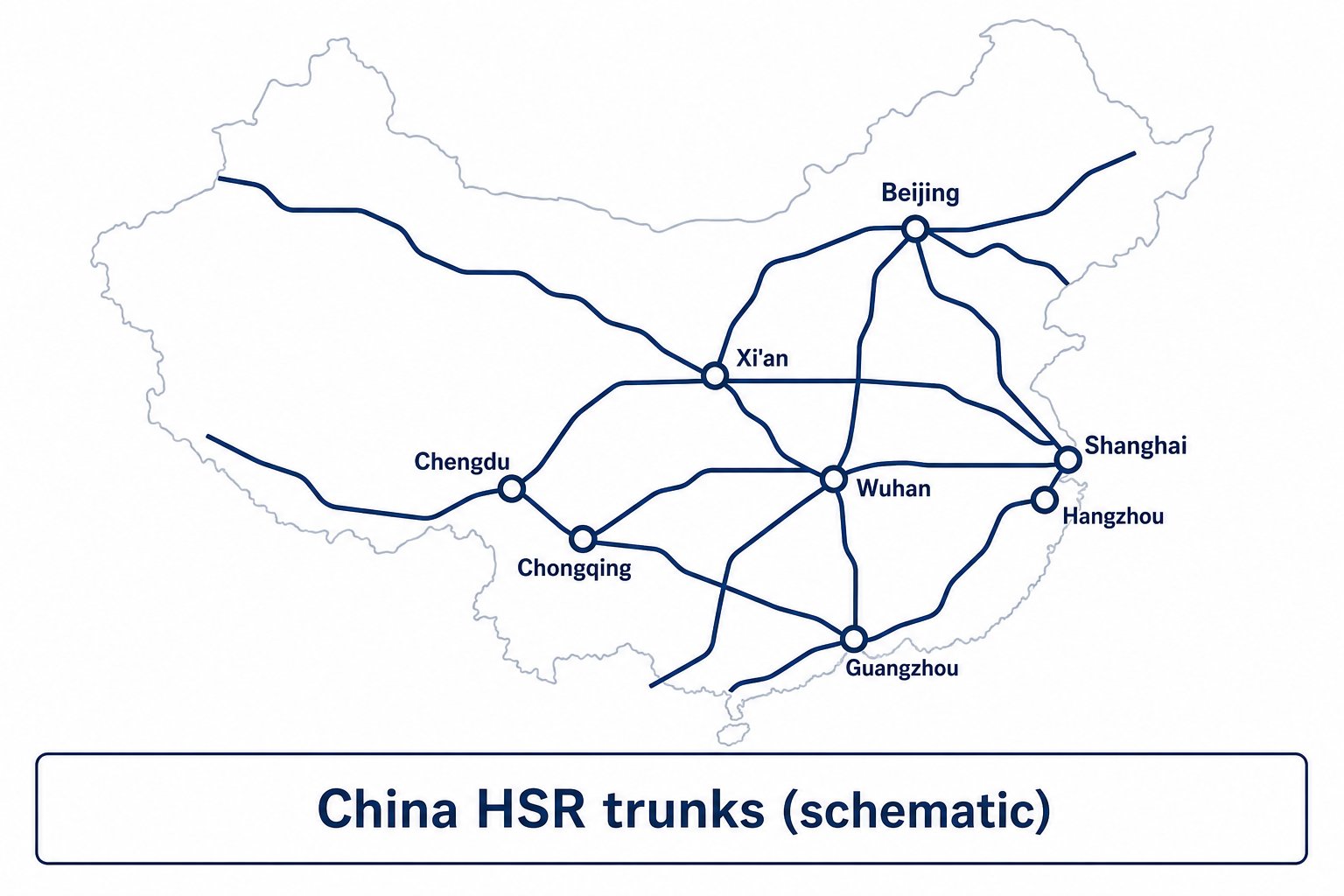
Memorize roles, not every station name:
- Beijing-Shanghai: business plus classic tourism spine. Densest G frequency on many days.
- Beijing-Wuhan-Guangzhou-Shenzhen, with the Hong Kong link: north-south backbone.
- Shanghai-Hangzhou-Changsha-Guiyang-Kunming: east into the southwest.
- Beijing-Zhengzhou-Xi'an-Chengdu / Chongqing: toward the west and the Sichuan Basin.
- Coastal and delta nets: Shandong, Fujian, Yangtze River Delta. Short C/G hops replace driving.
When a guidebook says take the high-speed train to X, it usually means: get yourself onto one of these trunks, then finish with a short regional leg.
You do not have to ride every corridor. Most visitor trips use one north-south spine, one east-west spine, and a handful of short C or G hops at the end. If a city sits off the trunks, budget a hub transfer or a flight rather than forcing a weak rail path.
Tourist Hop Map: Cities Travelers Actually Chain
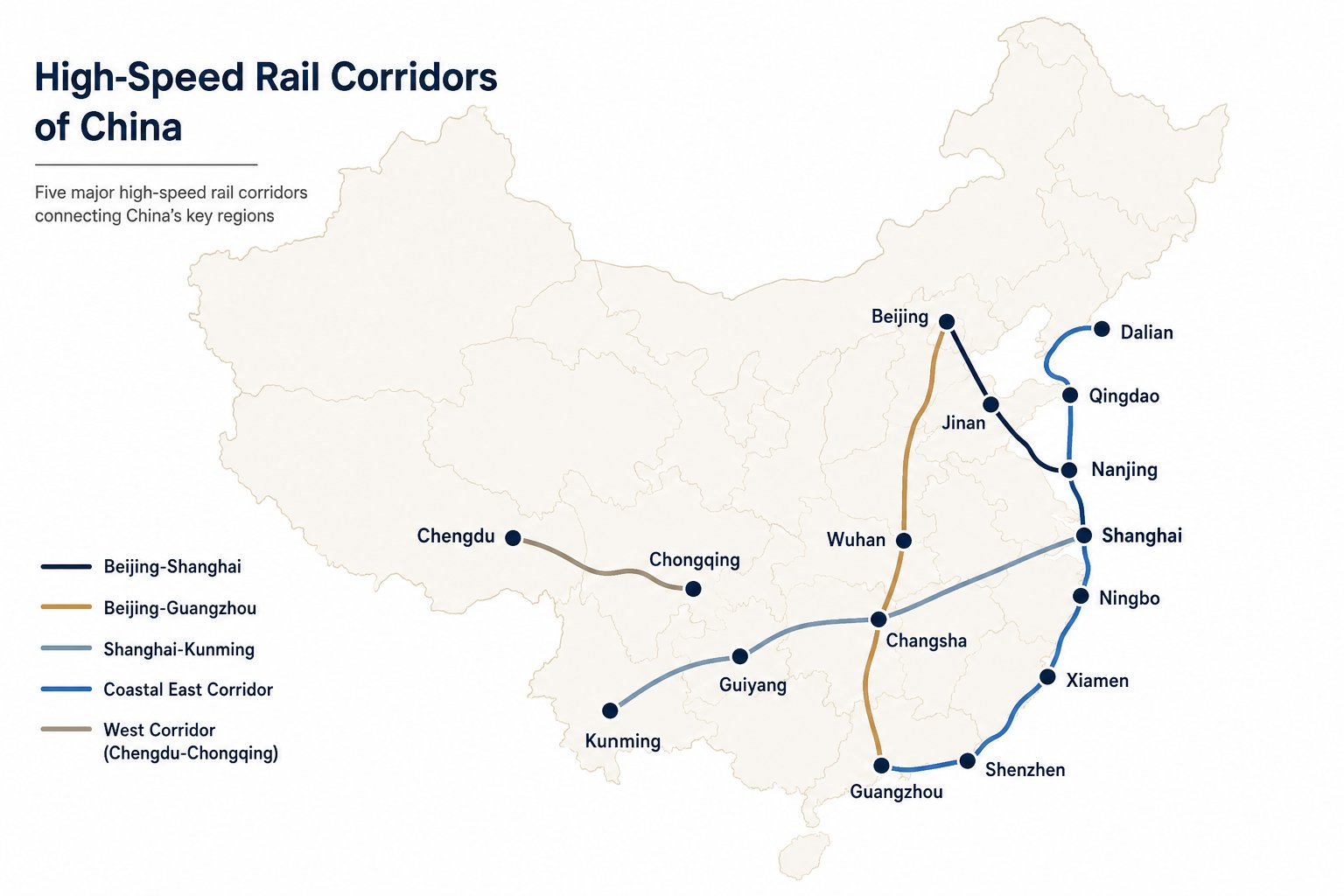
Think in loops, not in abstract network theory:
- North classics: Beijing to Pingyao or Xi'an to Luoyang, then back east via Zhengzhou hubs.
- East cities: Shanghai to Hangzhou to Suzhou or Nanjing to Huangshan, with rail plus a short transfer.
- South coast: Guangzhou or Shenzhen to Guilin, then flight or long rail toward Yunnan.
- West triangle: Xi'an to Chengdu to Chongqing, then back via high-speed where open.
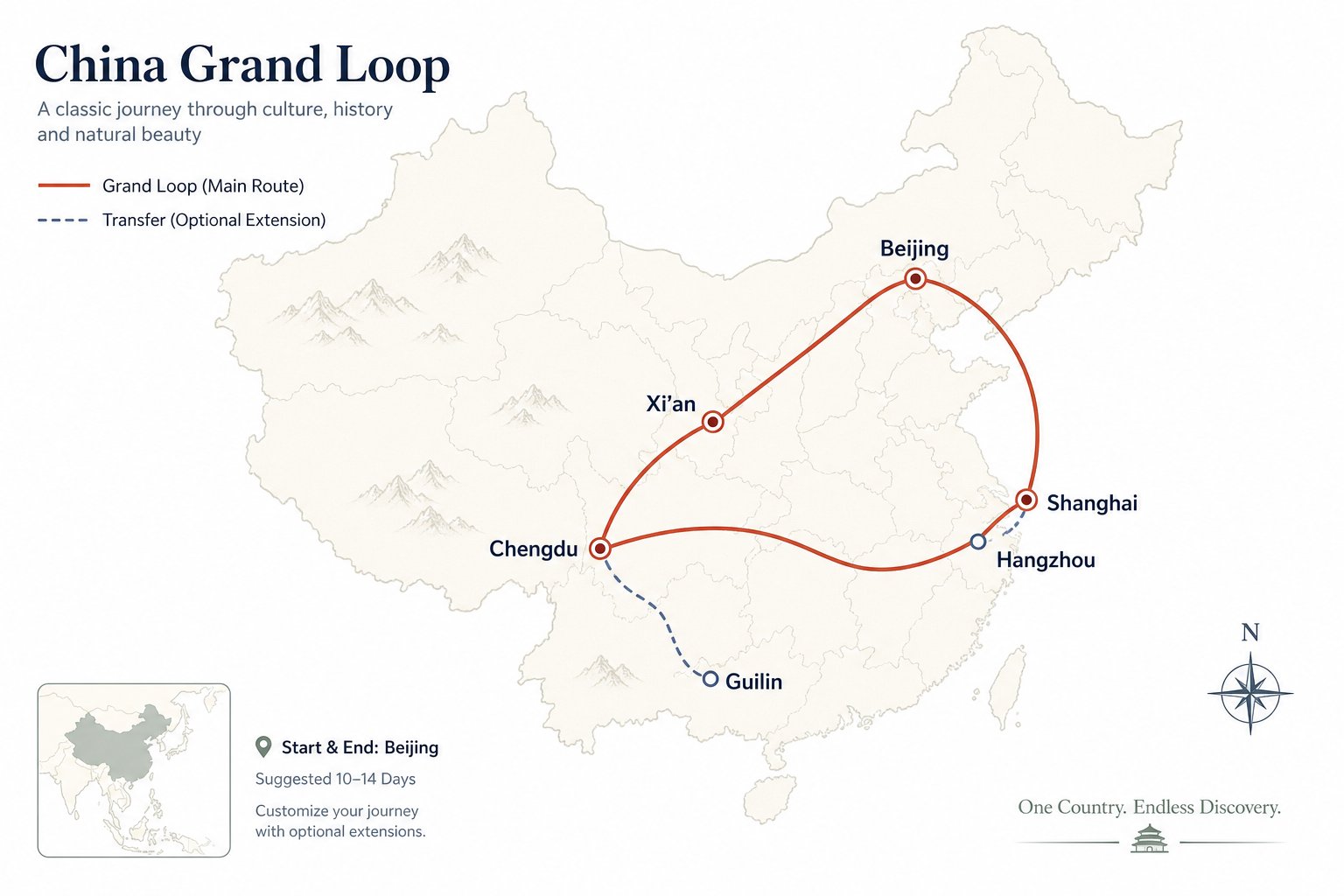
- Grand loop sample: Beijing to Xi'an to Chengdu to Guilin to Shanghai to Beijing.
Direct G/D exists on many bold legs. The thin legs are where you budget a hub transfer or a flight. That is map logic, not failure.
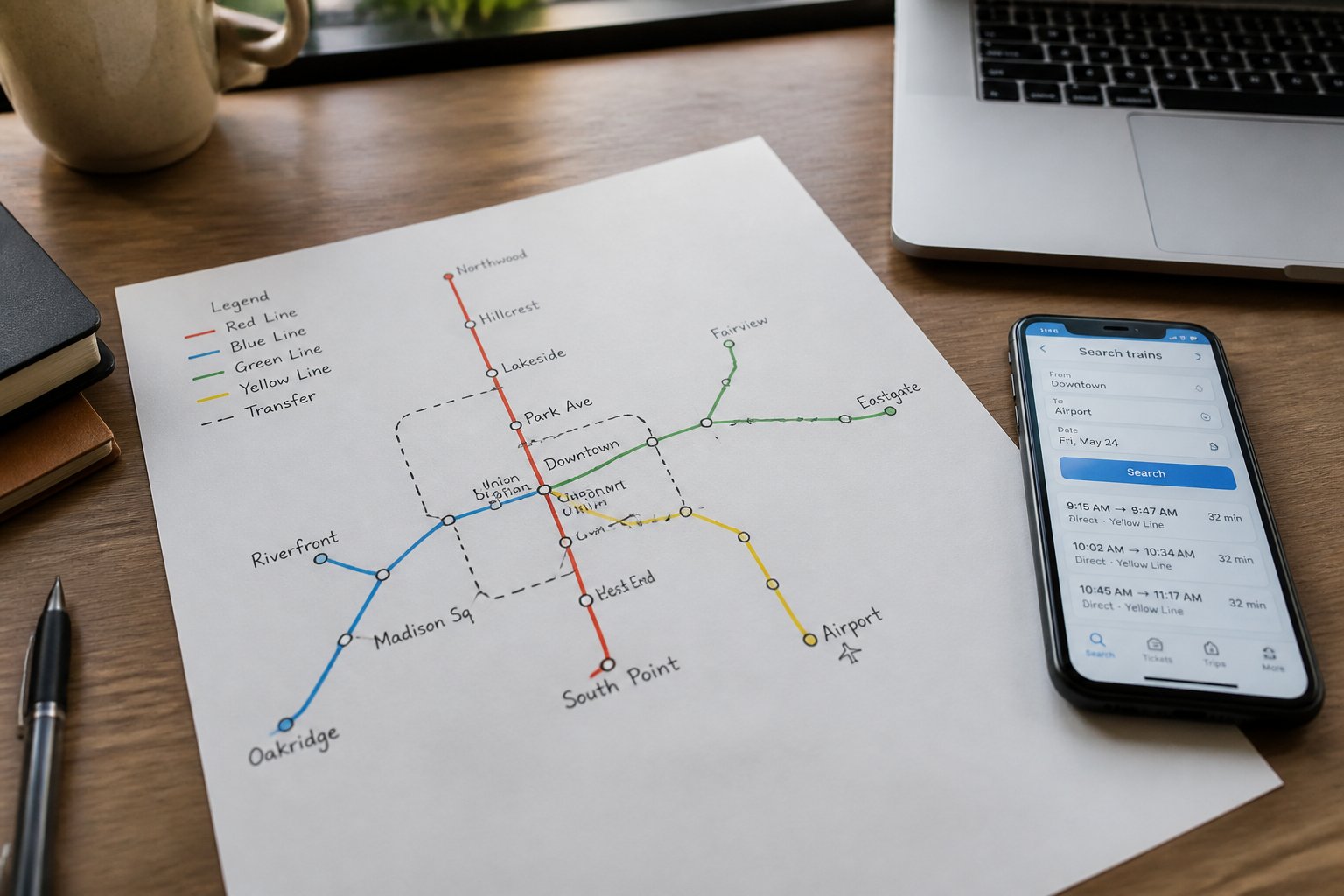
Draw the loop on paper before you open 12306. Solid lines are the legs you expect to book as one train. Dashed lines are the legs that need a hub night or a same-day buffer. If a dashed leg is also a holiday week, treat it as scarce and buy it first.
Hubs Worth Planning Around
If A to B has no comfortable direct train, route via a hub with dense onward options: Beijing, Shanghai, Guangzhou, Shenzhen, Wuhan, Zhengzhou, Xi'an, Chengdu, Chongqing, Hangzhou, Nanjing, Changsha.
At hubs, check same station versus cross-city:
- Same building or same campus transfer: easy, sometimes under 60 minutes.
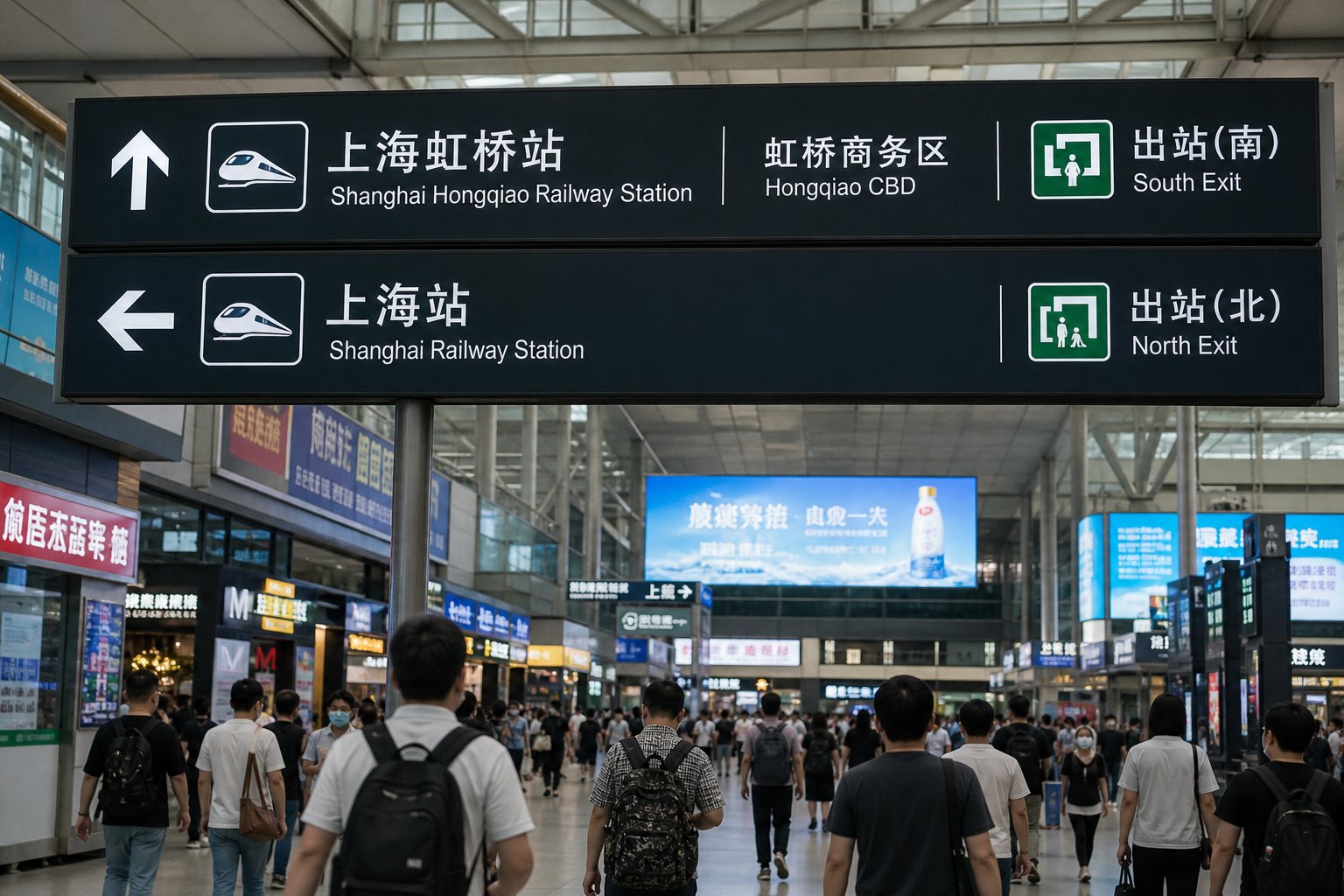
- Different stations in one metro area, for example Shanghai Station versus Hongqiao: budget metro or taxi time plus luggage reality.
Never assume Shanghai on a map equals the station your ticket shows. The map gets you to the city. The ticket locks the platform building.
The same trap appears in Beijing: West, South, and Qinghe are different trips. When two hubs sit in one metro area, write both station names on the sketch and time the transfer as if it were a separate trip.
Station-Name Traps on Every Map
These traps show up on every traveler map:
- City versus station: Beijing West, Beijing South, and Qinghe are different trips.
- Airport-style names: some East, West, North, or South stations sit far from the old downtown station.
- New HSR stations often open on the edge of town. Great for train speed, longer last mile.
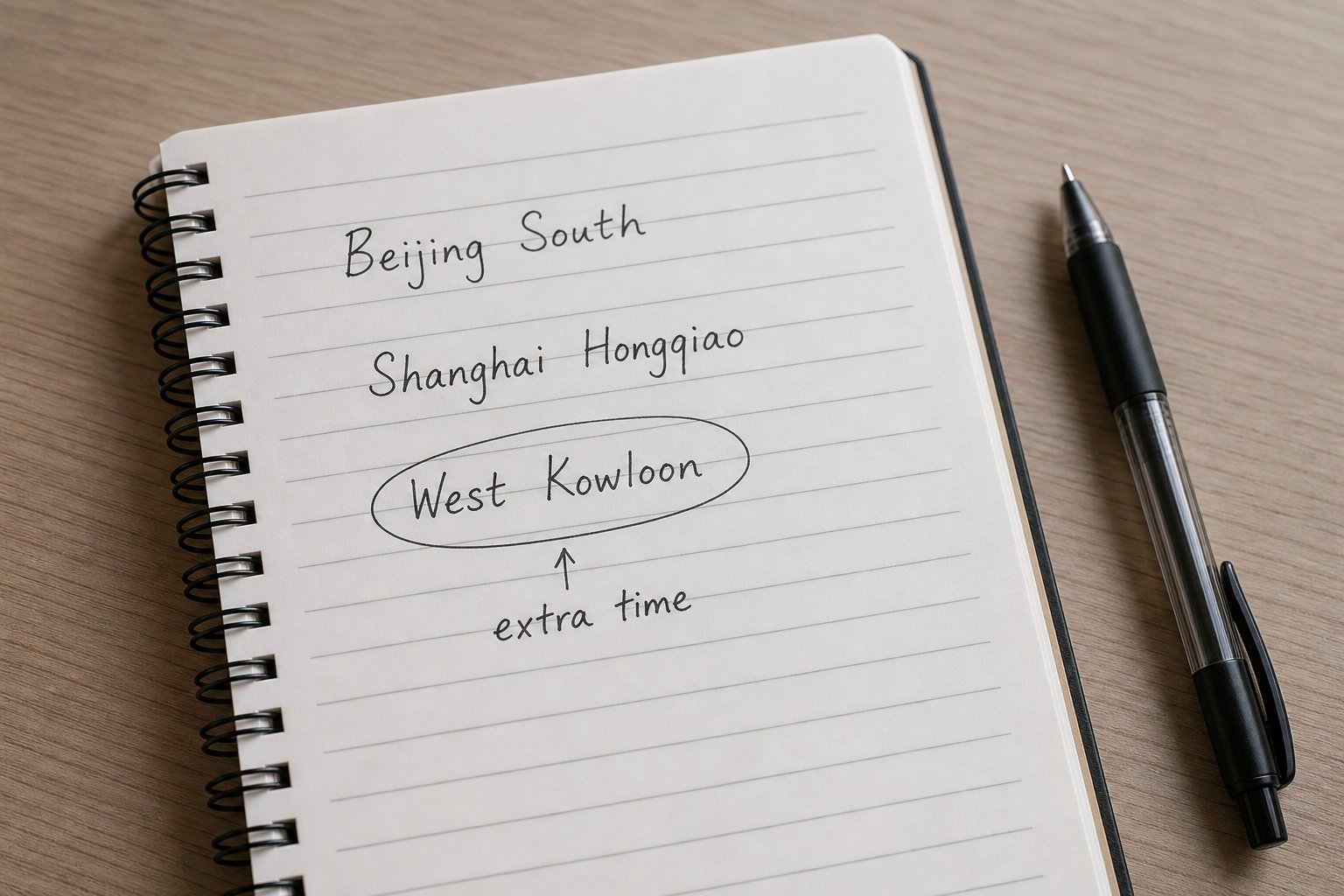
- Hong Kong West Kowloon is a special immigration case. Build extra time, not just rail minutes.
When sketching a route on paper, write the station names you will type into 12306, not only city bubbles.
From Map Sketch to Booked Tickets
Move from paper to a paid order in this sequence:
- Mark the cities you will visit, in that order.
- Draw solid lines where a direct G, D, or C exists. Draw dashed lines for hub transfers.
- For each solid or dashed leg, pick letter plus seat in China Train Types, Seats and Services.
- Buy in order of scarcity, holiday legs first, via Everything About China Train Tickets.
- Recheck the live timetable after any published diagram change. Maps in books lag. 12306 does not.