Which Legs Deserve a Plane
A useful China air map is not a wallpaper of every route. It is a way to decide which legs deserve a plane. Pair it with airport codes and ticket rules before you pay. When you mix modes, keep China Train Maps beside the air sketch.
Fly the awkward diagonal. Ride the dense middle. That single sentence prevents most first-timer fatigue.
Route Types Travelers Actually Book
Treat city pairs as patterns, then verify the live week on an airline or platform search. Frequencies change by season.
- International gateways: home to PEK, PVG, CAN, or HKG, to enter or leave China.
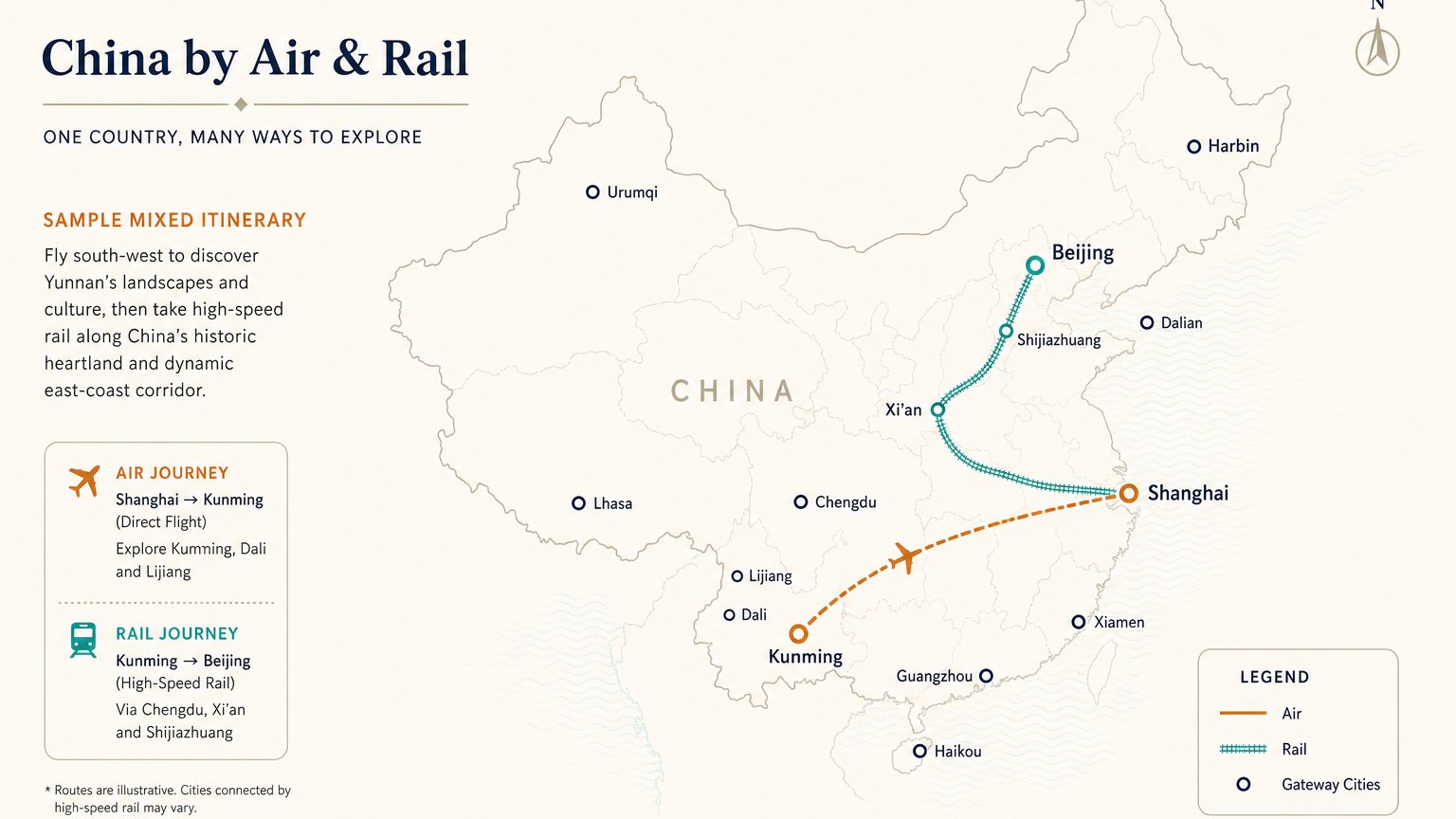
- Long domestic trunks: Beijing to Shenzhen, Shanghai to Chengdu, Beijing to Kunming, where rail is long or needs several transfers.
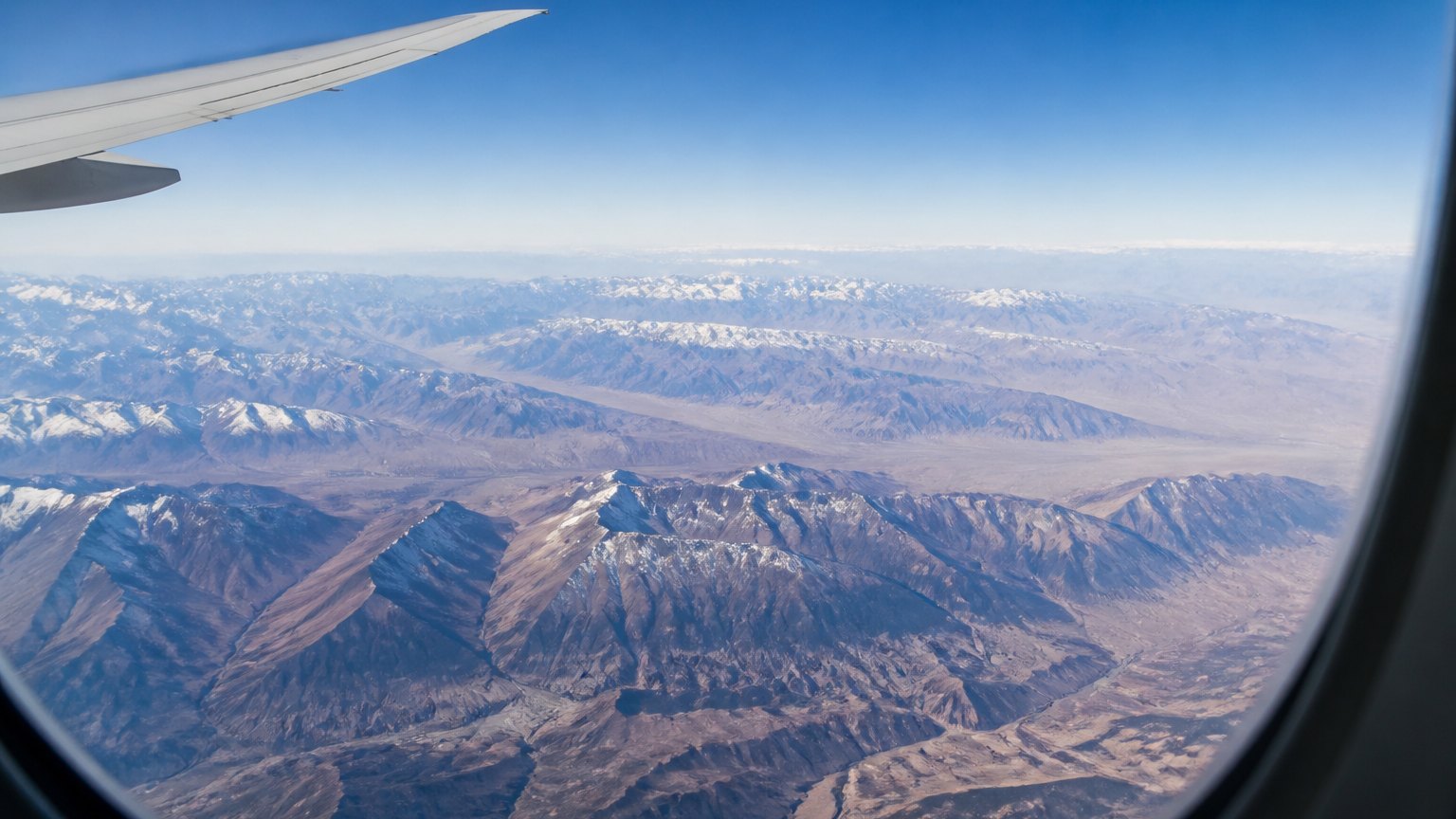
- West and plateau access: Chengdu or Chongqing to Lhasa, and coastal cities toward Xinjiang, where distance and geography argue for air.
- Holiday peaks: coastal cities toward Hainan or Yunnan leisure cities. Inventory moves fast; book earlier than you would in a quiet month. Check the China Festival Calendar before a holiday week.
- Thin tourist fills: eastern hubs toward Guilin or Zhangjiajie-type gateways, when a flight saves a full daylight day.
Do not memorize a route list as if it were a timetable. Confirm the week you will travel.
Draw the Trip as Air Plus Rail
A clean pattern for many first visits looks like this:
- Long-haul in to a gateway.
- Rail the dense middle, such as Beijing to Xi'an to Shanghai to Hangzhou.
- Fly the awkward diagonal, such as a southwest leisure city, the far west, or a return to a different gateway.
- Long-haul out.
If two cities sit on a fat high-speed trunk and the door-to-door rail trip is about six to seven hours or less, default to the train unless a tight international connection forces you to stay inside the airport system. Stations often beat airports on city access. You travel city center to city center with ordinary luggage, and a short flight is easier to break with weather or security queues.
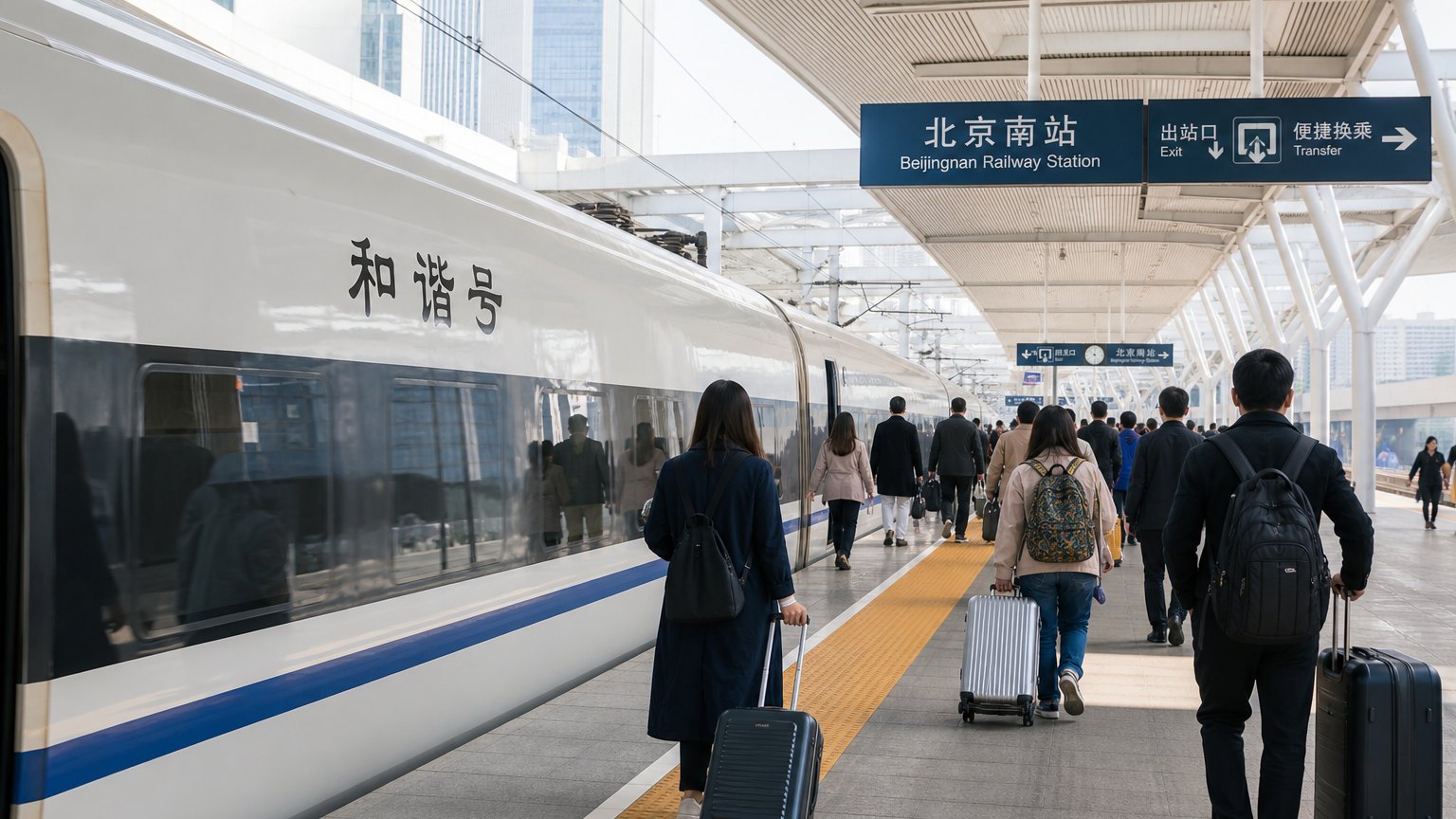
Flight Versus High-Speed Rail
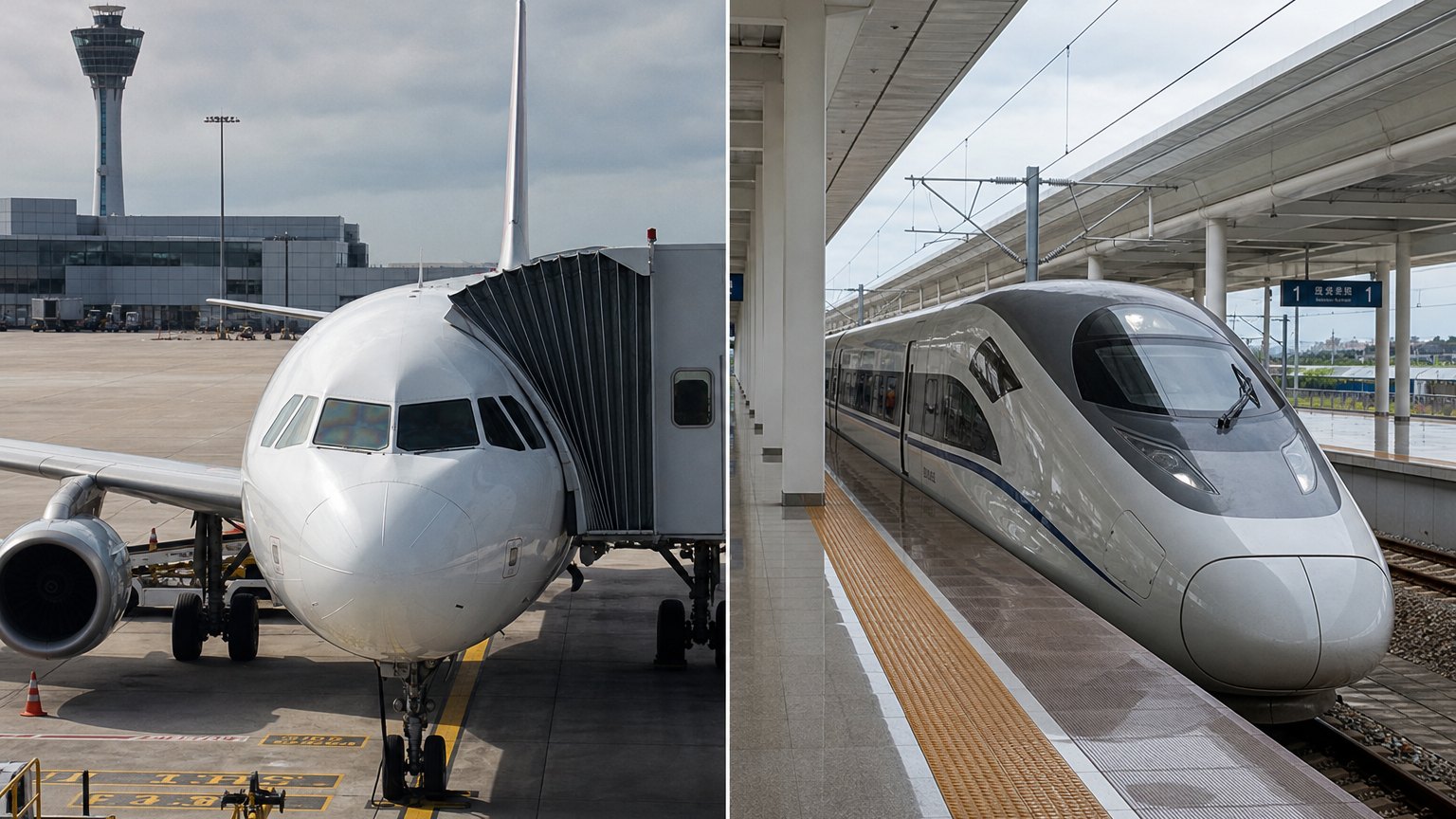
Choose rail when stations beat airports on city access, when you carry normal luggage and want a city-center arrival, or when a short hop looks fragile against weather and queues.
Choose air when rail would cost an overnight plus a recovery morning you cannot spare, when the map shows weak rail or several hub changes, or when you are already inside an airport day and the next leg is another flight.
Price alone is a weak decider. Add transfer time, a taxi, and the value of arriving able to walk a museum the same afternoon. Many strong itineraries mix both: fly the thin long leg, rail the dense east-coast or north-south trunks.
Cabin, Bags, and Airport Timing
Once the route exists, the remaining questions are human: where you sit, what you pack, and how early you arrive. Chinese carriers sell a familiar ladder: economy, sometimes premium economy, business, and first on selected long-haul or flagship widebodies. The fare brand matters as much as the cabin word. It drives change fees, miles, and often baggage.
- Economy fits a daytime domestic hop when budget leads.
- Premium economy, when offered, can help on a medium-haul sector. Read the seat map; some products are a blocked-off economy row.
- Business earns its keep on overnight, long-haul, or work-critical arrivals. Skip it on a hop under about two hours unless you are using miles or a coupon.
- First is a rare flagship product. On most domestic itineraries, business already sits at the top of the cabin.
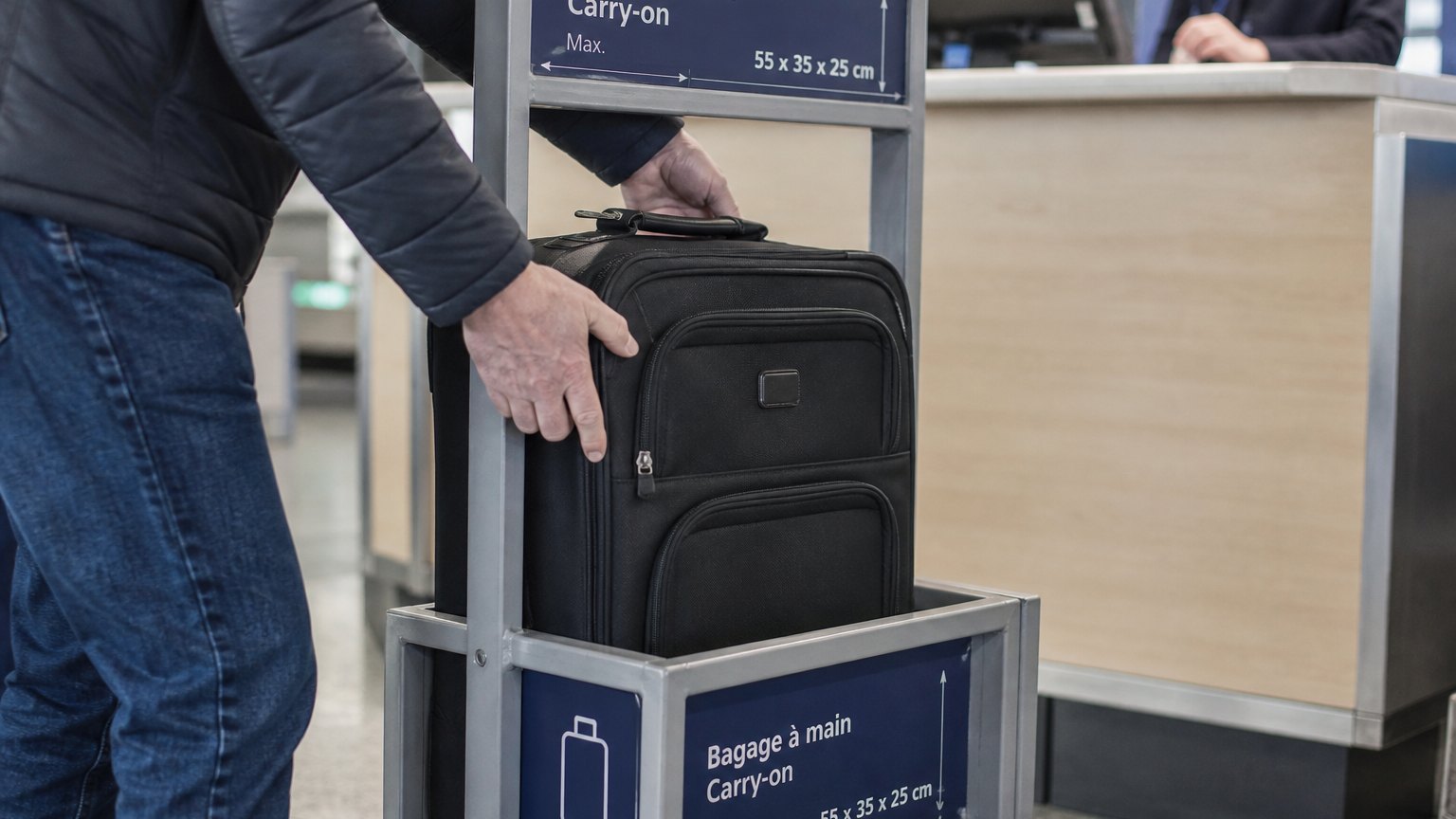
Do not reuse last year's baggage numbers. Open your fare and read checked pieces or weight, carry-on size, and any sports or oversized rules. Cheap economy boxes may exclude checked bags. Carry medicines, chargers, and one change of clothes in the cabin bag in case a tight domestic connection leaves the suitcase behind. Customs and personal-import limits sit in China Entry and Exit Rules.
Default timing, then add buffer for holidays, an unfamiliar airport, children, or mobility needs:
- Domestic: arrive about two hours before departure.
- International: about three hours.
- Peak hubs, or your first flight inside China: add more.
Check-in counters and bag drop close before departure. Airline pages list the exact minutes. Foreign-passport app check-in is not guaranteed on every carrier.
Airport Flow and the Airlines You Will See
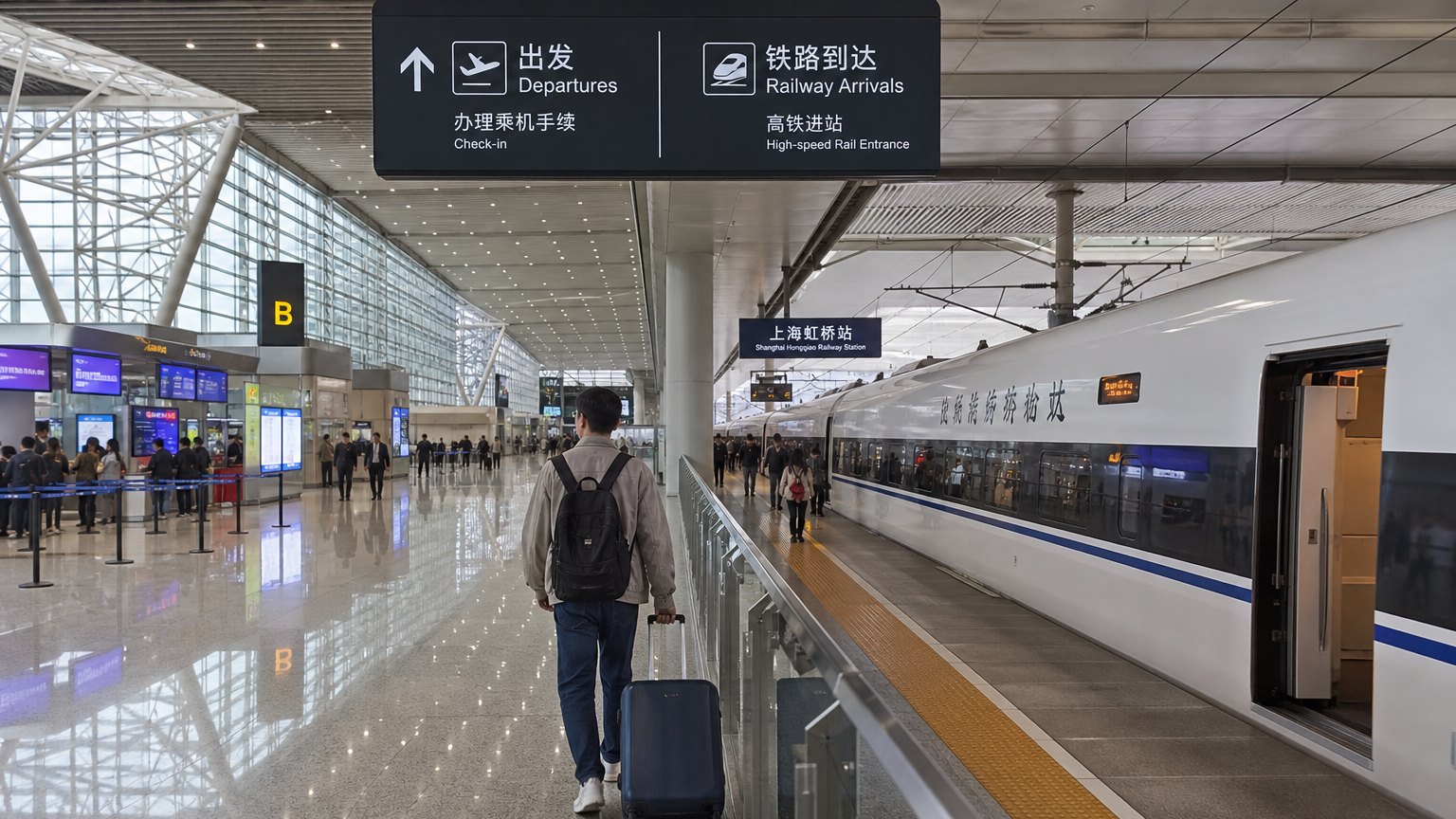
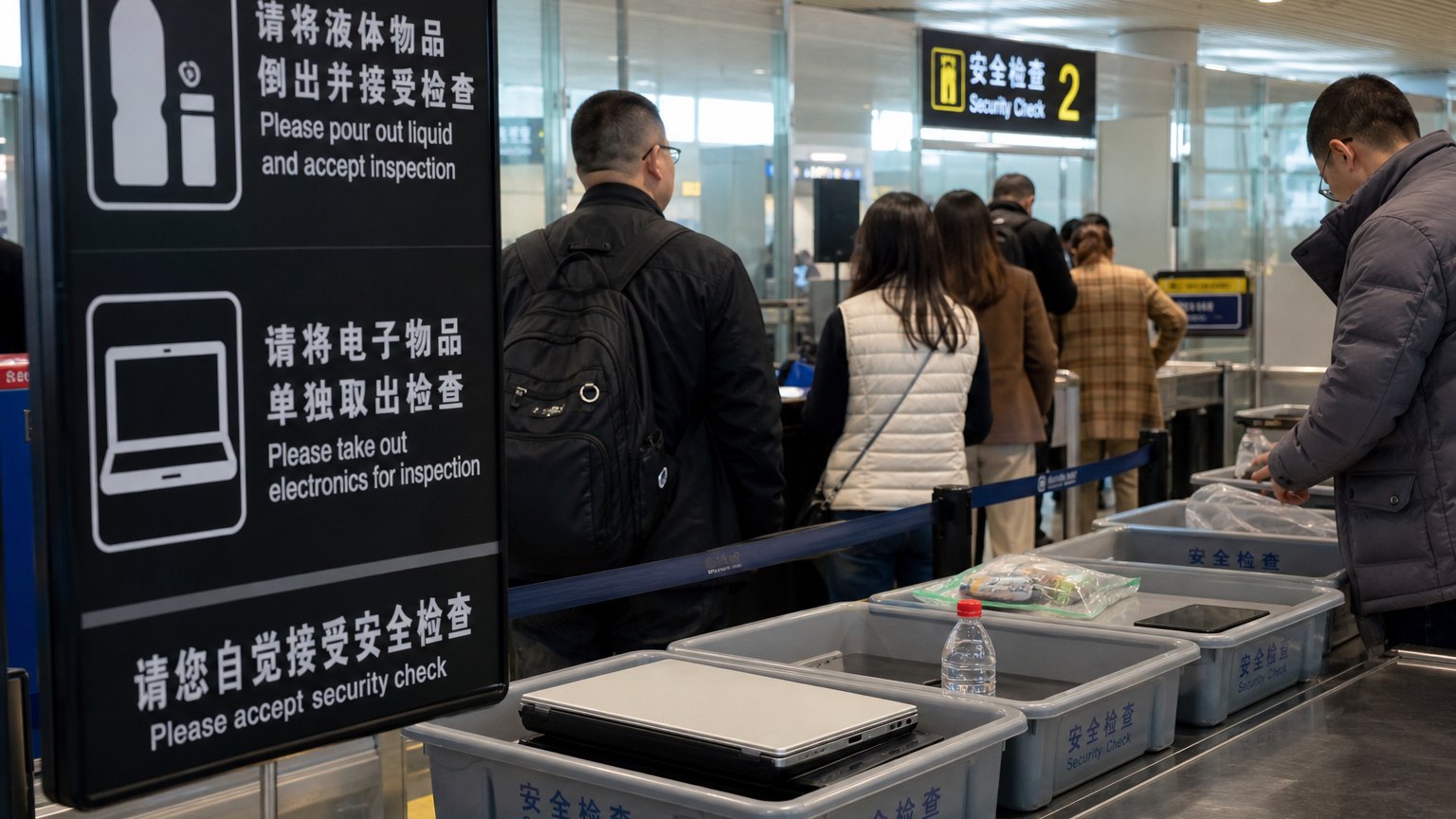
On departure: confirm the terminal and airport code in the China Airports Guide, check in, drop bags if needed, keep boarding pass and passport, clear security, and wait near the posted gate. Screens override an old pass if the gate moves. Immigration applies on international exits. Some flights still check the passport at the gate.
On arrival: follow baggage claim on domestic flights, or immigration, claim, and customs on international flights. Exit through metro or taxi pickup zones. If you connect to rail the same day, recompute city transfer time before you leave the terminal.
Major groups on China networks include carriers under the Air China, China Eastern, and China Southern families, plus strong players such as Hainan, Shenzhen, Xiamen, and Sichuan. Pick by schedule, airport, and fare rules, not by logo familiarity. If you need wheelchair help, a bassinet, unaccompanied-minor service, medical oxygen, or a pet policy, request it through the airline as early as booking day, not only through a platform chat.
From Sketch to Tickets
Turn the map into a booking list:
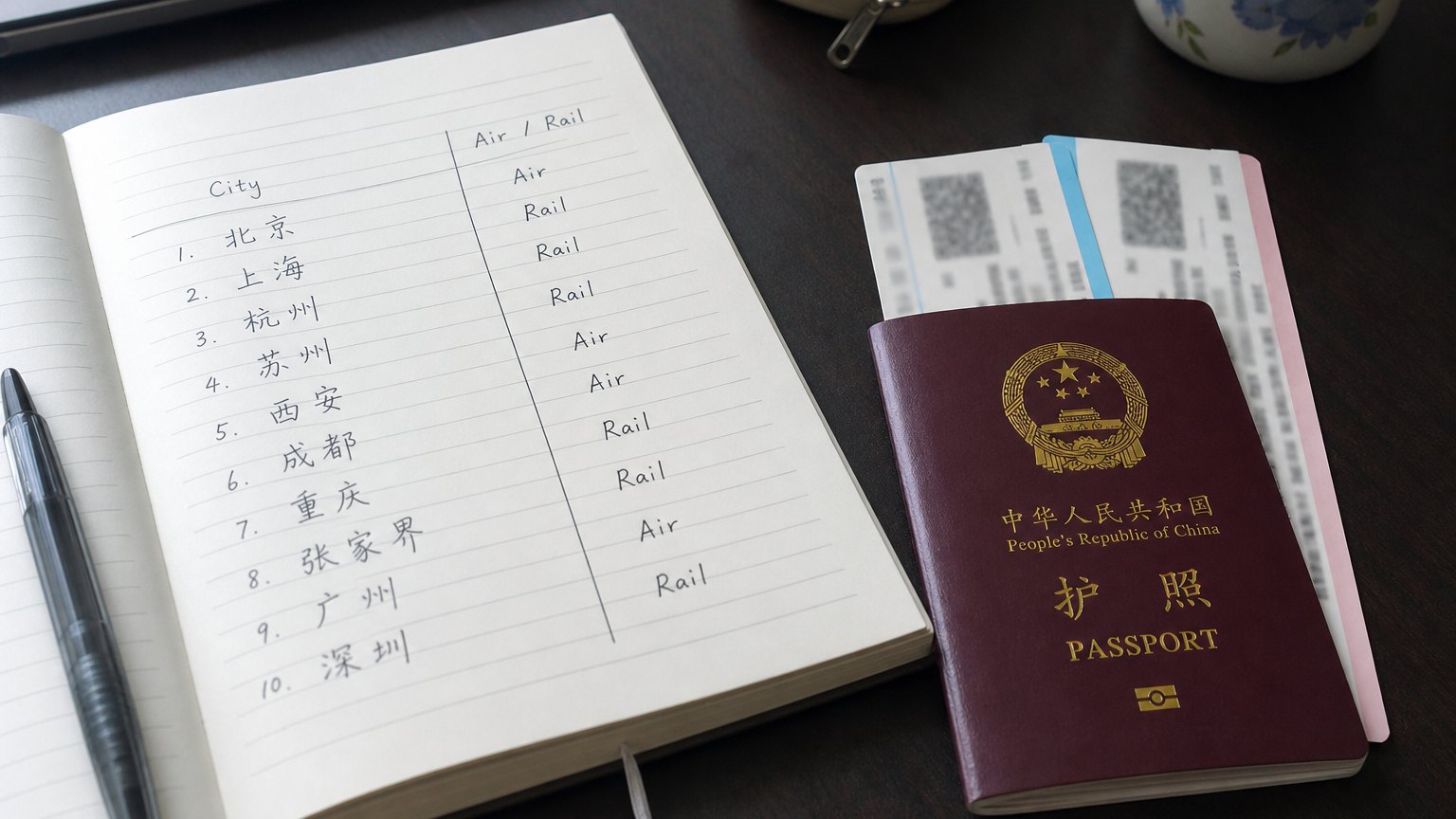
- Mark sleep cities in order.
- Label each leg Air, Rail, or Either.
- For air legs, lock codes in the China Airports Guide, then buy in How to Book China Flights.
- For rail legs, use Everything About China Train Tickets and China Train Types, Seats and Services.
- Protect any same-day air-and-rail join with a real buffer, not a hope.
Closing checks:
- The cabin matches the length and purpose of the flight.
- Bag allowance is the one on this fare.
- Arrival buffer is set for domestic or international.
- Terminal and gate plan is clear.
- Special requests, if any, sit in the airline record.
You now have a single playbook for China aviation: tickets, gateways, and the legs that should never have been flights in the first place.