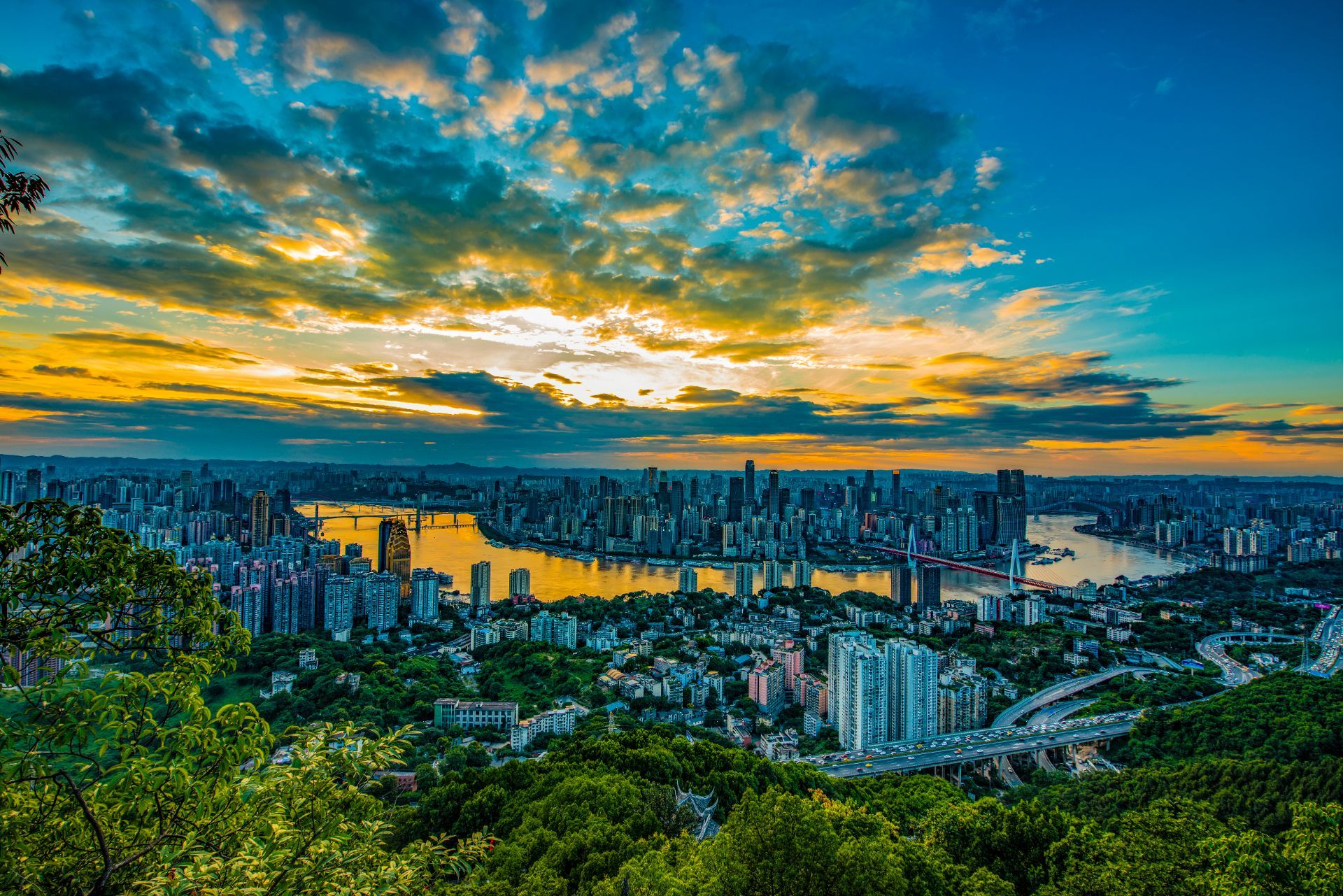
A 600-meter street people still live on
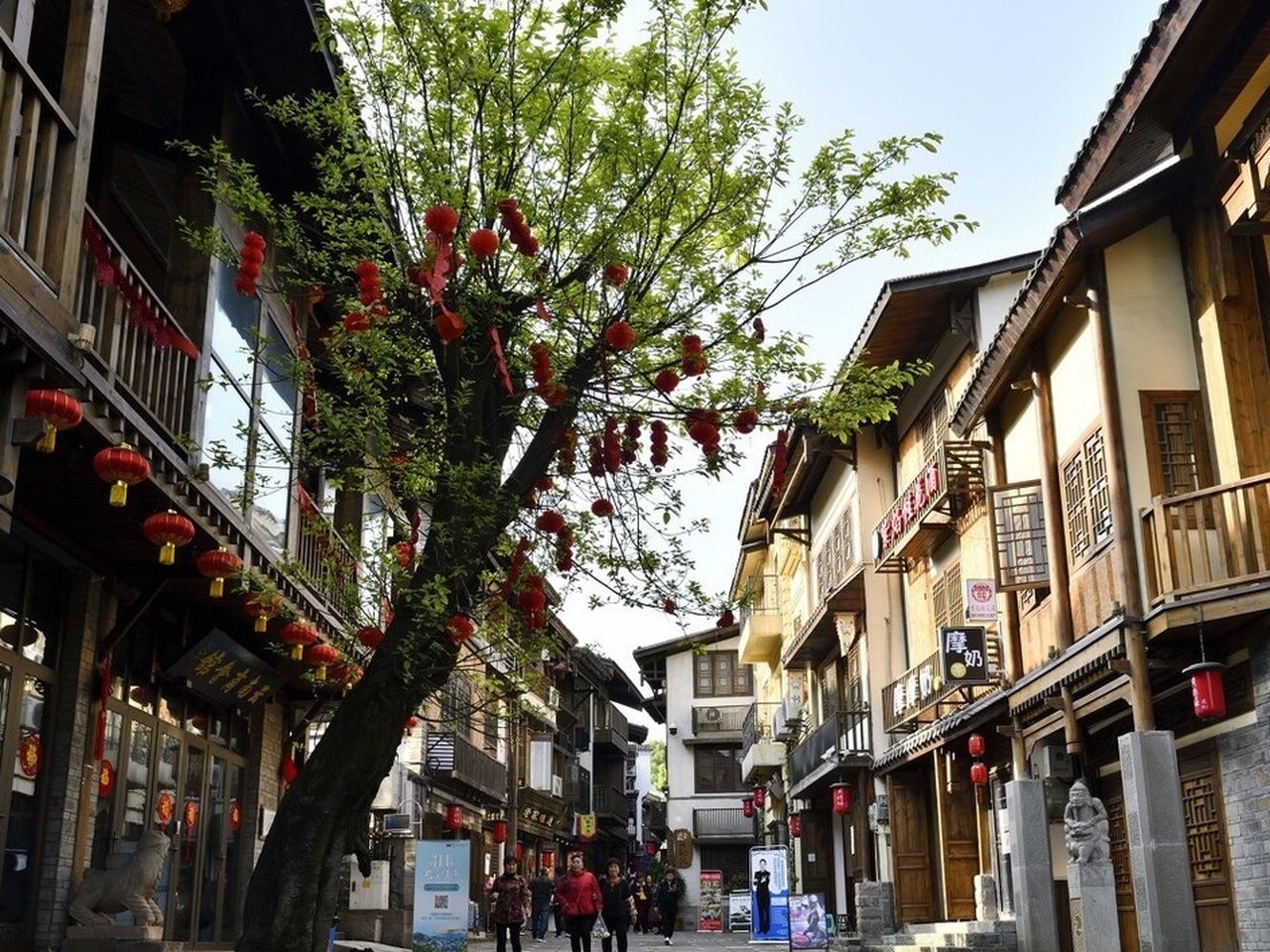
Huangjueya is a 600-meter street halfway up Nanshan, in Chongqing's Nan'an District. The official name is Huangjueya Zhengjie, the main street. About 175 old Chongqing houses and heritage residences line it. The street was restored around 2019. People still live here.
On weekends you meet locals walking up for exercise. On a clear day the street is easy to walk. Ciqikou is busier. Hongyadong, also called Hongya Cave, is more crowded. Both still fit a first trip, because they sit on the usual route. Come here after you have seen the rivers, when you have one afternoon left.
Walk up the Huangge Trail
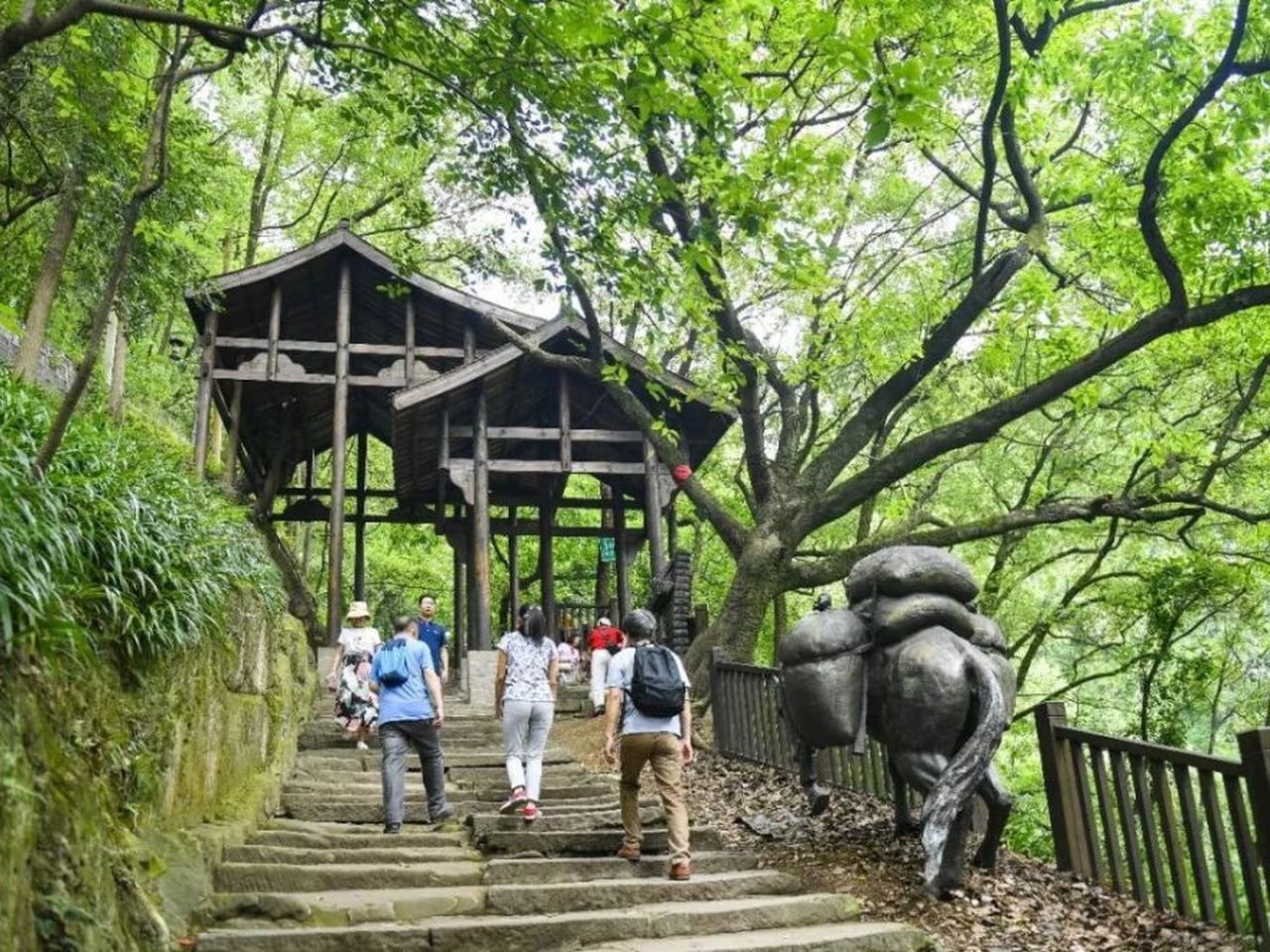
The Huangge Ancient Trail dates from the Tang and Song dynasties and was busiest in the Ming and Qing. It was the mountain road from Chongqing toward Guizhou and Yunnan. Locals call it the first ancient road of Bayu, the old name for Chongqing and eastern Sichuan. Official accounts put the length at about 3.6 kilometers, from the Yangtze bank up to this street. Goods crossed the river. Porters and mule teams carried them to the pass. The porters arrived tired. The street began as a place to stop.
Two paths climb the hill and merge into one stone lane.
From Nanbin Road or Haitangxi, start at Haitangxi. On the metro, take the Loop Line or Line 6 to Shangxinjie. Walk along Qianqu Road until you see the stone marker 黄葛古道上新街入口 (Huangge Ancient Trail, Shangxinjie Entrance). Stay on Qianqu Road past the marker. The steps start a few minutes farther on, at a lane on the left. This part is about 2 kilometers. It takes a fit walker 30 to 40 minutes. If you stop for the trees, allow an hour. There are public toilets along the way. The steps are wide, and the grade is steady. The path climbs the whole way. Wear shoes with a grip. Soft soles slip on the stone.
A taxi or a car saves the climb. In the map app, search 黄桷垭老街 (Huangjueya Old Street). From central Chongqing, allow 20 to 30 minutes in light traffic. Rush hour takes longer. On the way down, bus 346, 347, or 177 stops at Huangjueya or at Chongqing University of Posts and Telecommunications, a short walk from the street. In the app, the stops read 黄桷垭 and 重庆邮电大学. Check the app that day. Routes change.
Six hundred meters
The building at the entrance is the Guizhou Merchants' Guild Hall. What you see is a reconstruction. At night the lights make it look like a set. In daylight you can see the new timber. The history is older. In the Guangxu reign (1875–1908), Li Shuchang, an official from Guizhou, proposed a hall where Guizhou merchants on this road could store goods, eat, and sleep.
Beside it, Daxia Post Station is what locals call the first post on the way out of Chongqing toward Guizhou: the last lamp before the mountain road.
Farther along, read the boards. The 2019 work restored a group of old houses, including the former home of Li Kui'an, the Yunnan Merchants' Guild Hall, Zhangjing Stockade, and Daxia Post Station. Courtyards and upper floors are still there. Some beams still carry carved figures. Some doors are open. Walk through those. A shut door is a home.
In the Tongzhi reign, around 1865 or 1866, Wang Chi opened the Tianshunxiang firm here. He later became known as the money king of Yunnan. The shop on this street was the trading firm. The remittance house opened later, in the city. Goods stopped at this pass.
No. 145, Sanmao
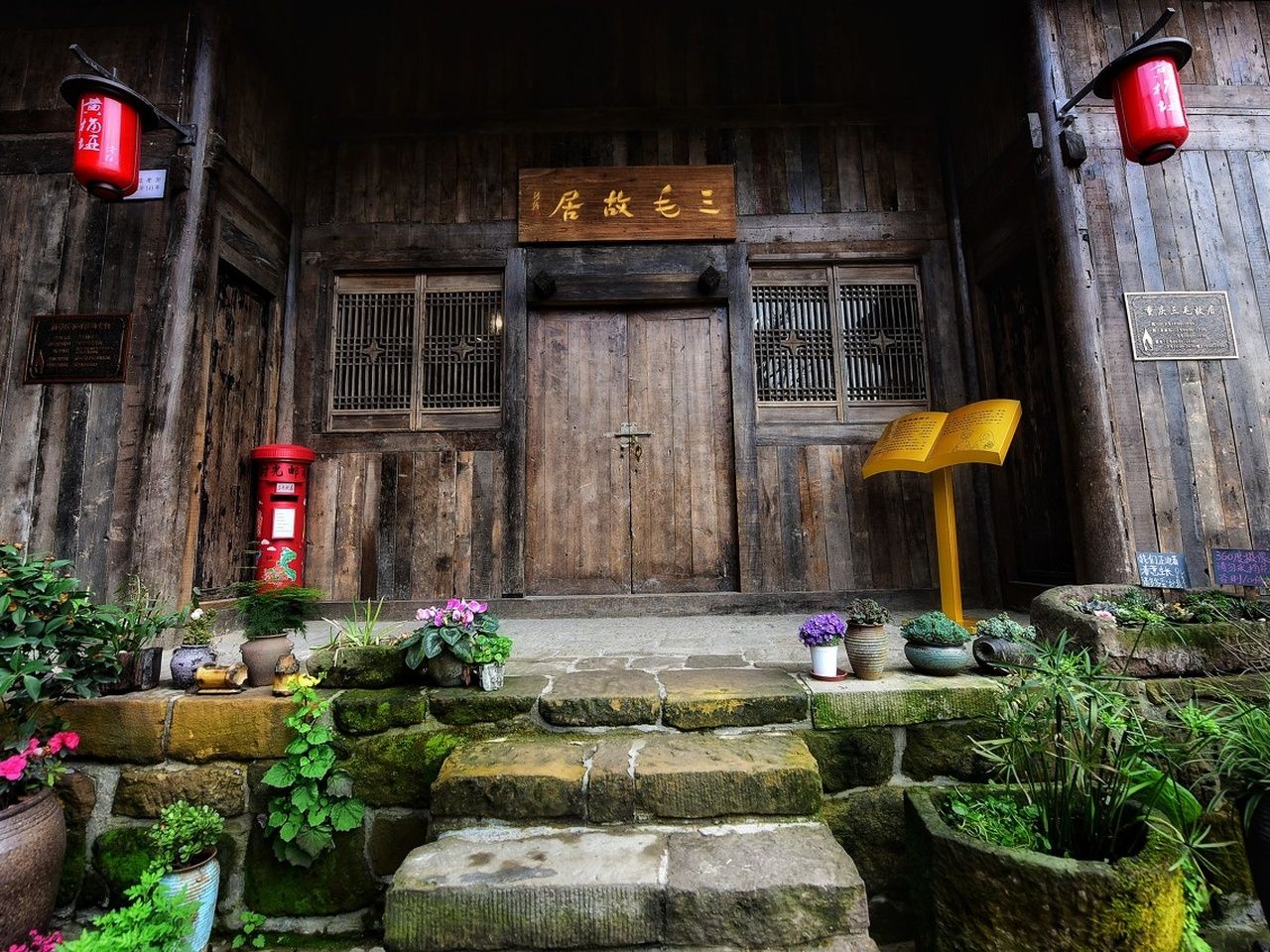
No. 145 Huangjueya Zhengjie is the birthplace of the writer Sanmao. Her birth name was Chen Maoping. She was born here on 26 March 1943 and lived here until 1948, when she left for Nanjing with her parents. She was about five. The family reached Taiwan at the end of the next year. The house is an ordinary eastern Sichuan home of the 1930s: small gray tiles, earth-and-timber mixed with brick-and-timber, set back under the trees on a side lane.
If you have read Stories of the Sahara, stop at the door. The English translation became widely available in 2019. Spanish readers knew her earlier. The desert, the islands, and the long travels came after Chongqing. It is a house, not a museum hall. This is the address of her first five years. She later returned to the mainland, and to this street. Look, then walk on.
Sit down under the trees
When your legs are tired, sit at a café under the huangge trees. These are Chongqing's banyans, and the trail is named for them. The leaves break the light. One coffee can take the rest of the hour. For a meal, choose a local place and ask what they cook for people who live here. The point of the street is that you can stop.
After dark the lights come on. Red lanterns hang at many doors. Tree shadows fall on the tiles. There are more people than in the afternoon. You can still walk without touching shoulders. What you hear is mostly the wind.
A German doctor's house
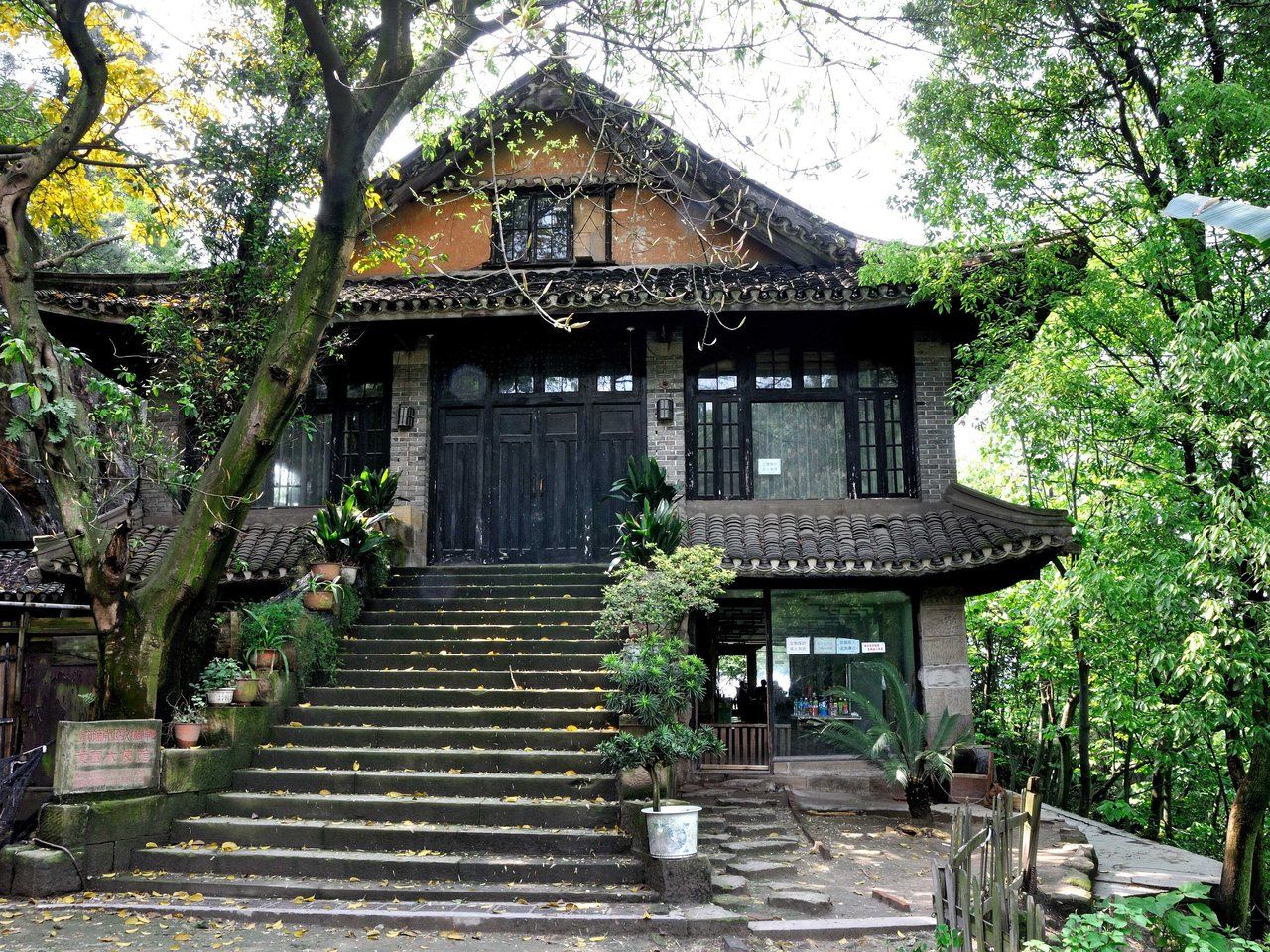
From the old street, walk toward Wenfeng for about 15 to 20 minutes. The address is 黄桷垭后街文峰段72号, No. 72, Wenfeng Section, Huangjueya Back Street. The trees are thick. You see the dark tiles and the upturned eaves first. This is a Chongqing municipal heritage site, the former German Embassy.
The house belonged to Paul Assmy. His gravestone reads Dr P. Assmy, 1869–1935. He came up the Yangtze to Chongqing in 1906 to practice medicine and teach, and later built this house on the slope behind Guangyi Middle School. The inscription on site and later reports do not agree on the year the house was finished. By 1935 he had died in Chongqing. The gravestone stands in the pines beside the courtyard.
The embassy used the house from June 1940 to January 1941, about eight months, as temporary quarters away from the bombing. In July 1941 the Nationalist government broke relations with Germany, and the mission in Chongqing closed. You are in a doctor's house.
The building has a double-eaved Chinese roof, small gray tiles, plaster ridges, and dormer windows. The base is large cut stone. The walls above it are gray brick. The house looks up to the tip of Wenfeng Pagoda. On the cliff side, the view opens to the river and the peninsula.
Restoration took more than three years. On 28 May 2025 the site opened again to the public. A small guesthouse, 重拾山 (Chongshishan), operates here, with about five rooms, so book ahead. The restaurant tied to the site is 郁苑, down the hill. You can walk the courtyard when the site is open and see the stone walls, the trees, and the gravestone. A guide is not there every day. Ask at the door what is running. Leave any fixed weekday or group size out of the plan until the site confirms it.
Wenfeng Pagoda is on the same ridge. Work began in 1850, the 30th year of the Daoguang reign, and finished the next year. It has seven stories, stands a little over 28 meters, and is also a municipal heritage site. It stands on top of Wenfeng Hill. From the old street, walk toward Sanmao's house and continue uphill. On a clear day you see the ridges of Nanshan and the city beyond.
The night view is a separate stop
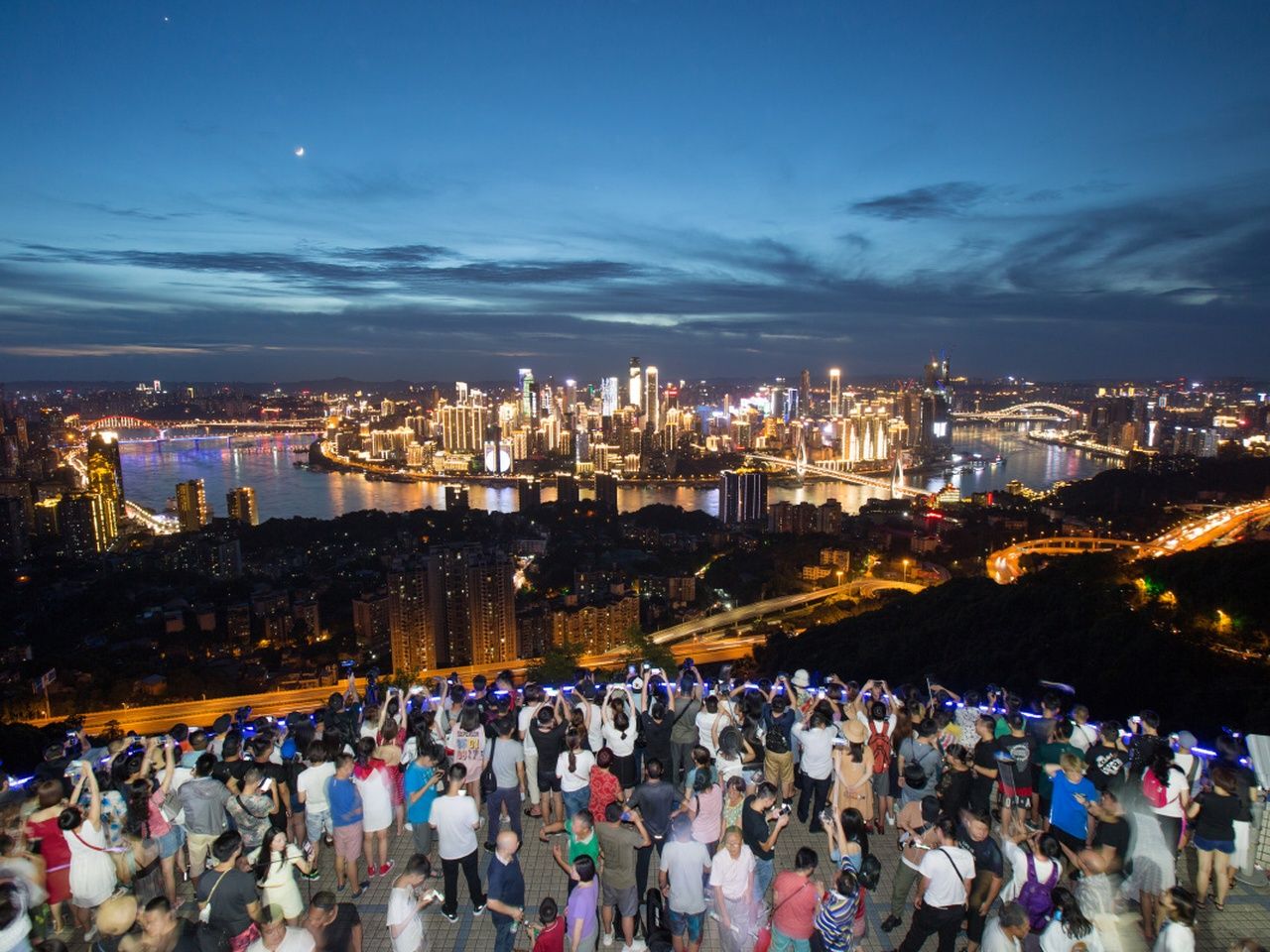
Laojun Cave is a working Taoist temple. The incense is strong. On a clear day the upper terrace looks over the Yuzhong peninsula. The One Tree viewing platform, Yikeshu, is on Longhuang Road near Huangjueya. It opened in 1997. A large huangge tree stands in the middle of the deck. From here you see both rivers and the city lights in one view. The walk from the old street, past Laojun Cave, to One Tree takes a little over 20 minutes, mostly on steps and slopes.
One Tree charges admission and stays open into the evening. Check the hours and the price that day. After sunset it is crowded. This is Chongqing's usual night view, a different visit from the old street. Walk over if your legs are still fresh and the light is still good. If not, take a car from the old street or from the embassy house. Stay off the Huangge Trail after dark. The road bends, and oncoming cars pass close. If you drive, go slowly.
Use this order: the old street by day, the former embassy and Wenfeng Pagoda in the afternoon, and the trails done before dark. If you want the night view, go to One Tree on its own. Do all four on one pair of legs and the end of the day becomes a rush.
Before you go
The old street is free and open day and night. You do not need a passport to enter. The embassy courtyard follows the site's own hours. One Tree is a separate ticket.
Pay with WeChat Pay or Alipay. Link a foreign card before you fly. Most small shops use a QR code. Carry a little cash for a stall that has no code.
When you take photos, leave gates, windows, and residents out of the frame. The chairs and the laundry poles belong to the people who live here.
In summer the shade is cooler than the riverfront. In autumn the huangge leaves turn. Spring and winter are fine for walking. Rain makes the stone slippery. Weekday mornings are quieter. Sunny weekends draw local hikers.
Half a day
Give Huangjueya half a day. Six hundred meters is a short distance. The climb and the stories take longer. You stop halfway up the mountain: the pass where goods left for Guizhou, the door of a writer who left at five, and a German doctor's grave beside the house that an embassy later rented. The river is still below. One afternoon is enough.
What we recommend
Huangjueya fills one afternoon. For the days around it, read Chongqing: The City, and Which Add-on to Choose, then look at these.
Chongqing: The City, and Which Add-on to Choose